
Commercial Examples
Burton Bridge Burton Porter, Fuller's London Porter, Nethergate Old Growler Porter, RCH Old Slug Porter, Samuel Smith Taddy Porter

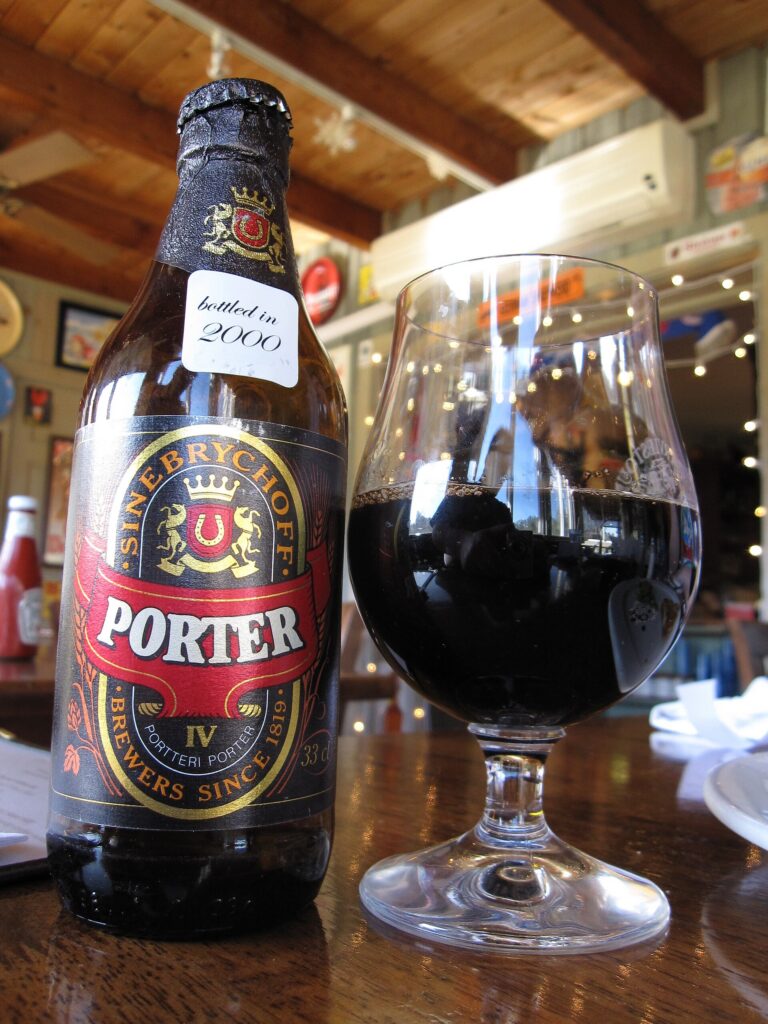
One of the most storied and influential beer styles in history (second probably only to the Pilsner). A medium-strength brown British ale with significant maltiness and light roasted character.
If you've followed a few of our posts on this blog, especially those about dark beer, you'll notice several mentions of the porter craze in eighteenth-century England. That's partially because most of the dark beer we drink today stems from that period and place, but also partially because the massive popularity of the style during that century would be impossible to overstate. To put it simply, the brewing industry cut its teeth on porter.
As is true of anything with a retrospectively consequential history, several stories have coalesced around porter's nascent years and the true origins of the style. One of the more important was a new inexpensive brown malt that became available in London at around that time. By 1773, brewers actually were blending beer as a part of production before it reached the pubs. This gave those brewers a ton of flexibility in creating the product they wanted from relatively inconsistent brewing practice.
Porters were hardworking folks who brought casks to the pub. After a hard day delivering oak barrels full of beer, they went to work emptying them. You can imagine more than a few locals walking up to the bar and ordering "what the porter is having."
English Porter originated in London in the late 17th/early 18th century and became one of the most important and influential beer styles in brewing history.
The style evolved as brewing techniques improved and trade routes expanded, eventually declining around WWI before being re-introduced in the mid-1970s with the start of the craft beer era.
Light to dark brown, often with ruby highlights when held up to light. The British versions are never quite black. Good clarity, with moderate off-white to light tan head with good to fair retention.
Strongly malty with notes of chocolate, caramel, and light roast. May show non-roasted malt character in support (caramelly, nutty, toffee-like and/or sweet). May have up to a moderate level of floral or earthy hops.
Malty in balance with varying levels of sweetness from different brewers. Roasted malts play a role in bitterness but should not create burnt or harsh roasted flavor. Moderate bready, biscuity, and toasty malt flavor includes a mild to moderate roastiness with chocolate character and significant caramel, nutty, and/or toffee character.
Deep malty sweetness with chocolate and caramel character. Light roasted notes without burnt qualities.
Biscuity and toasty malt flavors with subtle coffee and licorice notes. May include hints of toffee and nutty complexity.
Medium finish with lingering malty character. Very little perceived bitterness.
Serve fresh in a pint glass at 44°F. Best enjoyed at the pub with traditional fare.
Overall Impression: A moderate-strength brown beer with a restrained roasty character and bitterness. May have a range of roasted flavors, generally without burnt qualities, and often has a chocolate-caramel-malty profile.
Aroma: Moderate to moderately low bready, biscuity, and toasty malt aroma with mild roastiness, and may have a chocolate quality. May also show some non-roasted malt character in support (caramelly, nutty, toffee-like and/or sweet). May have up to a moderate level of floral or earthy hops. Fruity esters moderate to none. Diacetyl low to none.
Appearance: Light brown to dark brown in color, often with ruby highlights when held up to light. Good clarity, although may approach being opaque. Moderate off-white to light tan head with good to fair retention.
Flavor: Moderate bready, biscuity, and toasty malt flavor includes a mild to moderate roastiness (frequently with a chocolate character) and often a significant caramel, nutty, and/or toffee character. May have other secondary flavors such as coffee, licorice, biscuits or toast in support. Should not have a significant burnt or harsh roasted flavor, although small amounts may contribute a bitter chocolate complexity. Earthy or floral hop flavor moderate to none. Medium-low to medium hop bitterness will vary the balance from slightly malty to slightly bitter. Usually fairly well-attenuated, although can be somewhat sweet. Diacetyl moderately-low to none. Moderate to low fruity esters.
Mouthfeel: Medium-light to medium body. Moderately-low to moderately-high carbonation. Light to moderate creamy texture.
Comments: This style description describes the modern version of English porter, not every possible variation over time in every region where it existed. Historical re-creations should be entered in the Historical style category, with an appropriate description describing the profile of the beer. Modern craft examples in the UK are bigger and hoppier.
History: Originating in London around 300 years ago, porter evolved from earlier sweet, Brown Beer popular at the time. Evolved many times with various technological and ingredient developments and consumer preferences driving these changes. Became a highly-popular, widely-exported style in the 1800s before declining around WWI and disappearing in the 1950s. It was re-introduced in the mid-1970s with the start of the craft beer era. The name is said to have been derived from its popularity with the London working class performing various load-carrying tasks of the day. Parent of various regional interpretations over time, and a predecessor to all stouts (which were originally called "stout porters"). There is no historic connection or relationship between Mild and Porter.
Characteristic Ingredients: Grists vary, but something producing a dark color is always involved. Chocolate or other dark-roasted malts, caramel malt, brewing sugars, and the like are common. London-type porters often use brown malt as a characteristic flavor.
Style Comparison: Differs from an American Porter in that it usually has softer, sweeter and more caramelly flavors, lower gravities, and usually less alcohol; the American Porter will also typically have more of a hop character. More substance and roast than a British Brown Ale. Higher in gravity than a dark mild.
Vital Statistics: OG: 1.040 – 1.052 IBUs: 18 – 35 FG: 1.008 – 1.014 SRM: 20 – 30 ABV: 4.0 – 5.4%
Commercial Examples: Burton Bridge Burton Porter, Fuller's London Porter, Nethergate Old Growler Porter, RCH Old Slug Porter, Samuel Smith Taddy Porter
Brown Porter Color: Dark brown to very dark. May have red tint. Clarity: Beer color may be too dark to perceive clarity. When clarity is perceivable, chill haze is acceptable at low temperatures. Perceived Malt Aroma & Flavor: Low to medium malt sweetness. Caramel and chocolate attributes are acceptable. Strong roast barley or strong burnt or black malt character should not be present. Perceived Hop Aroma & Flavor: Very low to medium Perceived Bitterness: Medium Fermentation Characteristics: Fruity esters are acceptable. Diacetyl is usually absent in these beers but may be present at low levels. Body: Low to medium Original Gravity: 1.040-1.050 (10-12.4 Plato) Final Gravity: 1.006-1.014 (1.5-3.6 Plato) Alcohol by Weight (Volume): 3.5%-4.7% (4.4%-6.0%) Bitterness (IBU): 20-30 Color SRM (EBC): 20-35 (40-70 EBC)
Two-row brewers malt, British caramel and/or brown malt, light use of roasted malts, English hops, expressive English ale yeast.
Expressive English ale yeast for pomme fruit fermentation profile.
Varies by region but typically soft to moderate sulfate content.
Single infusion mash in the mid to upper saccharification temperature range.
A single infusion mash is traditional, and hopping is traditionally only one addition for bitterness early in the boil. Use around 5-6% chocolate malt, but plan to stay away from roasted barley to limit the amount of acrid character. Plan to mash in the middle to upper range for a bigger body (152-154). Fermented with English yeast for a pomme fruit fermentation profile.
At the Pub: Smash burger and fries Takeout: Burritos with Mole sauce Barbecue night: Grilled steaks or burgers
Aged cheddar, smoked gouda, blue cheese
Smash burgers and fries, grilled steaks, roasted meats, hearty stews
Chocolate desserts, toffee treats, dark fruit pastries
Black Flannel Vermont Common
New: Queen, "Don't Stop Me Now" Old (but not really old): Kevin Puts, Symphony No. 4
Burton Bridge Burton Porter, Fuller's London Porter, Nethergate Old Growler Porter, RCH Old Slug Porter, Samuel Smith Taddy Porter