
Commercial Examples
Anchor Porter, Boulevard Bully! Porter, Deschutes Black Butte Porter, Founders Porter, Great Lakes Edmund Fitzgerald Porter, Smuttynose Robust Porter, Sierra Nevada Porter

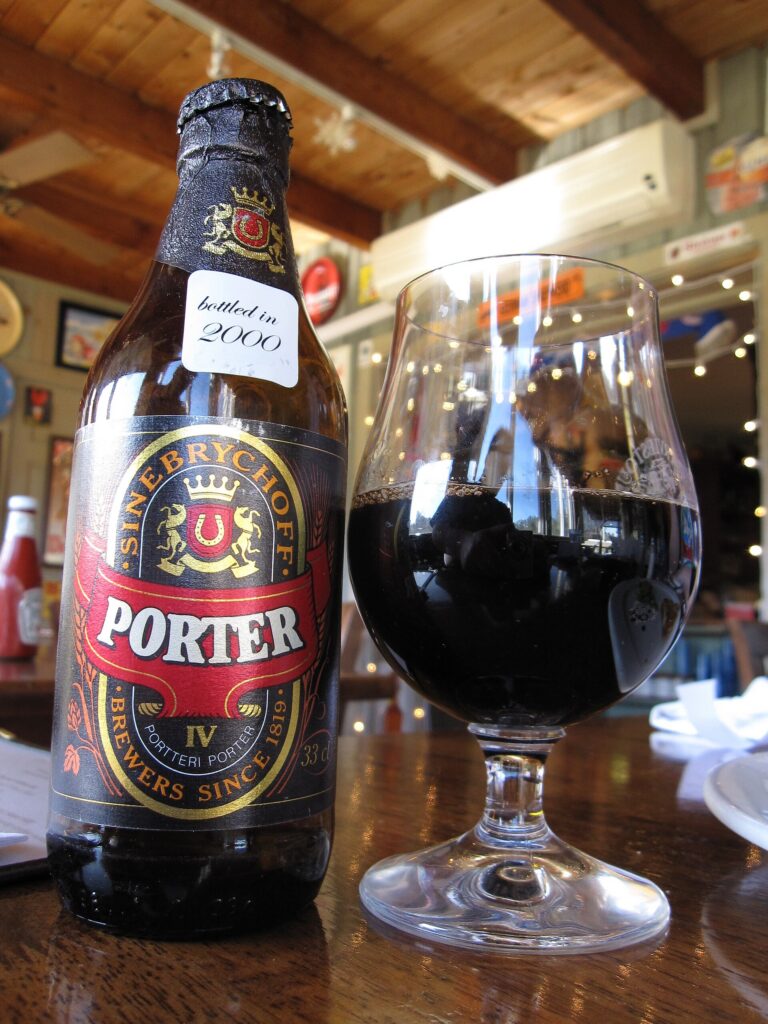
A substantial, malty dark beer with a complex and flavorful dark malt character.
(For our post on porter vs. stout, see the American Stout page on our blog…this post will focus on the history of porter since the end of prohibition.)
Following the all-too-common trend of American brewers taking something from European beer culture, adding more hops, and boosting its alcohol content, the American Porter is inspired by its English ancestors from the early eighteenth century. After the American Revolution, our founding mothers and fathers mirrored the model they learned through the feudal estates in England. Brewing was typically done on a small scale for personal consumption…a far cry from the industrial machine that would shortly follow. We'll delve a little deeper into that period when we talk about the Pre-Prohibition Porter, but it's worth mentioning here that one of the driving forces behind the establishment of our brewing culture during the nineteenth century was a strong desire to produce the beer we drank rather than buying it from the British. Notice that we didn't dump the beer into Boston Harbor with the tea. Moral equivalency can be hard…especially after a cask or two.
After prohibition ended, American beer was strongly impacted by the ensuing war and its impact on literally every aspect of daily life. After learning some hard lessons about the frivolity of forced abstinence during the Civil War, the war-time government mandated that brewers reserve a full 15% of their product for soldiers overseas. They also created standards for the beer they bought to send. The result? 3.2% lager…here we are, 80 years down the line, still suffering through the consequences of that.
The relatively mild porter that predated prohibition and the second world war continued its hiatus from popularity after the war. Thankfully, it never fully disappeared completely from the brewing scene–Yuengling and Stegmaier both continued producing a porter until the craft movement began in the 1980s. When craft brewers began their endeavor toward more flavorful beer, one of the obvious outlets was the porter, a style once extremely popular in the US, and also one that was different in every imaginable way from the lagers of the day.
As we discussed in our post on American Stout, the lines aren't just blurry between those two designators…they often don't really exist. Since the beginning of the craft movement–and especially during the past decade–porters have become a laboratory for everything from massive imperial beers, to light sessionable malt showcases, to dessert-inspired pastry style beers. While these are all wonderful, one of our favorites here at Black Flannel is our coffee porter. It's a classic take on porter. Light enough to be drinkable all year round, but with a full enough malt backbone when you're in the mood for something darker.
A stronger, more aggressive version of pre-prohibition porters and/or English porters developed in the modern craft beer era. Historical versions existed, particularly on the US East Coast, some of which are still being produced (see the Historical Beer, Pre-Prohibition Porter). This style describes the modern craft version.
Black
Roasty, coffee, and dark chocolate flavors dominate Sometimes licorice or dark fruit notes are present American hops are low to medium strength
Ranges from low to medium sweetness Follows aroma characteristics Lingers with roasted/dark coffee and chocolate flavors Sometimes quite dry on the finish
Full body Dry or medium-length finish
Overall Impression: A substantial, malty dark beer with a complex and flavorful dark malt character.
Aroma: Medium-light to medium-strong dark malt aroma, often with a lightly burnt character. Optionally may also show some additional malt character in support (grainy, bready, toffee-like, caramelly, chocolate, coffee, rich, and/or sweet). Hop aroma low to high, often with a resiny, earthy, or floral character. May be dry-hopped. Fruity esters are moderate to none.
Appearance: Medium brown to very dark brown, often with ruby- or garnet-like highlights. Can approach black in color. Clarity may be difficult to discern in such a dark beer, but when not opaque will be clear (particularly when held up to the light). Full, tan-colored head with moderately good head retention.
Flavor: Moderately strong malt flavor usually features a lightly burnt malt character (and sometimes chocolate and/or coffee flavors) with a bit of grainy, dark malt dryness in the finish. Overall flavor may finish from dry to medium-sweet. May have a sharp character from dark roasted grains, but should not be overly acrid, burnt or harsh. Medium to high bitterness, which can be accentuated by the dark malt. Hop flavor can vary from low to high with a resiny, earthy, or floral character, and balances the dark malt flavors. The dark malt and hops should not clash. Dry-hopped versions may have a resiny flavor. Fruity esters moderate to none.
Mouthfeel: Medium to medium-full body. Moderately low to moderately high carbonation. Stronger versions may have a slight alcohol warmth. May have a slight astringency from dark malts, although this character should not be strong.
Comments: Although a rather broad style open to brewer interpretation. Dark malt intensity and flavor can vary significantly. May or may not have a strong hop character, and may or may not have significant fermentation by-products; thus may seem to have an "American" or "British" character.
History: A stronger, more aggressive version of pre-prohibition porters and/or English porters developed in the modern craft beer era. Historical versions existed, particularly on the US East Coast, some of which are still being produced (see the Historical Beer, Pre-Prohibition Porter). This style describes the modern craft version.
Characteristic Ingredients: May contain several malts, prominently dark malts, which often include black malt (chocolate malt is also often used). American hops typically used for bittering, but US or UK finishing hops can be used; a clashing citrus quality is generally undesirable. Ale yeast can either be clean US versions or characterful English varieties.
Style Comparison: More bitter and often stronger with more dark malt qualities and dryness than English Porters or Pre-Prohibition Porters. Less strong and assertive than American Stouts.
Vital Statistics: OG: 1.050 – 1.070 IBUs: 25 – 50 FG: 1.012 – 1.018 SRM: 22 – 40 ABV: 4.8 – 6.5%
Commercial Examples: Anchor Porter, Boulevard Bully! Porter, Deschutes Black Butte Porter, Founders Porter, Great Lakes Edmund Fitzgerald Porter, Smuttynose Robust Porter, Sierra Nevada Porter
Robust Porter Color: Very dark brown to black Clarity: Opaque Perceived Malt Aroma & Flavor: Medium to medium-high. Malty sweetness, roast malt, cocoa and caramel should be in harmony with bitterness from dark malts. Perceived Hop Aroma & Flavor: Very low to medium Perceived Bitterness: Medium to high Fermentation Characteristics: Fruity esters should be present and balanced with all other characters. Diacetyl should not be present. Body: Medium to full Original Gravity: 1.045-1.060 (11.2-14.7 Plato) Final Gravity: 1.008-1.016 (2.1-4.1 Plato) Alcohol by Weight (Volume): 4.0%-5.2% (5.1%-6.6%) Bitterness (IBU): 25-40 Color SRM (EBC): 30+ (60+ EBC)
Pale malt Varying levels of caramel malt Roasted malts Flaked grains American hops
A single infusion mash is commonly used. Depending on level of hopping in recipe, will often contain only one 60-minute hop addition. Fermented with an American or English yeast strain.
Takeout: Barbeque Swanky date night: Oysters
Vermont Grain (From Vermont Common) Lightly aged rye whiskey
New: Interpol Old: Dvorak, Symphony No. 9 "From the New World"
Anchor Porter, Boulevard Bully! Porter, Deschutes Black Butte Porter, Founders Porter, Great Lakes Edmund Fitzgerald Porter, Smuttynose Robust Porter, Sierra Nevada Porter