—## Brewing History & Origins
Historical Development
After the porter boom began in the eighteenth century, two major and related innovations modified brewing practices for dark beer. The first of these was the introduction of the hydrometer, which is an instrument used to measure the density of liquids. When it was adopted by the brewing industry in the late 1700s, brewers began to realize that pale malt had a much greater extract yield than the brown malt they had been using to brew porters. Simple math gave them the realization that they could use less malt and get the same amount of beer, which was money in the bank. The second innovation that made waves was Daniel Wheeler's invention of and patent on the roasting drum in 1817, a machine that gave us a very darkly roasted malted barley which we still call "black patent" malt to this day.
Brewing is always about balancing various factors to create the best possible beer, and this is a great example of how that can play out when innovation is involved. If brewers wanted to use a greater percentage of pale malts in order to save money, but needed a way to darken and flavor the beer at the same time, these two new technologies helped one another in the evolution of recipes. Brewers were able to get both greater yield and the same flavor, which meant their experimental minds needed occupation.
Cue the boundary-pushing stouts that emerged in the 1800s. Brewers would often make several beers out of the same mash–a style of brewing called "parti-gyle" we've seen often in English practice–and stouts and porters were prime candidates for this kind of brewing. Stouts, after all, likely began as bigger versions of porters, so by using a larger mash bill and soaking the grain several times, brewers were able to get two, and many times three beers out of one pile of grain. A recipe from the middle of the 1800s gives us a window into what that might have looked like, but we can glean something extra from its malt ratios. In the smaller beers on this chart, the black malt percentages are actually higher than in the bigger ones. It's hard to gauge how these recipes would really taste given the huge change in ingredients, but there are a few clues about the direction of stouts hidden there. In the Bottling/Keeping beer, the original gravity, a measure of how much extract the mash produced, was 1.065, and that recipe included 5.39 pounds of hops per barrel. The largest beer, the imperial stout, had an original gravity of 1.099, but with 8.2 pounds of hops per barrel. Although we don't know the potency of the hops they used–we could take some guesses but we won't–taken at face value, this gives us a ratio of 1.32 ounces per gravity point on the small beer, and exactly the same 1.32 ounces of hops per gravity point on the bigger one. What's different, is that the bigger beer would have quite a bit more residual sweetness and body than the keeping beer–1.028 vs. 1.020.
If you're still with me, first of all thanks. Second, while it's true that these aren't linear measurements, by boosting the sweetness and body in the imperial stout and keeping the hopping rate nearly the same based on original gravity, presumably that imperial stout would have been a sweeter beer. All of that leads us to this: though we've only got one recipe on hand here, at least one brewery–and they were the second largest in London during those days–was moving in the direction of sweeter stouts and more bitter porters.
By the end of the nineteenth century, this sweeter, more filling beer was typically used as a drink for the ill and injured. Throughout history, it's also been prescribed to pregnant and nursing mothers and children for various purposes. Though it went through a period of decline, the milk stout is enjoying massive popularity in the US today, where brewers (including us) are making more traditional versions that appeal to drinkers' sweet tooth alongside bigger versions with all manner of adjuncts that taste like dessert. We've tasted versions that are designed to remind you of tiramisu, chocolate layer cake, black forest cake, and peanut butter cups to name a few, and we've even brewed a couple that we'll be releasing in the colder months. Traditionally, these beers are still meant to be enjoyed by the pint, so if you're looking for one of those stay away from anything that's named after a dessert. But if you're looking to open a bottle and share it with friends after a nice meal, a well-made pastry stout can be a fitting end to your night.### Geographic Origin
Information about where this style developed### Modern Evolution
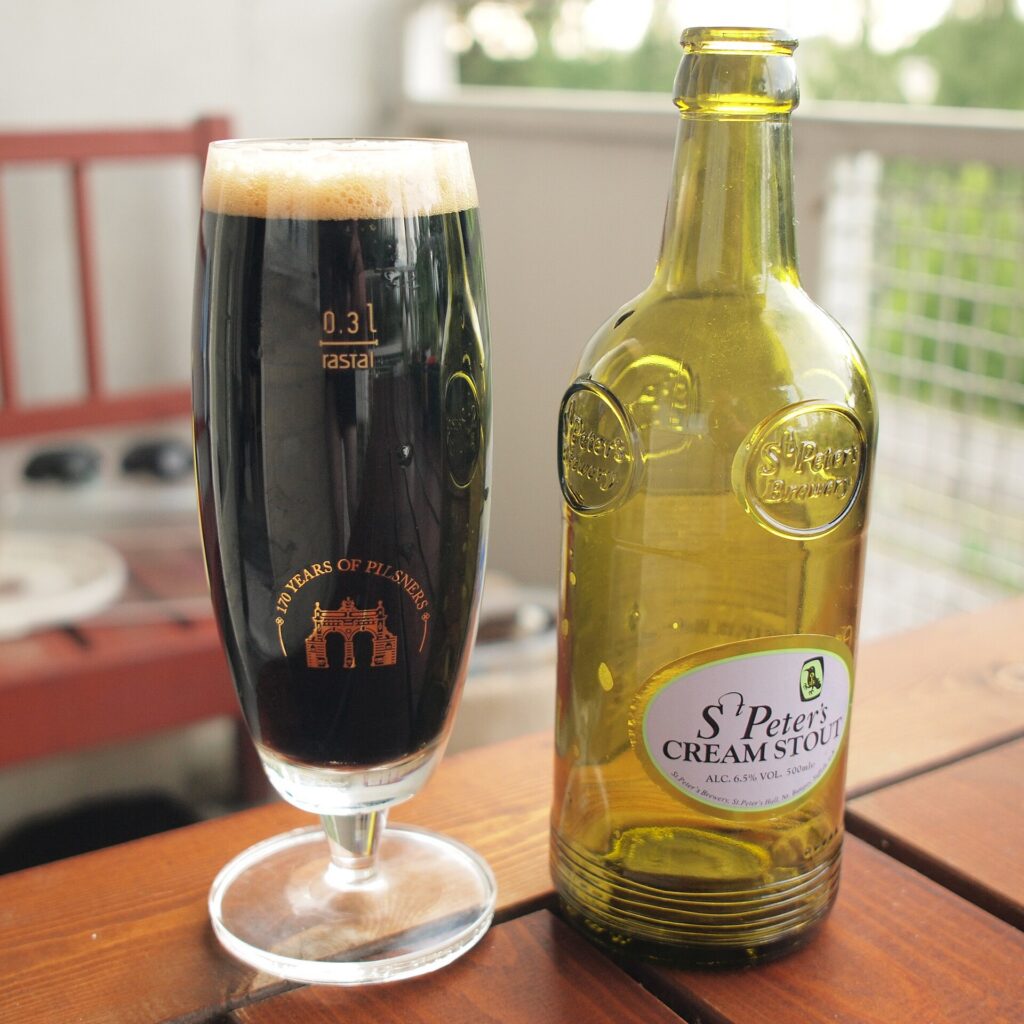
An English style of stout developed in the early 1900s. Historically known as "Milk" or "Cream" stouts, legally this designation is no longer permitted in England (but is acceptable elsewhere). The "milk" name is derived from the use of lactose, or milk sugar, as a sweetener. Originally marketed as a tonic for invalids and nursing mothers.## Style Profile
Appearance
Black, often with a beautiful tannish head### Aroma
Malty and sweet with varying levels of roast### Flavor
Malty in balance
Sweet, with varying levels of sweetness from different brewers and beers
Roasted malts help to balance that sweetness### Mouthfeel
Full bodied with lower carbonation for a creamy filling mouthfeel## Technical Specifications
Original Gravity (OG)
Final Gravity (FG)
Alcohol by Volume (ABV)
International Bittering Units (IBU)
Standard Reference Method (SRM)