
Pisco Peru
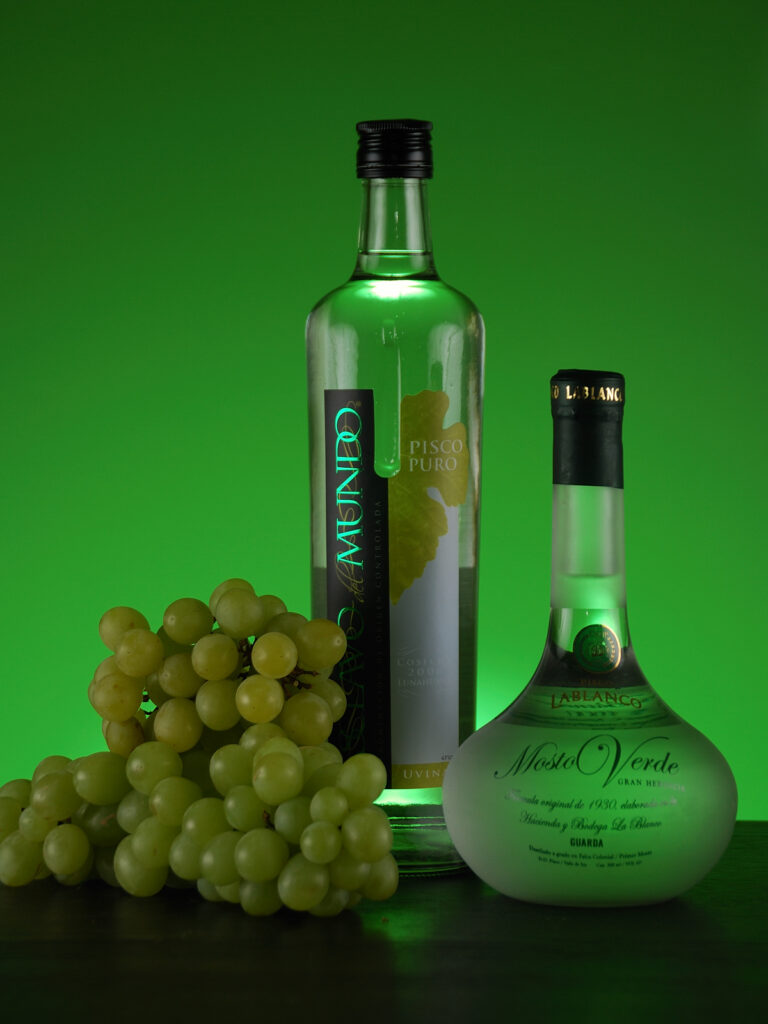
A clear Peruvian grape spirit whose expression ranges from relatively restrained and structured to intensely floral and fruity. Grape selection and whether the must completes fermentation before distillation are central distinctions. Oak flavour is outside the intended protected identity.
Color
Maturation
Alcohol
Sweetness
Balance
History
Peru’s National Archives presents colonial records documenting grape-spirit production and commerce, including a 1589 shipment and early-seventeenth-century wills associated with distilling equipment. The well-known 1613 will of Pedro Manuel is therefore an important record, rather than the earliest possible proof or a precise invention date. These documents ground Peruvian pisco’s history in the colonial wine economy while leaving questions about the name’s earliest usage separate from evidence for distillation. Peru National Archives: Pisco origins, manuscripts and maps.
Classic characteristics
Appearance
Clear and colourless; wood-derived colour is not expected.
Aroma
Medium to pronounced; grape, citrus, flowers, fruit or subtler savoury associations by variety.
Flavor
Fruit-derived expression; aromatic and less-aromatic grape styles differ substantially.
Sweetness
Dry; sweet aromatic impressions do not indicate permitted sugar addition.
Mouthfeel
Light through rounded or oily, with integrated warmth in balanced examples.
Finish
Medium to long in expressive examples; describe fruit/floral development and persistence.
Flavor Profile Deep Dive
Judge grape expression and neutral resting; do not reward wood notes as a required feature of Peruvian pisco. Investigate persistent unpleasant solvent-like, stale or sulfurous character in context. Do not diagnose a specific production error from one aroma; appropriate fermentation character and proof-related warmth are not automatic faults.
Service notes
Compare one less-aromatic and one aromatic grape expression, keeping serving conditions consistent. Then examine a blend and discuss what each component might contribute only where the recipe is documented. For guests, identify the grape or blend and describe the actual floral or fruit character. When using it in cocktails, evaluate strength and aroma directly rather than assuming every Peruvian pisco behaves identically.
Style parameters
| Parameter | Boundary or expectation |
|---|---|
| Base material | Authorized Peruvian wine grapes |
| Bottled strength | Peru 38–48%; ordinary U.S. brandy minimum 40% applies in that market. |
| Peru: bottled ABV | at least 38% and at most 48%; see identity requirements. |
| United States: bottled ABV | at least 40%; Ordinary brandy identity; protected-origin specifications also apply. |
| Color and clarity | Clear and colourless; wood-derived colour is not expected. |
| Maturation | At least three months resting in neutral vessels; no oak maturation. |
| Additions | No water or sugar added to the finished protected spirit. |
Legal limits apply only to the named jurisdiction and identity. ADI entry conditions and typical sensory expectations are separate; a product example is not a universal range.
Cocktail connections
Style comparison
The no-dilution and neutral-resting approach distinguishes Peru's specification from Chile's. Grape classifications are also useful: a less-aromatic variety can make expressive pisco without an overt perfume. Acholado is a blending description, not a guaranteed intensity or quality tier. Mosto Verde describes fermentation state at distillation, not a liqueur category.
Ingredients
Authorized Peruvian wine grapes
Production notes
Peru's denomination specifies eligible regions and grape varieties, direct discontinuous distillation and resting in vessels that do not alter colour or flavour. Water and sugar addition are prohibited. Puro identifies a single grape variety; Acholado involves blending; Mosto Verde uses must distilled before fermentation is complete. Mosto Verde does not mean that the finished spirit must be sweet.
Commercial examples
No newly verified benchmark is designated in this revision. Select a documented qualifying expression before running a benchmark tasting.
Retained example and source context. INDECOPI denomination regulation; CONAPISCO legal overview; La Caravedo Portón expressions. U.S. recognition: the protected-brandy origin provisions.
Photo credit
Peruvian pisco bottles. Photo: Fernando Revilla / Wikimedia Commons. CC BY-SA 3.0. Display resized; no other edits.

Keep exploring
- Peru Pisco designation regulation — evidence reviewed 2026-09-17.
- 27 CFR 5.145 — evidence reviewed 2026-09-17.