
Commercial Examples
Paulaner Salvator, Ayinger Celebrator, Weihenstephaner Korbinian, Tucher Bajuvator, Spaten Optimator, Kulmbacher Monchshof Dunkel

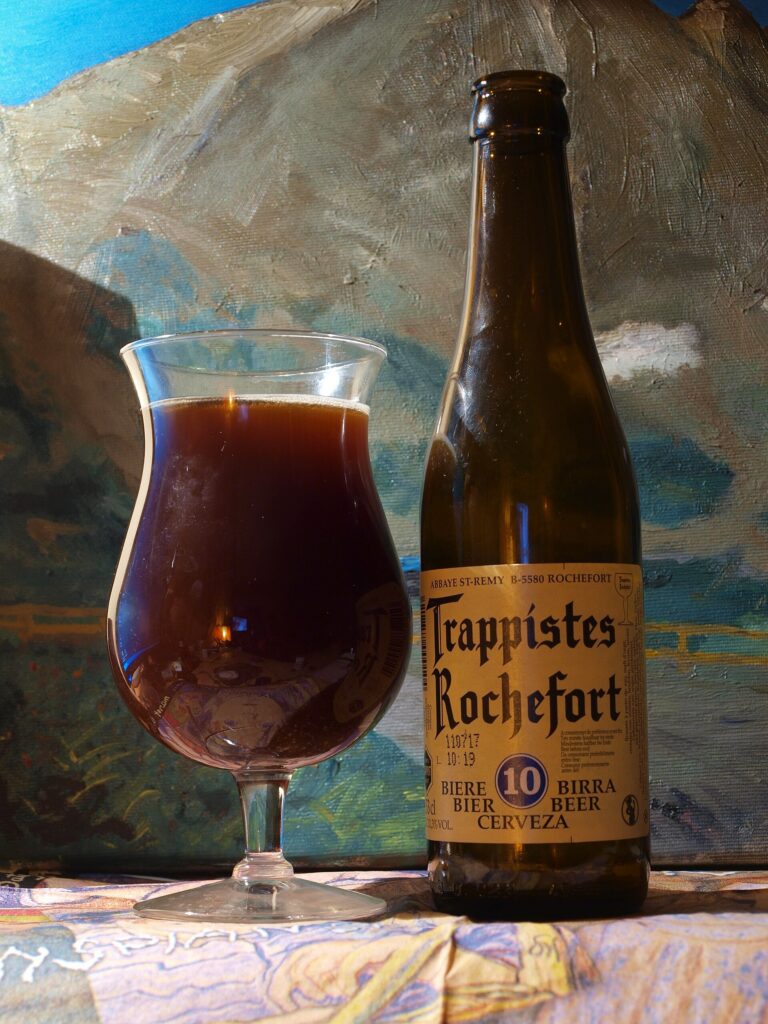
A very rich, malty, strong Bavarian lager with significant alcohol and intense malt character. The name "Doppelbock" means "double bock," indicating its strength relative to standard Bock beers. Traditionally brewed by monks and continues to be a pride of Bavarian brewing heritage.
Doppelbock emerged in Bavaria as a monastic brewing tradition, particularly associated with the monks of the Saint Francis of Paola monastery (Paulaner Monastery) in Munich. The style was developed as a stronger version of the traditional Bock beer, intended to provide nutrition and sustenance during fasting periods in the religious calendar. The monks' deep brewing knowledge and access to quality ingredients resulted in a beer of remarkable complexity and character.
Historically, many Doppelbock breweries followed the tradition of naming their beer with a "-ator" suffix, honoring the original style-defining beer "Salvator" produced by the monastery brewery (now Paulaner Brauerei). Names like Celebrator, Triumphator, and others reference this heritage, though not all follow this convention today.
Doppelbock remained a regional specialty of Bavaria and southern Germany for centuries, gaining wider recognition only in the 20th century as German brewing traditions spread internationally.
Doppelbock originated in Munich, Bavaria, particularly from the monastery breweries of the region. Munich's brewing tradition and Bavarian water chemistry were ideal for developing these rich, malty lagers.
Today, Doppelbock remains a prestigious style, brewed by numerous Bavarian and international breweries. The tradition of naming new Doppelbocks with "-ator" suffixes continues, though is not universal. Modern interpretations maintain the rich, malty character while occasionally exploring variations in color and intensity.
Color ranges from light brown to dark brown (sometimes nearly black in darker versions). Full body evident, with a thick, persistent tan or beige head. Gravity indicated by legs forming on the glass.
Rich, complex malt aroma with notes of caramel, toffee, bread, and deep grain. Some versions show dark fruit character (plum, raisin), vinous or port-like notes. Alcohol warmth is present. Very little hop aroma.
Intensely malty with caramel, toffee, chocolate, and bread flavors dominating. Dark fruit notes (plums, currants, raisins) and vinous character in many examples. Alcohol is noticeable but well-integrated, adding warmth and complexity rather than harshness. Very little hop bitterness despite moderate IBU—the bitterness serves only to balance the malt. Smooth, malty finish with lingering sweetness.
Deep, rich maltiness featuring caramel, toffee, dark bread, and subtle chocolate. The sweetness is balanced by moderate alcohol warmth and just enough bitterness to prevent it from being cloying.
Dark fruit character (plums, raisins, currants), vinous or port-like notes, complex alcohol notes reminiscent of brandy, warming spice from yeast, subtle roasted grain notes in darker versions.
Long, warm, smooth finish with lingering malt sweetness and alcohol warmth. Properly made examples show excellent balance and integration of all components.
Serve at 50-55°F in a snifter or goblet. This beer rewards slow sipping and contemplation. Pairs beautifully with conversation and contemplative winter evenings.
Overall Impression: A strong, rich, and very malty German lager that can have both pale and dark variants. The darker versions have more richly-developed, deeper malt flavors, while the paler versions have slightly more hops and dryness.
Aroma: Very strong maltiness. Darker versions will have significant Maillard products and often some toasty aromas. A light caramel aroma is acceptable. Lighter versions will have a strong malt presence with some Maillard products and toasty notes. Virtually no hop aroma, although a light noble hop aroma is acceptable in pale versions. A moderately low malt-derived dark fruit character may be present (but is optional) in dark versions. A very slight chocolate-like aroma may be present in darker versions, but no roasted or burned aromatics should ever be present. Moderate alcohol aroma may be present.
Appearance: Deep gold to dark brown in color. Darker versions often have ruby highlights. Lagering should provide good clarity. Large, creamy, persistent head (color varies with base style: white for pale versions, off-white for dark varieties). Stronger versions might have impaired head retention, and can display noticeable legs.
Flavor: Very rich and malty. Darker versions will have significant Maillard products and often some toasty flavors. Lighter versions will have a strong malt flavor with some Maillard products and toasty notes. A very slight chocolate flavor is optional in darker versions, but should never be perceived as roasty or burnt. Clean lager character. A moderately low malt-derived dark fruit character is optional in darker versions. Invariably there will be an impression of alcoholic strength, but this should be smooth and warming rather than harsh or burning. Little to no hop flavor (more is acceptable in pale versions). Hop bitterness varies from moderate to moderately low but always allows malt to dominate the flavor. Most versions are fairly malty-sweet, but should have an impression of attenuation. The sweetness comes from low hopping, not from incomplete fermentation. Paler versions generally have a drier finish.
Mouthfeel: Medium-full to full body. Moderate to moderately-low carbonation. Very smooth without harshness, astringency. A light alcohol warmth may be noted, but it should never burn.
Comments: Most versions are dark colored and may display the caramelizing and Maillard products of decoction mashing, but excellent pale versions also exist. The pale versions will not have the same richness and darker malt flavors of the dark versions, and may be a bit drier, hoppier and more bitter. While most traditional examples are in the lower end of the ranges cited, the style can be considered to have no upper limit for gravity, alcohol and bitterness (thus providing a home for very strong lagers).
History: A Bavarian specialty first brewed in Munich by the monks of St. Francis of Paula. Historical versions were less well-attenuated than modern interpretations, with consequently higher sweetness and lower alcohol levels (and hence was considered "liquid bread" by the monks). The term "doppel (double) bock" was coined by Munich consumers. Many commercial doppelbocks have names ending in "-ator," either as a tribute to the prototypical Salvator or to take advantage of the beer's popularity. Traditionally dark brown in color; paler examples are a more recent development.
Characteristic Ingredients: Pils and/or Vienna malt for pale versions (with some Munich), Munich and Vienna malts for darker ones and occasionally a tiny bit of darker color malts (such as Carafa). Saazer-type hops. Clean lager yeast. Decoction mashing is traditional.
Style Comparison: A stronger, richer, more full-bodied version of either a Dunkles Bock or a Helles Bock. Pale versions will show higher attenuation and less dark fruity character than the darker versions.
Entry Instructions: The entrant will specify whether the entry is a pale or a dark variant.
Vital Statistics: OG: 1.072 – 1.112 IBUs: 16 – 26 FG: 1.016 – 1.024 SRM: 6 – 25 ABV: 7.0 – 10.0%
Commercial Examples: Dark Versions – Andechser Doppelbock Dunkel, Ayinger Celebrator, Paulaner Salvator, Spaten Optimator, Troegs Troegenator, Weihenstephaner Korbinian; Pale Versions – Eggenberg Urbock 23, EKU 28, Plank Bavarian Heller Doppelbock
German-Style Doppelbock
Color: Copper to dark brown
Clarity: Appearance should be clear. Chill haze should not be present
Perceived Malt Aroma & Flavor: Pronounced aromas and flavors of toasted malted barley. Some caramel and toffee character can contribute to complexity in a secondary role. Malty sweetness is pronounced but should not be cloying. There should be no astringency from roasted malts.
Perceived Hop Aroma & Flavor: Hop aroma is absent. Hop flavor is low.
Perceived Bitterness: Low
Fermentation Characteristics: Alcoholic strength is high. Fruity esters are commonly perceived at low to moderate levels. Diacetyl should not be present.
Body: Full
Original Gravity (Plato) 1.074-1.080 (18-19.3 Plato) – Apparent Extract/Final Gravity (Plato) 1.014-1.020 (3.6-5.1 Plato) – Alcohol by Weight (Volume) 5.2%-6.2% (6.6%-7.9%) – Bitterness (IBU) 17-27 – Color SRM (EBC) 12-30 (24-60 EBC)
Two-row Pilsner malt as base, with significant Munich malt for depth and body. Caramel malts (40-120L) for sweetness and color, small amounts of roasted malt in darker versions. Some brewers use Vienna malt or bread malt for complexity.
Traditional German noble varieties (Hallertau, Spalt, Tettnang, Hersbruck) used very sparingly for balance. Low alpha acids preferred.
Bavarian lager yeast (Saccharomyces pastorianus) fermented at cool temperatures (50-55°F).
Soft to moderately sulfate Bavarian water.
Decoction mashing or multi-step mashing in upper saccharification range for complete fermentation with significant residual sweetness.
Cool primary fermentation (2-3 weeks), followed by extended lagering period (4-6 months minimum). This beer improves significantly with age as flavors integrate and mellow.
At the pub: Scotch Egg
Also at the pub: Smoked Trout Schnitzel
Barbeque night: Smoked ribs with sweet sauce
Dessert: Maple Cream Pie
Aged Swiss, aged cheddar, smoked gouda, Gruyère
Roasted red meats, beef stew, venison, braised short ribs, smoked fish, aged cured meats
Rich chocolate cakes, caramel desserts, dark chocolate truffles, spiced holiday pastries
Excellent as a winter beer or after-dinner drink; warming qualities make it ideal for cold weather.
Vermont Common
New: Mumford & Sons, Sigh No More
Old: Bach (of course), Mass in B Minor (you might want a couple bottles…)
Paulaner Salvator, Ayinger Celebrator, Weihenstephaner Korbinian, Tucher Bajuvator, Spaten Optimator, Kulmbacher Monchshof Dunkel