
Commercial Examples
Kulmbacher Eku 28, Ayinger Maibock, Paulaner Maibock, Victory Golden Monkey (American interpretation)

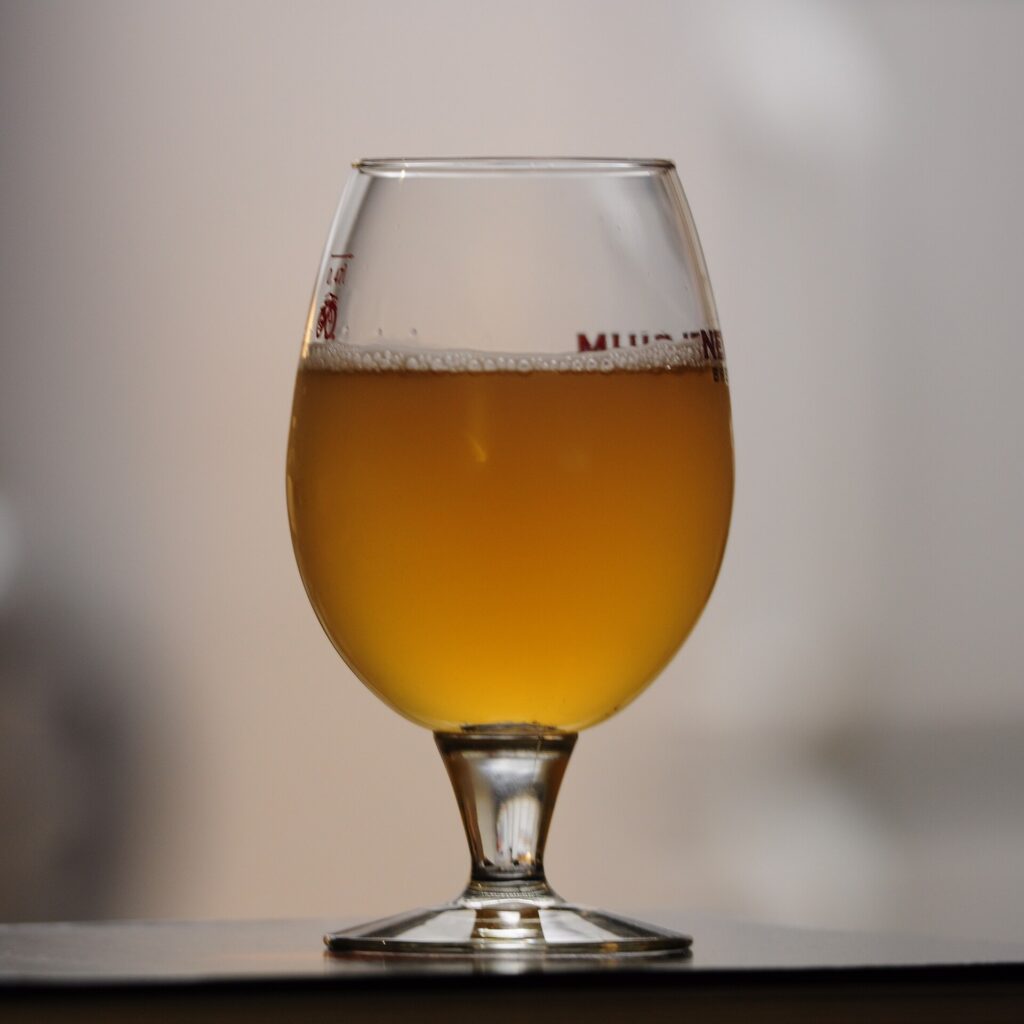
A strong, pale German lager combining the high alcohol and full body of a traditional Bock with the clean, crisp character of a Helles lager. Helles Bock showcases malt complexity without the roasted character of darker Bocks, emphasizing bright, bread-like malt flavors and a dry finish.
Helles Bock emerged in Bavaria during the 19th century as brewers sought to apply lager fermentation and pale malting techniques to the traditional strong Bock style. The style is sometimes called Maibock, referring to its springtime brewing tradition. One significant historical development occurred in 1614 when Elias Pilcher, a Bavarian brewer, created what would become the template for the style—a pale, strong lager that balanced malt character with clean lager fermentation.
Helles Bock became popular in spring as a seasonal beer, representing the transition from winter to spring. The style was brewed specifically for late winter aging and spring consumption, making it a traditional fixture of the Bavarian calendar.
Helles Bock originated in Bavaria, particularly in Munich and surrounding regions. The style remains most closely associated with Bavaria and Germany, where it continues to be brewed as a seasonal spring offering by traditional breweries.
While the fundamental character of Helles Bock has remained consistent since its establishment in the 19th century, modern craft breweries have adopted the style with slight variations. The style remains popular in Bavaria and has gained international recognition through craft beer movements.
Pale gold to light copper color, typically clear. White to off-white head that is persistent. The appearance should suggest both strength and refinement.
Prominent malt aroma with bread-like, honey, or grain character. Slight caramel sweetness may be apparent. Minimal hop aroma—if present, should be restrained and supportive. The overall aroma should be inviting and malty, suggesting a strong but refined beer.
Strong malt character with clean, bread-like or grainy notes. Slight sweetness from substantial malt, balanced by moderate hop bitterness in the 23-35 IBU range. The finish is dry to slightly sweet, with malt flavors persisting. The key is that despite high alcohol and strength, the beer maintains clean, refined character without fruity esters or harsh phenols.
Strong malt character with bread-like and grain notes. Clean lager fermentation allowing malt to shine. Moderate hop bitterness providing balance without aggression. The beer should taste refined and elegant despite its strength.
Subtle caramel from specialty malts, minimal fruity esters or other complexity. The focus should be on clean malt character and refined lager fermentation.
Dry finish with lingering malt sweetness and clean character. The finish should be smooth and refined.
Serve in a standard beer glass or chalice at 50-55°F. Helles Bock works well as a seasonal spring beer or as a sophisticated after-dinner beverage.
Overall Impression: A relatively pale, strong, malty German lager beer with a nicely attenuated finish that enhances drinkability. The hop character is generally more apparent than in other bocks.
Aroma: Moderate to strong grainy-sweet malt aroma, often with a lightly toasted quality and low Maillard products. Moderately-low to no hop aroma, often with a spicy, herbal, or floral quality. Clean fermentation profile. Fruity esters should be low to none. Very light alcohol may be noticeable. May have a light DMS aroma.
Appearance: Deep gold to light amber in color. Bright to clear clarity. Large, creamy, persistent, white head.
Flavor: Moderately to moderately strong grainy-sweet malt flavor dominates with some toasty notes and/or Maillard products providing added interest. Little to no caramel flavors. May have a light DMS flavor. Moderate to no hop flavor (spicy, herbal, floral, peppery). Moderate hop bitterness (more so in the balance than in other bocks). Clean fermentation profile. Well-attenuated, not cloying, with a moderately-dry finish that may taste of both malt and hops.
Mouthfeel: Medium-bodied. Moderate to moderately-high carbonation. Smooth and clean with no harshness or astringency, despite the increased hop bitterness. A light alcohol warming may be present.
Comments: Also known as Mai Bock, but there is some dispute whether Helles ("pale") Bock and Mai ("May") Bock are synonymous. Most agree that they are identical, but some believe that Maibock is a "fest" type beer hitting the upper limits of hopping and color for the range. Any fruitiness is due to Munich and other specialty malts, not yeast-derived esters developed during fermentation. The hops compensate for the lower level of Maillard products.
History: A fairly recent development in comparison to the other members of the bock family. The serving of Maibock is specifically associated with springtime and the month of May.
Characteristic Ingredients: Base of Pils and/or Vienna malt with some Munich malt to add character (although much less than in a traditional bock). No non-malt adjuncts. Saazertype hops. Clean lager yeast. Decoction mash is typical, but boiling is less than in Dunkles Bock to restrain color development.
Style Comparison: Can be thought of as either a pale version of a Dunkles Bock, or a Munich Helles brewed to bock strength. While quite malty, this beer typically has less dark and rich malt flavors, and can be drier, hoppier, and more bitter than a Dunkles Bock. Has more of a rich malt character and more alcohol than a Festbier.
Vital Statistics: OG: 1.064 – 1.072 IBUs: 23 – 35 FG: 1.011 – 1.018 SRM: 6 – 11 ABV: 6.3 – 7.4%
Commercial Examples: Altenmunster Maibock, Ayinger Maibock, Capital Maibock, Blind Tiger Maibock, Einbecker Mai-Urbock, Hacker-Pschorr Hubertus Bock, Mahr's Bock
Pale malt base (German Pilsner malt or similar), constituting 85-95% of the grain bill. Small amounts of caramel malt (10-20 L) in the 5-15% range add subtle sweetness and body. The malt bill should be straightforward and clean, emphasizing pale malt character.
Moderate bittering with noble varieties such as Hallertau, Tettnang, or Spalt. Aroma additions should be restrained. Total IBUs typically 23-35. The hop character should be supportive of malt rather than assertive.
Bavarian or German lager yeast fermented cool for clean, refined character. The yeast should ferment efficiently and attenuate well to create a dry finish despite the high gravity.
Soft to moderately balanced water suitable for pale lagers. Avoid heavily sulfate-forward water that might create excessive bitterness.
Step mash or single infusion in the mid-range saccharification temperature (around 152-156°F) to balance fermentability with body. Some brewers use a step mash to extract additional body.
Ferment cool (around 50-55°F) with a Bavarian lager strain. Proper attenuation is important to achieve dry finish. Extended lagering (6-8 weeks or more) is beneficial for developing refined character.
At the pub: Pretzel with pub mustard Also at the pub: Smoked Trout Schnitzel Barbeque night: Smoked ribs with spicy dry rub
Medium aged cheddar, Gruyere, Emmental
Veal, pork, light meats, mild preparations
Roasted vegetables, light preparations, bread-based dishes
Not typical with sweets; best as a post-meal beverage
Vermont Common Cognac
New: Vulfpeck Old: Brahms, Symphony No. 3
Kulmbacher Eku 28, Ayinger Maibock, Paulaner Maibock, Victory Golden Monkey (American interpretation)