
Commercial Examples
Kulmbacher Eisbock, Greif Brau Eisbock, Pyramid Eisbock (modern American interpretation)
Beer Cocktail Recipe
We don't suggest making a cocktail with this style…sip it over a long night and enjoy.

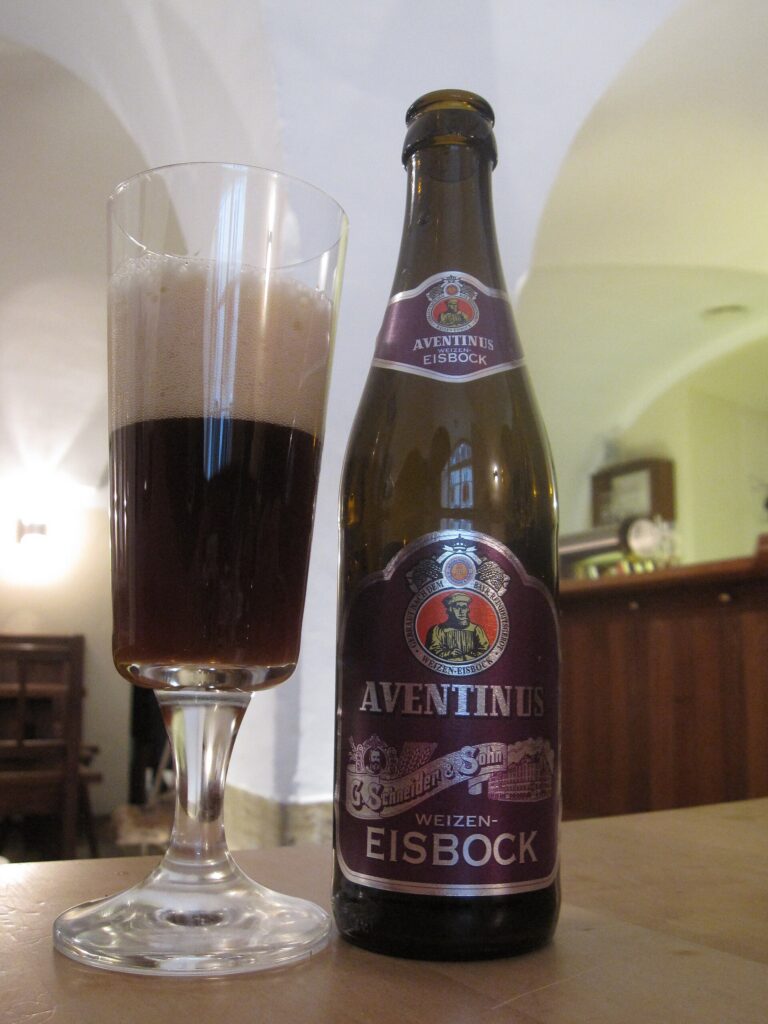
Eisbock emerged as a specialty beer from the Kulmbacher Brauerei in Kulmbach, Bavaria, around 1890. The style was created through a traditional ice concentration method—partially freezing a batch of Doppelbock and removing the ice crystals, which concentrates the remaining liquid's sugars, alcohol, and flavors. This process, known as fractional crystallization, was practiced historically in cider production but found its most famous application in beer with Eisbock. The style represents a natural evolution of Bavarian strong lager brewing, pushing the boundaries of what fermentation and concentration could achieve.
Eisbock remained largely a local specialty until modern times, with Kulmbacher continuing to produce it as their flagship strong lager. The style embodies the Bavarian brewing tradition of creating beers for special occasions and winter consumption, where the high alcohol content served both preservative and warming functions.
Eisbock originated in Kulmbach, Bavaria, in southern Germany. Kulmbach is one of Germany's major brewing centers historically, known for its strong lagers and innovative brewing techniques. The region's cool climate and water chemistry were ideal for lager production.
Today, Eisbock remains a relatively rare specialty even in Germany, with few breweries producing it. The style has seen some experimentation with different base beers and aging techniques, but the traditional method—concentrating Doppelbock through partial freezing—remains the gold standard.
Dark brown to black, with a thick, creamy tan head that persists well. Full-bodied appearance with visible body and gravity indicated by rapid legs on the glass.
Rich, intense malt aroma with deep notes of caramel, toffee, and dark fruit. Complex alcohol warmth, reminiscent of brandy or whiskey. Some versions show vinous character with hints of plum or raisin.
Powerful malt character featuring deep caramel, toffee, chocolate, and dark fruit flavors. The alcohol is integrated but noticeable, adding warmth and complexity. Very little hop bitterness despite the IBU range—the intensity of malt and alcohol dominates. Some vinous, port-like characteristics may emerge. Smooth finish with lingering warmth.
Intensely malty with deep caramel, toffee, and chocolate notes. The concentrated malt character from the freezing process creates layers of sweetness balanced by just enough bitterness and alcohol warmth.
Dark fruit character (plums, raisins, currants), subtle vinous notes, hints of brandy or whiskey from high alcohol content, warming spice notes from lager yeast.
Long, warm, complex finish with lingering malt sweetness and alcohol warmth. The finish is smooth despite the high alcohol, indicating proper integration and maturation.
Serve at 50-55°F in a snifter or goblet. Small pours (4-6 oz) are appropriate given the strength. Age improves most examples significantly.
Overall Impression: A strong, full-bodied, rich, and malty dark German lager often with a viscous quality and strong flavors. Even though flavors are concentrated, the alcohol should be smooth and warming, not burning.
Aroma: Dominated by a balance of rich, intense malt and a definite alcohol presence. No hop aroma. May have significant malt-derived dark fruit esters. Alcohol aromas should not be harsh or solventy.
Appearance: Deep copper to dark brown in color, often with attractive ruby highlights. Lagering should provide good clarity. Head retention may be moderate to poor. Off-white to deep ivory colored head. Pronounced legs are often evident.
Flavor: Rich, sweet malt balanced by a significant alcohol presence. The malt can have Maillard products, toasty qualities, some caramel, and occasionally a slight chocolate flavor. No hop flavor. Hop bitterness just offsets the malt sweetness enough to avoid a cloying character. May have significant malt-derived dark fruit esters. The alcohol should be smooth, not harsh or hot, and should help the hop bitterness balance the strong malt presence. The finish should be of malt and alcohol, and can have a certain dryness from the alcohol. It should not by sticky, syrupy or cloyingly sweet. Clean lager character.
Mouthfeel: Full to very full-bodied. Low carbonation. Significant alcohol warmth without sharp hotness. Very smooth without harsh edges from alcohol, bitterness, fusels, or other concentrated flavors.
Comments: Extended lagering is often needed post-freezing to smooth the alcohol and enhance the malt and alcohol balance. Pronounced "ICE-bock."
History: A traditional Kulmbach specialty brewed by freezing a doppelbock and removing the ice to concentrate the flavor and alcohol content (as well as any defects).
Characteristic Ingredients: Same as doppelbock. Commercial eisbocks are generally concentrated anywhere from 7% to 33% (by volume).
Style Comparison: Eisbocks are not simply stronger doppelbocks; the name refers to the process of freezing and concentrating the beer and is not a statement on alcohol; some doppelbocks are stronger than Eisbocks. Not as thick, rich, or sweet as a Wheatwine.
Vital Statistics: OG: 1.078 – 1.120 IBUs: 25 – 35 FG: 1.020 – 1.035 SRM: 18 – 30 ABV: 9.0 – 14.0%
Commercial Examples: Kulmbacher Eisbock
Two-row Pilsner malt as base, with significant portions of Munich malt, caramel malts (120-150L), and small amounts of roasted or chocolate malt for color and depth. Some brewers use bread malt or Vienna malt for complexity.
Traditional German noble varieties (Hallertau, Spalt, or Tettnang) used sparingly for balance only. Bittering hops selected for noble character rather than high alpha acids.
Bavarian lager yeast (Saccharomyces pastorianus) fermented at cool temperatures (50-55°F) for clean fermentation character.
Soft to moderately sulfate Bavarian water typical of Kulmbach region.
Multi-step or decoction mashing in upper saccharification temperature range for full malt extraction and body.
Cool fermentation followed by extended lagering (4-6 months minimum, often longer). The beer improves significantly with age as flavors integrate and mellow.
At the pub: Scotch Egg Cheese: Bayley Hazen Blue Dessert: Maple Cream Pie
Aged Swiss, sharp cheddar, smoked gouda
Rich braised meats (beef stew, venison), smoked fish, aged cured meats, duck confit
Dark chocolate desserts, chocolate truffles, caramel-based desserts, holiday spiced cakes
Pairs well after a meal as a digestif or dessert beer; warming quality makes it ideal for cold weather evenings.
Vermont Common
New: Tom Waits, Rain Dogs Old: Bach (of course), Partita in D Minor for Solo Violin, BWV 1004
Kulmbacher Eisbock, Greif Brau Eisbock, Pyramid Eisbock (modern American interpretation)
We don't suggest making a cocktail with this style…sip it over a long night and enjoy.