.jpg)
Commercial Examples
Coopers Best Extra Stout, Guinness Foreign Extra Stout, The Kernel Export Stout, Ridgeway Foreign Export Stout, Southwark Old Stout

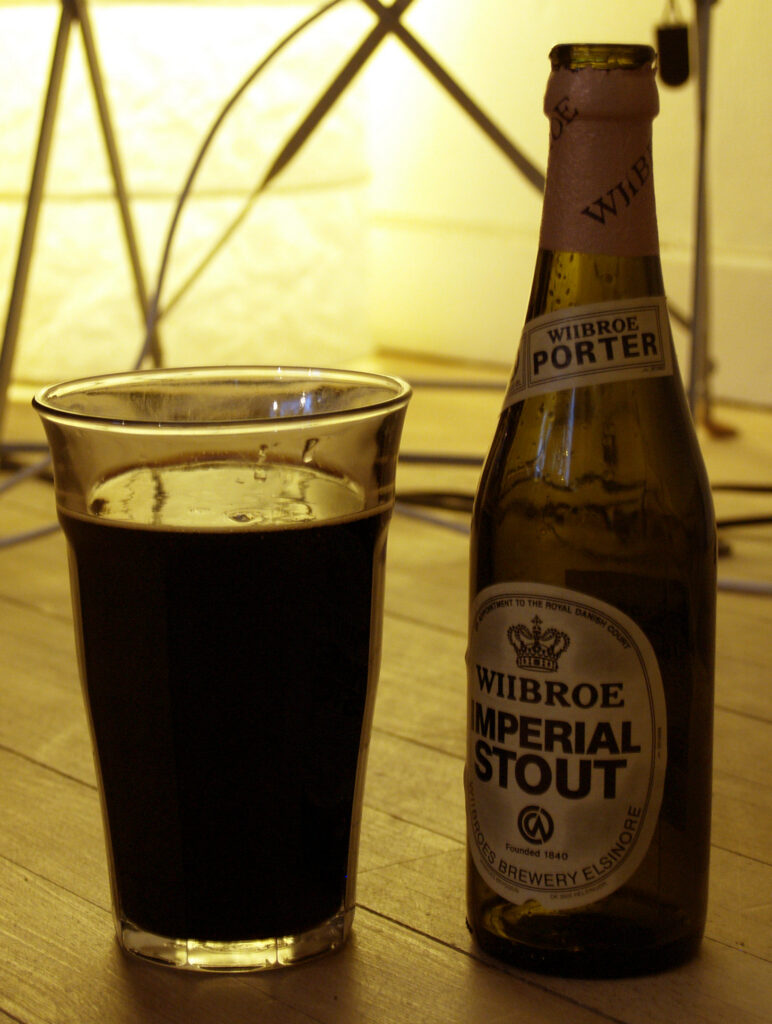
A very dark, moderately strong, fairly dry, stout with prominent roast flavors.
As we mentioned in our post on English IPA, it's a common misconception that the only reason English brewers created the IPA was to give casks of beer a better chance at making the months-long journey to India by elevating the alcohol and hop content. One of the reasons we're certain that this wasn't entirely the case is that we've got contemporaneous Indian newspapers with advertisements for a wide variety of beer styles, not just IPA. If they were brewed for the sole purpose of survival, why would brewers have also shipped casks of beer that would go bad before it reached its destination?
Ironically, the Foreign Extra Stout looks more like the story we all know about IPA. According to Guinness's own telling, their West Indies Porter–which they call "the mother of what we now know as foreign extra stout"–was first brewed in 1801 with more hops to survive a long sea journey in tropical climate. Given that the East India Company started trading what we now call IPA by the 1790s at the latest, it might be that porter brewers–Guinness among them–thought to hop their beers more heavily for the sea voyage. Given that demand in the Indian market drove IPA recipes–customers wrote letters giving feedback to English brewers–it's also likely that porter brewers recognized that hops were a hit in India, and made intelligent adjustments to market their products. Sometimes convenience–in this case making a beer that's more shelf-stable–and marketability do intersect, and the answer is likely somewhere in the gray area between those two.
Whatever the origin of this style, modern brewers in the UK recognize the differences in global beer tastes…specifically, that foreign drinkers often like bigger, bolder versions of the styles they brew. Guinness–one of the first to brew this style–is best known for their traditional Irish Dry Stout, but Foreign Extra Stout makes up around 40% of their annual sales. Because of its more significant roast and hop character, you might think of this style as the stout made in the UK that's most similar to the American version. Depending on the brewer, they can be difficult to tell apart, but American versions will usually have a cleaner yeast character, fuller body, and, of course, piney and citrusy hops.
Stronger stouts brewed for the export market today, but with a history stretching back to the 18th and 19th centuries when they were more heavily-hopped versions of stronger export stouts. Guinness Foreign Extra Stout (originally West India Porter, later Foreign Extra Double Stout) was first brewed in 1801 according to Guinness with "extra hops to give it a distinctive taste and a longer shelf life in hot weather, this is brewed today in Africa, Asia and the Caribbean. It currently makes up 40% of all the Guinness brewed around the world."
Black
Coffee, chocolate, and roast
Usually dry, but some versions are slightly malty-sweet
Medium-light to medium body, with medium carbonation
Overall Impression: A very dark, moderately strong, fairly dry, stout with prominent roast flavors.
Aroma: Moderate to high roasted grain aromas, often with coffee, chocolate and/or lightly burnt notes. Low to medium fruitiness. May have a sweet aroma, or molasses, licorice, dried fruit, and/or vinous aromatics. Stronger versions can have a subtle, clean aroma of alcohol. Hop aroma moderately low to none, can be earthy, herbal or floral. Diacetyl low to none.
Appearance: Very deep brown to black in color. Clarity usually obscured by deep color (if not opaque, should be clear). Large tan to brown head with good retention.
Flavor: Moderate to high roasted grain and malt flavor with a coffee, chocolate, or lightly burnt grain character, although without a sharp bite. Moderately dry. Low to medium esters. Medium to high bitterness. Moderate to no hop flavor, can be earthy, herbal, or floral. Diacetyl medium-low to none.
Mouthfeel: Medium-full to full body, often with a smooth, sometimes creamy character. May give a warming (but never hot) impression from alcohol presence. Moderate to moderately-high carbonation.
Comments: Also known as Foreign Stout, Export Stout, Foreign Export Stout. Historic versions (before WWI, at least) had the same OG as domestic Extra Stouts, but had a higher ABV because it had a long secondary with Brettanomyces chewing away at it. The difference between domestic and foreign versions were the hopping and length of maturation.
History: Stronger stouts brewed for the export market today, but with a history stretching back to the 18th and 19th centuries when they were more heavily-hopped versions of stronger export stouts. Guinness Foreign Extra Stout (originally West India Porter, later Foreign Extra Double Stout) was first brewed in 1801 according to Guinness with "extra hops to give it a distinctive taste and a longer shelf life in hot weather, this is brewed today in Africa, Asia and the Caribbean. It currently makes up 40% of all the Guinness brewed around the world."
Characteristic Ingredients: Pale and dark roasted malts and grains, historically also could have used brown and amber malts. Hops mostly for bitterness, typically English varieties. May use adjuncts and sugar to boost gravity.
Style Comparison: Similar in balance to an Irish Extra Stout, but with more alcohol. Not as big or intense as a Russian Imperial Stout. Lacking the strong bitterness and high late hops of American Stouts. Similar gravity as Tropical Stout, but with a drier finish, higher bitterness, and less esters.
Vital Statistics: OG: 1.056 – 1.075 IBUs: 50 – 70 FG: 1.010 – 1.018 SRM: 30 – 40 ABV: 6.3 – 8.0%
Commercial Examples: Coopers Best Extra Stout, Guinness Foreign Extra Stout, The Kernel Export Stout, Ridgeway Foreign Export Stout, Southwark Old Stout
Export-Style Stout Color: Black Clarity: Opaque Perceived Malt Aroma & Flavor: Coffee-like roasted barley and roasted malt aromas are prominent. Initial malt and light caramel flavors give way to a distinctive dry-roasted bitterness in the finish. Perceived Hop Aroma & Flavor: Should not be present Perceived Bitterness: May be analytically high, but the perception is lessened by malt sweetness. Fermentation Characteristics: Fruity esters are low. Diacetyl is usually absent in these beers but may be present at very low levels. Slight acidity is acceptable. Body: Medium to full Additional notes: Head retention should be persistent Original Gravity: 1.052-1.072 (12.9-17.5 Plato) Final Gravity: 1.008-1.020 (2.1-5.1 Plato) Alcohol by Weight (Volume): 4.5%-6.4% (5.6%-8.0%) Bitterness (IBU): 30-60 Color SRM (EBC): 40+ (80+ EBC)
Similar in balance to an Irish Extra Stout, but with more alcohol. Not as big or intense as a Russian Imperial Stout. Lacking the strong bitterness and high late hops of American Stouts. Similar gravity as Tropical Stout, but with a drier finish, higher bitterness, and less esters.
Two-row brewers malt Light use of caramel malts Roasted barley English hops Expressive English ale yeast
A single infusion mash is traditional, and hopping is traditionally only one addition for bitterness early in the boil. Use roasted barley for a significant portion of the roasted grain percentage, which can go above 10% for this style. The roasted barley gives this beer its characteristic dryness and roasted coffee character. Plan to mash in the low-middle range for higher alcohol but not too light of a body (151-152F). Fermented with English yeast for a pomme fruit fermentation profile.
At the Pub: Oyster night Takeout: Mexican dishes with mole sauce Barbecue night: Low and slow smoked ribs
Black Flannel Vermont Common
New: Mumford and Sons Old: Erik Satie
Coopers Best Extra Stout, Guinness Foreign Extra Stout, The Kernel Export Stout, Ridgeway Foreign Export Stout, Southwark Old Stout