
Commercial Examples
Ayinger Ur-Weisse, Ettaler Weissbier Dunkel, Franziskaner Hefe-Weisse Dunkel, HackerPschorr Weisse Dark, Tucher Dunkles Hefe Weizen, Weihenstephaner Hefeweissbier Dunkel

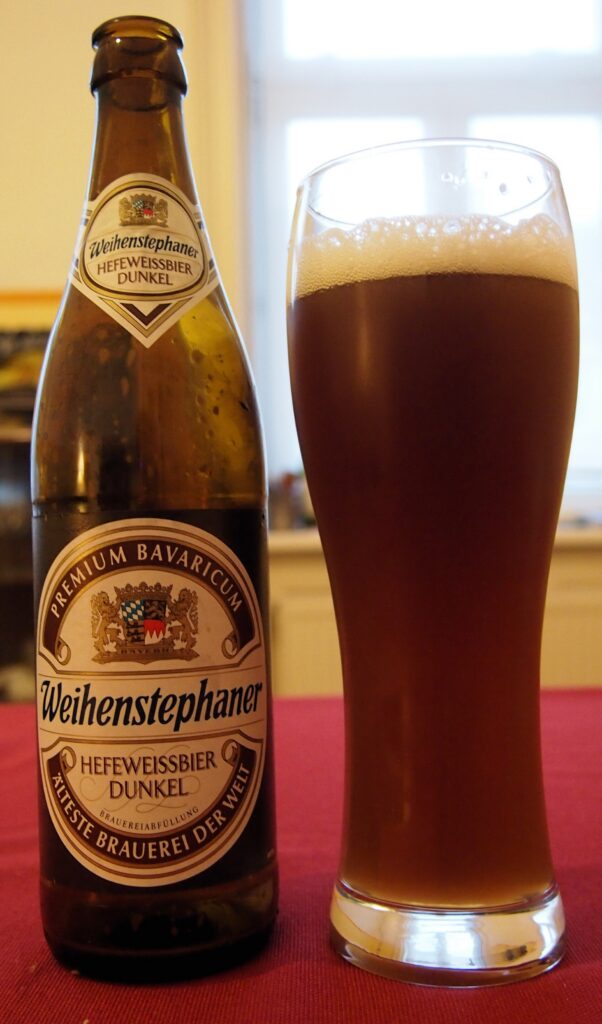
A moderately dark German wheat beer with a distinctive banana-and-clove yeast character, supported by a toasted bread or caramel malt flavor. Highly carbonated and refreshing, with a creamy, fluffy texture and light finish that encourages drinking.
Here we are again, transported to the royal court of Duke Maximillian I in seventeenth-century Bavaria for the beginnings of what we'll eventually know as Dunkles Weissbier. If you haven't seen our posts on Hefeweizen, Helles Bock, Dunkles Bock, and Munich Dunkel, you may want to glance through those posts for more info on that period. For now, we'll recap with a brief history: shortly after Duke Maximillian I took over for his father Duke Wilhelm V, he inherited the right to brew beer with wheat from the family of the now-dead Duke Degenberg. When Maximillian started producing wheat beer in a new brewery in Munich for his court, that made the style explode in popularity…if the royals were drinking it, it was a sign of social and political class.
At this point, we know a few things about the style we now call Hefeweizen: it was called weissbier, which translates not as "wheat beer," but as "white beer." These beers, like their modern descendents, would have included 50% or more of the much lighter-colored wheat malt, making them significantly lighter than their lagered counterparts. It's a relative certainty that though these beers were labeled "white" by the locals, they were anything but the straw-pale versions we know and love today. Given that malts during this period were produced using wood smoke as the drying agent, nearly every batch of barley malt would have had a dark enough hue to easily turn these brews into the amber range (see our post on Munich Dunkel for more on malting history).
Though this is a little speculative, there is evidence beyond malting history to guide us toward that conclusion. For most of the 1800s, it made economical sense to only brew lagers during the cold months. Even still, they took over the world as the drink of choice (see our posts on Pilsner and Czech Premium Pale Lager for more). It wasn't until 1871 that Carl von Linde's first commercial refrigeration machine went into use, and it did so in the Spaten lager brewery in Munich. It's a bit ironic, then, that with both the taste of drinkers and technology moving toward lager production, Georg Schneider I bought the rights to brew wheat beer from the Wittelsbach family in 1872, becoming the very first "commoner" to own that right.
We've got a good window into the first brews Schneider produced, since their TAP7, previously called "Mein Original" is brewed using the same recipe as it was in the 1870s. When you order one of these, you'll be poured a light amber (almost burnt orange) beer, not the straw-pale hefeweizen we're familiar with today. This suggests that even in the 1800s, weissbier was brewed to darker color than we're accustomed today.
Dunkels Weissbier existed through this period too, and though they're still much less popular than pale hefeweizen, they're an interesting and unique brew that pair with a range of food as well as any beer you'll find. The spicy yeast character compliments curries and thai food, the caramelly maltiness cools peppery heat, and the high carbonation can refresh your palate from rich fatty sauces. Though it won't be a mainstay at the pub, we love tradition and lesser-known styles at Black Flannel, so you'll likely find one of these on our tap list from time to time.
Bavaria has a wheat beer brewing traditional hundreds of years old, but the brewing right was reserved for Bavarian royalty until the late 1700s. Old-fashioned Bavarian wheat beer was often dark, as were most beer of the day. Pale weissbier started to become popular in the 1960s, but traditional dark wheat beer remained somewhat of an old person's drink. Characteristic Ingredients: By German brewing tradition, at least 50% of the grist must be malted wheat, although some versions use up to 70%; the remainder is usually Munich, Vienna, or dark or caramel wheat malts, or Pilsner malt with color malt. A decoction mash is traditional, but infrequently used today. Weizen ale yeasts produce the typical spicy and fruity character, although extreme fermentation temperatures can affect the balance and produce off-flavors.
Amber
Bready, wheaty malt sweetness
Caramel and light toast
Banana and clove
Very little perceived bitterness
Malt is balanced by esters and phenols
Overall Impression: A moderately dark German wheat beer with a distinctive banana-and-clove yeast character, supported by a toasted bread or caramel malt flavor. Highly carbonated and refreshing, with a creamy, fluffy texture and light finish that encourages drinking.
Aroma: Moderate phenols (usually clove) and fruity esters (usually banana). The balance and intensity of the phenol and ester components can vary but the best examples are reasonably balanced. Optionally, a low to moderate vanilla character and/or faint bubblegum notes may be present, but should not dominate. Hop aroma ranges from low to none, and may be lightly floral, spicy, or herbal. A light to moderate wheat aroma (which might be perceived as bready, doughy or grainy) may be present and is often accompanied by a caramel, bread crust, or richer malt aroma. The malt aroma may moderate the phenols and esters somewhat.
Appearance: Light copper to mahogany brown in color. A very thick, moussy, long-lasting off-white head is characteristic. The high protein content of wheat impairs clarity in this traditionally unfiltered style, although the level of haze is somewhat variable. Suspended yeast sediment can contribute to cloudiness.
Flavor: Low to moderately strong banana and clove flavor. The balance and intensity of the phenol and ester components can vary but the best examples are reasonably balanced and fairly prominent. Optionally, a very light to moderate vanilla character and/or faint bubblegum notes can accentuate the banana flavor, sweetness and roundness; neither should be dominant if present. The soft, somewhat bready, doughy, or grainy flavor of wheat is complementary, as is a richer caramel, toast, or bread crust flavor. The malty richness can be low to medium-high, and supports the yeast character. A roasted malt character is inappropriate. A spicy, herbal, or floral hop flavor is very low to none, and hop bitterness is very low to low. Wellrounded, flavorful, often somewhat malty palate with a relatively dry finish.
Mouthfeel: Medium-light to medium-full body. The texture of wheat as well as yeast in suspension imparts the sensation of a fluffy, creamy fullness that may progress to a lighter finish, aided by moderate to high carbonation. Effervescent.
Comments: The presence of Munich and/or Vienna-type barley malts gives this style a deep, rich barley malt character not found in a weissbier. Often known as dunkelweizen, particularly in the United States.
History: Bavaria has a wheat beer brewing traditional hundreds of years old, but the brewing right was reserved for Bavarian royalty until the late 1700s. Old-fashioned Bavarian wheat beer was often dark, as were most beer of the day. Pale weissbier started to become popular in the 1960s, but traditional dark wheat beer remained somewhat of an old person's drink. Characteristic Ingredients: By German brewing tradition, at least 50% of the grist must be malted wheat, although some versions use up to 70%; the remainder is usually Munich, Vienna, or dark or caramel wheat malts, or Pilsner malt with color malt. A decoction mash is traditional, but infrequently used today. Weizen ale yeasts produce the typical spicy and fruity character, although extreme fermentation temperatures can affect the balance and produce off-flavors.
Style Comparison: Reflecting the best yeast and wheat character of a weissbier blended with the malty richness of a Munich dunkel. The banana and clove character is often less apparent than in a weissbier due to the increased maltiness.
Vital Statistics: OG: 1.044 – 1.056 IBUs: 10 – 18 FG: 1.010 – 1.014 SRM: 14 – 23 ABV: 4.3 – 5.6%
Commercial Examples: Ayinger Ur-Weisse, Ettaler Weissbier Dunkel, Franziskaner Hefe-Weisse Dunkel, HackerPschorr Weisse Dark, Tucher Dunkles Hefe Weizen, Weihenstephaner Hefeweissbier Dunkel
Reflecting the best yeast and wheat character of a weissbier blended with the malty richness of a Munich dunkel. The banana and clove character is often less apparent than in a weissbier due to the increased maltiness.
Two-row brewers malt
Flaked and/or malted wheat
Small addition of roasted wheat
May also use light additions of caramel and/or munich malts
Noble hops
Fruity, phenolic German weissbier yeast
Typically the grist includes 50% wheat, some with a little more and some a little less. Some brewers use a ferulic acid rest to drive the precursor to 4-vinyl-guaiacol, the clove-like phenol found in this beer. Otherwise, a single infusion mash is traditional, and hops are often added in just one bittering addition. Fermented with German weissbier yeast for characteristic profile.
This is one of the most pairable beers for food. Try it with almost anything and it'll likely work. Here are a few possibilities.
At the Pub: Welsh Rarebit
Also at the Pub: Rabbit hand pie
Takeout: Chicken Tikka Masala or Indian Butter Chicken
Wheated Bourbon
New: Cat Stevens, Tea for the Tillerman
Old: Bach, Orchestral Suite No. 1 in C Major
Ayinger Ur-Weisse, Ettaler Weissbier Dunkel, Franziskaner Hefe-Weisse Dunkel, HackerPschorr Weisse Dark, Tucher Dunkles Hefe Weizen, Weihenstephaner Hefeweissbier Dunkel