
Commercial Examples
Bass Ale, Highland Orkney Blast, Samuel Smith's Old Brewery Pale Ale, Shepherd Neame Bishop's Finger, Shepherd Neame Spitfire, West Berkshire Dr. Hexter's Healer, Whitbread Pale Ale, Young's Ram Rod

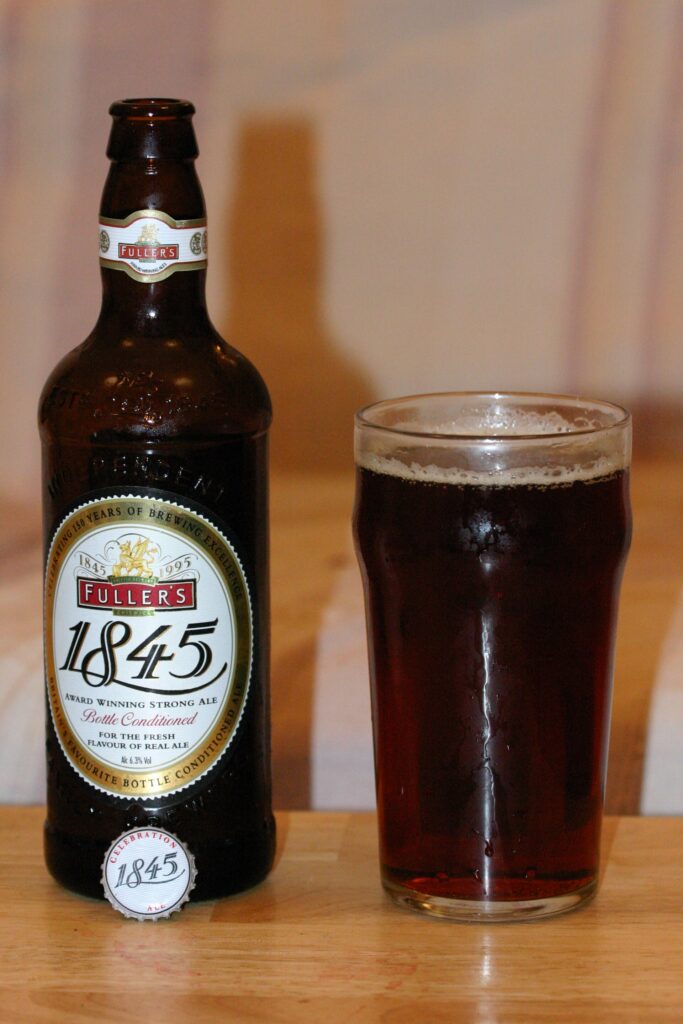
An average-strength to moderately strong British bitter ale. The balance may be fairly even between malt and hops to somewhat bitter. Drinkability is a critical component of the style. A rather broad style that allows for considerable interpretation by the brewer.
If there's one beer style from England that's made its way onto brewpub taplists (relatively) unchanged here in the states, it's the Strong Bitter. Of course there are styles that we've taken and changed to our liking (IPAs and Sweet Stouts chief among those), but the Strong Bitter has remained more or less similar to its English counterparts in its trek across the ocean, and with good reason. Of all the beer styles that are known for both flavor and drinkability, this one is near the top of the heap.
Strong Bitter emerged relatively recently on the world stage when Fuller's brewed the first version of their iconic ESB in 1969. As we discussed in our post on Ordinary Bitter, the two world wars ravaged British beer production earlier that century, necessitating (many times by law) the production of weaker beer. When Fuller's started pouring that first batch of the new, stronger bitter, it was called Winter Beer. This can often be a catch-all term for anything stronger than average that's meant to warm your soul during the colder winter months. You'll also see that term in some of our posts on Bavarian lagers, since many of the laws around the time of the reinheitsgebot mandated brewing seasons, which necessitated forethought on what beer would be best for different seasons. By 1971, Fuller's was calling this recipe their Extra Special Bitter, which is how you'll often see it marketed here in the states ("ESB" is a protected product name in the UK, but it's used elsewhere to designate this style).
There's a reason beyond flavor that these beers are extremely popular in American brewpubs: they're perfect for just about any food, but especially traditional pub fare. In his wonderful book on food and beer pairings, Garrett Oliver mentions fish (fried or otherwise), chicken, pork, thai, sandwiches, steak, strong cheeses, bangers and mash, and shepherd's pie as possible pairings (among others). Whether the beer was developed to match food tastes or the food was developed to match beer tastes (my money's on the latter), there's something really special about pub food and ESB. It's got enough character to hold up some fattier dishes–like fried fish and chips–but it's also light enough for a sandwich.
Like Ordinary and Best Bitters, these beers are best when they're served from a cask with the mouthfeel and flavors that come from it (think apple cider esters from low oxidation, but in a pleasant way). Like any good brewpub, we'll have one on from time to time, and we'll definitely host an event or two where this is served traditionally from a cask.
Strong bitters can be seen as a higher-gravity version of best bitters (although not necessarily "more premium" since best bitters are traditionally the brewer's finest product). British pale ales are generally considered a premium, export-strength pale, bitter beer that roughly approximates a strong bitter, although reformulated for bottling (including increasing carbonation levels). While modern British pale ale is considered a bottled bitter, historically the styles were different.
Deep gold to copper
Medium bready, biscuity malt Floral, earthy, herbal, and woody English hops
Balanced or leaning toward bitter Notes of biscuity sweetness on palate
Medium body, with low carbonation leading to a creamy mouthfeel
Overall Impression: An average-strength to moderately strong British bitter ale. The balance may be fairly even between malt and hops to somewhat bitter. Drinkability is a critical component of the style. A rather broad style that allows for considerable interpretation by the brewer.
Aroma: Hop aroma moderately-high to moderately-low, typically with a floral, earthy, resiny, and/or fruity character. Medium to medium-high malt aroma, optionally with a low to moderate caramel component. Medium-low to medium-high fruity esters. Generally no diacetyl, although very low levels are allowed.
Appearance: Light amber to deep copper color. Good to brilliant clarity. Low to moderate white to off-white head. A low head is acceptable when carbonation is also low.
Flavor: Medium to medium-high bitterness with supporting malt flavors evident. The malt profile is typically bready, biscuity, nutty, or lightly toasty, and optionally has a moderately low to moderate caramel or toffee flavor. Hop flavor moderate to moderately high, typically with a floral, earthy, resiny, and/or fruity character. Hop bitterness and flavor should be noticeable, but should not totally dominate malt flavors. Moderately-low to high fruity esters. Optionally may have low amounts of alcohol. Medium-dry to dry finish. Generally no diacetyl, although very low levels are allowed.
Mouthfeel: Medium-light to medium-full body. Low to moderate carbonation, although bottled versions will be higher. Stronger versions may have a slight alcohol warmth but this character should not be too high.
Comments: In England today, "ESB" is a Fuller's trademark, and no one thinks of it as a generic class of beer. It is a unique (but very well-known) beer that has a very strong, complex malt profile not found in other examples, often leading judges to overly penalize traditional English strong bitters. In America, ESB has been co-opted to describe a malty, bitter, reddish, standard-strength British-type ale, and is a popular craft beer style.
History: Strong bitters can be seen as a higher-gravity version of best bitters (although not necessarily "more premium" since best bitters are traditionally the brewer's finest product). British pale ales are generally considered a premium, export-strength pale, bitter beer that roughly approximates a strong bitter, although reformulated for bottling (including increasing carbonation levels). While modern British pale ale is considered a bottled bitter, historically the styles were different.
Characteristic Ingredients: Pale ale, amber, and/or crystal malts, may use a touch of black malt for color adjustment. May use sugar adjuncts, corn or wheat. English finishing hops are most traditional, but any hops are fair game; if American hops are used, a light touch is required. Characterful British yeast. Burton versions use medium to high sulfate water, which can increase the perception of dryness and add a minerally or sulfury aroma and flavor.
Style Comparison: More evident malt and hop flavors than in a special or best bitter, as well as more alcohol. Stronger versions may overlap somewhat with British strong ales, although strong bitters will tend to be paler and more bitter. More malt flavor (particularly caramel) and esters than an American Pale Ale, with different finishing hop character.
Vital Statistics: OG: 1.048 – 1.060 IBUs: 30 – 50 FG: 1.010 – 1.016 SRM: 8 – 18 ABV: 4.6 – 6.2%
Commercial Examples: Bass Ale, Highland Orkney Blast, Samuel Smith's Old Brewery Pale Ale, Shepherd Neame Bishop's Finger, Shepherd Neame Spitfire, West Berkshire Dr. Hexter's Healer, Whitbread Pale Ale, Young's Ram Rod
Extra Special Bitter Color: Amber to deep copper Clarity: Chill haze is acceptable at low temperatures Perceived Malt Aroma & Flavor: Medium to medium-high Perceived Hop Aroma & Flavor: Medium to medium-high Perceived Bitterness: Medium to medium-high Fermentation Characteristics: Low carbonation traditionally characterizes draft-cask versions, but in bottled versions, a slight increase in carbon dioxide content is acceptable. The overall impression is refreshing and thirst quenching. Fruity esters are acceptable. Diacetyl is usually absent in these beers but may be present at low levels. Body: Medium to full Original Gravity: 1.046-1.060 (11.4-14.7 Plato) Final Gravity: 1.010-1.016 (2.6-4.1 Plato) Alcohol by Weight (Volume): 3.8%-4.6% (4.8%-5.8%) Bitterness (IBU): 30-45 Color SRM (EBC): 8-17 (16-34 EBC)
More evident malt and hop flavors than in a special or best bitter, as well as more alcohol. Stronger versions may overlap somewhat with British strong ales, although strong bitters will tend to be paler and more bitter. More malt flavor (particularly caramel) and esters than an American Pale Ale, with different finishing hop character.
British Pale Ale malt Caramel malts Flaked Maize English hops Expressive English ale yeast
A single infusion mash is traditional. Fuller's recipe uses flaked maize and a fairly complex hopping schedule including Challenger, Goldings, Northdown, and Target varieties. Fermented with English yeast for a pomme fruit fermentation profile.
At the Pub: Smash burger and fries Takeout: Fish and chips Casual date: Thai
White Beet Spirit
New: The Beatles, Sgt. Pepper's Lonely Hearts Club Band Old: Vaughan Williams, Symphony No. 5
Bass Ale, Highland Orkney Blast, Samuel Smith's Old Brewery Pale Ale, Shepherd Neame Bishop's Finger, Shepherd Neame Spitfire, West Berkshire Dr. Hexter's Healer, Whitbread Pale Ale, Young's Ram Rod