
Commercial Examples
Fuller's 1845, Harvey's Elizabetian Ale, J.W. Lees Manchester Star, Samuel Smith's Winter Welcome, Young's Winter Warmer, Fuller's London Porter (stronger versions), various modern craft brewery strong ales

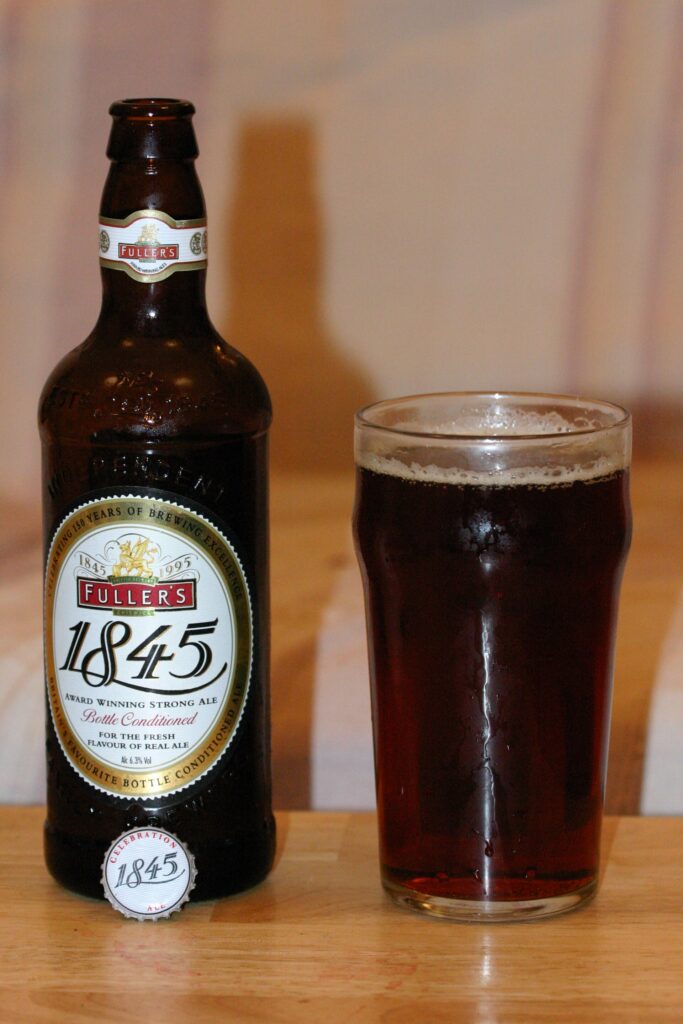
A designation used to describe a range of typically malty beers at higher-than-average ABV in the UK. The most famous examples in the states are "Winter Warmers," which are amber to brown, malty, often spiced beers for the holiday season.
British Strong Ale is primarily a modern category reflecting a grouping of unrelated styles rather than a single historical style. The heritage varies since beers of this strength category would not have been abnormal in past centuries. Some examples are historical recreations drawing from older brewing traditions, while others are entirely modern creations brewed for special occasions or as creative seasonal offerings. During the early twentieth century, most British beer was standard strength (5-6% ABV), but wartime restrictions and temperance movements pushed brewers toward lower gravity beers that persisted into modern times.
British Strong Ales originate throughout the British Isles, with examples from England, Scotland, Wales, and Ireland. Famous examples include Fuller's 1845, Harvey's Elizabethan Ale, J.W. Lees Manchester Star (based on pre-war recipes), Samuel Smith's Winter Welcome, and Young's Winter Warmer. Each region and brewery brings its own character to the strong ale category.
British Strong Ale has evolved primarily through the development of modern seasonal brewing practices, particularly "Winter Warmers" and other special-occasion beers. CAMRA's advocacy for traditional British ales in the 1970s renewed interest in fuller-bodied, more complex beers. Modern craft brewers throughout the British Isles continue to create strong ales, pushing the boundaries of the category while maintaining connection to brewing traditions.
Deep gold to dark reddish-brown color, though many examples are quite dark. Generally clear, although darker versions may be almost opaque. Moderate to low cream- to light tan-colored head with average retention.
Malty-sweet with fruity esters, often with a complex blend of dried-fruit, caramel, nuts, toffee, and/or specialty malt aromas. Some alcohol notes are acceptable but should not be hot or solventy. Hop aromas can vary widely with earthy, resiny, fruity, and/or floral notes. The balance varies widely, with most examples showing a blend of malt, fruit, hops, and alcohol.
Medium to high malt character often rich with nutty, toffee, or caramel flavors. Light chocolate notes sometimes found in darker beers. Balance often malty, though well-hopped versions with moderate to high bitterness exist. Moderate fruity esters common, often with dark fruit or dried fruit character. The finish may vary from medium dry to somewhat sweet. Alcoholic strength evident without being overwhelming.
Medium to full, chewy body. Alcohol warmth often evident and always welcome. Low to moderate carbonation providing smooth texture. Warming quality throughout the palate.
Rich malty sweetness with toffee, caramel, and nut character dominating. Fruity esters from English yeast contribute dried fruit, plum, and prune notes. Warming alcohol presence appropriate to the higher ABV.
Light chocolate or cocoa notes in darker versions. Moderate hop bitterness and flavor providing balance. Subtle spice notes in some examples, particularly Winter Warmers. Possible honey or candy notes from adjuncts.
Lingering sweetness and warmth. Moderate bitterness providing balance. Complex fruity and malty notes fading gradually. Pleasant alcohol warmth throughout and in the finish. Long finish appropriate to the strength.
Serve in a snifter glass at 50-55°F. Excellent with rich meat dishes, hearty stews, and aged cheeses. The warming alcohol and complex flavors make this a perfect evening contemplation beer. Allow time for the beer to warm slightly to fully appreciate the aromatic complexity.
Overall Impression: An ale of respectable alcoholic strength, traditionally bottled-conditioned and cellared. Can have a wide range of interpretations, but most will have varying degrees of malty richness, late hops and bitterness, fruity esters, and alcohol warmth. Judges should allow for a significant range in character, as long as the beer is within the alcohol strength range and has an interesting 'British' character, it likely fits the style. The malt and adjunct flavors and intensity can vary widely, but any combination should result in an agreeable palate experience.
Aroma: Malty-sweet with fruity esters, often with a complex blend of dried-fruit, caramel, nuts, toffee, and/or other specialty malt aromas. Some alcohol notes are acceptable, but shouldn't be hot or solventy. Hop aromas can vary widely, but typically have earthy, resiny, fruity, and/or floral notes. The balance can vary widely, but most examples will have a blend of malt, fruit, hops, and alcohol in varying intensities.
Appearance: Deep gold to dark reddish-brown color (many are fairly dark). Generally clear, although darker versions may be almost opaque. Moderate to low cream- to light tan-colored head; average retention.
Flavor: Medium to high malt character often rich with nutty, toffee, or caramel flavors. Light chocolate notes are sometimes found in darker beers. May have interesting flavor complexity from brewing sugars. Balance is often malty, but may be well hopped, which affects the impression of maltiness. Moderate fruity esters are common, often with a dark fruit or dried fruit character. The finish may vary from medium dry to somewhat sweet. Alcoholic strength should be evident, though not overwhelming. Diacetyl low to none, and is generally not desirable.
Mouthfeel: Medium to full, chewy body. Alcohol warmth is often evident and always welcome. Low to moderate carbonation. Smooth texture.
Comments: As an entry category more than a style, the strength and character of examples can vary widely. Fits in the style space between normal gravity beers (strong bitters, brown ales, English porters) and barleywines. Can include pale malty/hoppy beers, English winter warmers, strong dark milds, smaller Burton ales, and other unique beers in the general gravity range that don't fit other categories. Traditionally a bottle-conditioned product suitable for cellaring.
History: The heritage varies since this category generally reflects a grouping of unrelated minor styles with limited production. Some are historical recreations while others are modern. Some directly descend from older styles such as Burton ales, while others maintain a historical connection with older beers. As a grouping, the notion is relatively modern since beers of this strength category would not have been abnormal in past centuries. Do not use this category grouping to infer historical relationships between examples; this is almost a modern British specialty category where the 'special' attribute is alcohol level.
Characteristic Ingredients: Grists vary, often based on pale malt with caramel and specialty malts. Some darker examples suggest that dark malts (e.g., chocolate, black malt) may be appropriate, though sparingly so as to avoid an overly roasted character. Sugary adjuncts are common, as are starchy adjuncts (maize, flaked barley, wheat). Finishing hops are traditionally English.
Style Comparison: Significant overlap in gravity with old ales, but not having a stale or aged character. A wide range of interpretations is possible. Should not be as rich or strong as an English Barleywine. Stronger than the stronger everyday beers (strong bitters, brown ales, porters). More specialty malt and/or sugar character than American Strong Ales.
Vital Statistics: OG: 1.055 – 1.080 IBUs: 30 – 60 FG: 1.015 – 1.022 SRM: 8 – 22 ABV: 5.5 – 8.0%
Commercial Examples: Fuller's 1845, Harvey's Elizabethan Ale, J.W. Lees Manchester Star, Samuel Smith's Winter Welcome, Young's Winter Warmer
Strong Ale
Color: Amber to dark brown
Clarity: Chill haze is acceptable at low temperatures
Perceived Malt Aroma & Flavor: Medium to high malt and caramel sweetness. Very low levels of roast malt may be present.
Perceived Hop Aroma & Flavor: Not present to very low
Perceived Bitterness: Present but minimal, and balanced with malt flavors.
Fermentation Characteristics: Rich, often sweet and complex fruity ester attributes can contribute to the profile of Strong Ales. Alcohol types can be varied and complex. Diacetyl is usually absent in these beers but may be present at very low levels.
Body: Medium to full
Additional notes: When using these guidelines as the basis for evaluating entries at competitions, competition organizers may choose to split this category into subcategories which reflect strong and very strong versions.
Original Gravity (Plato) 1.060-1.125 (14.7-29 Plato) – Apparent Extract/Final Gravity (Plato) 1.014-1.040 (3.6-10 Plato) – Alcohol by Weight (Volume) 5.5%-8.9% (7.0%-11.3%) – Bitterness (IBU) 30-65 – Color SRM (EBC) 8-21 (16-42 EBC)
Pale malt as the base, with caramel and specialty malts adding color and character. Some darker examples may use small amounts of dark malts (chocolate, black malt) sparingly to avoid excessive roast. Sugary adjuncts (candi sugar, honey) are common in many examples.
Expressive English ale yeast contributing fruity esters and complexity. Ferment at moderate temperatures (around 65-68°F) to encourage ester development appropriate to the style.
Moderate to fairly hard water typical of British brewing regions. No specific mineral targeting required, though traditional Burton or London water profiles work well.
Single infusion mash at moderate temperatures (around 150-152°F) to create a fermentable wort with good body and residual sweetness. Decoction mashing can be used for traditional versions.
Moderate to fairly high bittering additions (30-60 IBUs depending on desired balance). Finishing hops and late additions contribute complexity. English hop varieties typical but not required.
Ferment with expressive English yeast at moderate temperatures to encourage fruity ester development. Maintain adequate temperature control to manage fermentation rate and ester profile.
Traditionally bottle-conditioned and suitable for cellaring. Allow several weeks conditioning to allow flavors to mellow and develop. Many examples improve with 1-5 years of aging in proper conditions.
At the Pub: Scotch Egg
Takeout: Fish and chips
Casual date: Thai
Aged cheddar, washed-rind cheeses, blues, strong English cheeses
Scotch eggs, beef stew, roasted meats, game, rich seafood preparations
Root vegetables, mushroom dishes, rich sauces
Holiday desserts, spiced cakes, puddings, chocolate, rich fare
White Beet Spirit
New: The Beatles, Across the Universe
Old: Vaughan Williams, Songs of Travel
Fuller's 1845, Harvey's Elizabetian Ale, J.W. Lees Manchester Star, Samuel Smith's Winter Welcome, Young's Winter Warmer, Fuller's London Porter (stronger versions), various modern craft brewery strong ales