
Commercial Examples
Burton Bridge Olde Expensive, Gale's Prize Old Ale, Greene King Strong Suffolk Ale, Marston Owd Roger, Theakston Old Peculier

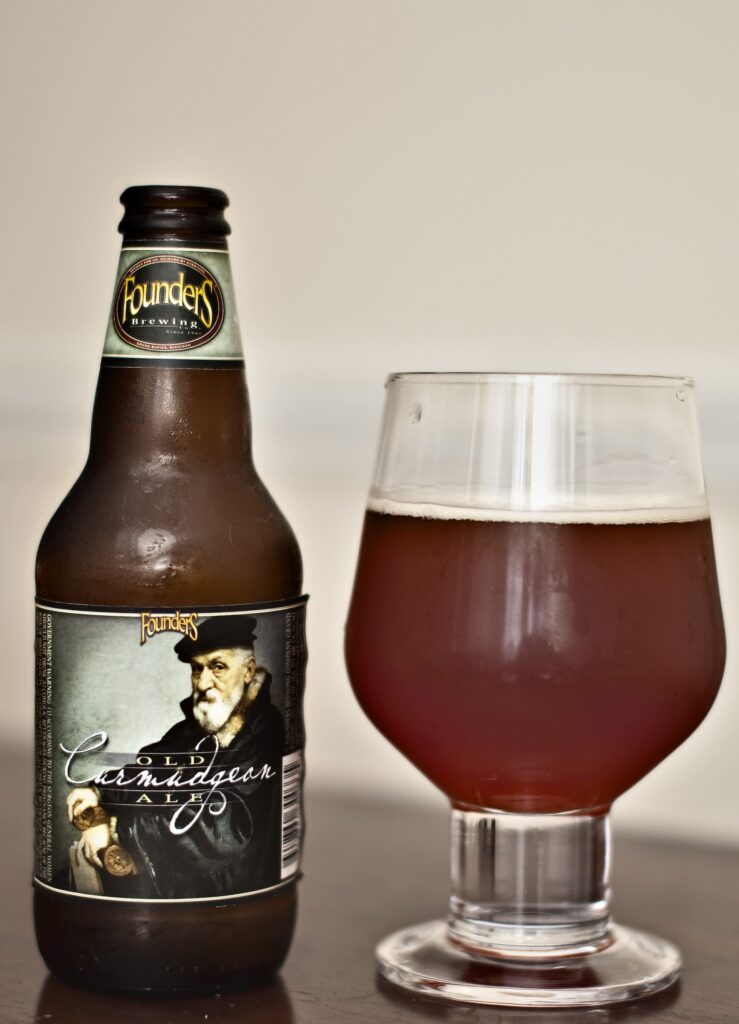
An ale of moderate to fairly significant alcoholic strength, bigger than standard beers, though usually not as strong or rich as barleywine. Often tilted towards a maltier balance. "It should be a warming beer of the type that is best drunk in half pints by a warm fire on a cold winter's night" – Michael Jackson.
One of the truly unique sensory experiences you'll find today, traditional English Old Ale is among the beers that ties us most closely to our brewing heritage. Stemming from the estate tradition of brewing to be stored for significant lengths of time, Old Ale, like the name suggests, reminds us that beer has a relatively short history in the form we see it today.
As we mentioned in our post on English IPA, estate brewers in Victorian-era England brewed several strengths of beer for different purposes. The smallest beers were for anyone to drink–and often made from ingredients other than pure malted barley–while stronger beers (what we might consider "normal" strength today at 5-7% ABV) were generally reserved for the estate owners. Two particularly special beers were also brewed each year, called "October" and "March" beer for the months they were brewed in. The October beer used the freshest ingredients from the year's harvest–and lots of them–to produce a beer that often topped 10% ABV. Casks of that brew were set aside until the following October (or longer), and were also referred to as "stock" ales, simply designating that they were stocked for later dates.
If you've heard someone mention "Brett" character in beer, they're talking about a wild yeast strain that was first identified by Niels Claussen in 1904 in an aging batch of old ale. "Brett" is short for Brettanomyces, which means "British Fungus." Claussen named the particular strain after himself, and recently Brettanomyces claussenii has become one of the primary strains used by brewers to intentionally funkify their beer.
Two factors significantly impacted stock ale production: the industrial revolution, and the mass production of beer that came with it, and the wars that ravaged the European continent. Despite the continued popularity of ale in England, mass-market lagers made cheaply with new technologies also had their impact on English brewers. To make matters worse, the industrial revolution was followed by two wars that forced ingredient rationing, necessitating the use of smaller grain bills. This ruled out, or at the very least greatly limited, production of higher gravity beers like stock ales for several decades.
Drinking Old Ale not only brings you to a past where beer production was different, it transports you to a time when nature played a much more prevalent role in beer production. Until the recent boom in lambic-style yeast capturing here in the states, Belgian brewers are often thought of as having had a monopoly on the wild yeast market, but this wasn't so. Nature crept into barrels of Old Ale, giving them character and complexity that can be difficult to describe, but incredibly fun to enjoy. Perhaps the legendary beer writer Michael Jackson puts it best: "It should be a warming beer of the type that is best drunk in half pints by a warm fire on a cold winter's night."
Cheers to that.
Historically, an aged ale used as stock ales for blending or enjoyed at full strength (stale or stock refers to beers that were aged or stored for a significant period of time). There are at least two definite types in Britain today, weaker draught ones that are similar to aged milds of around 4.5%, and stronger ones that are often 6-8% or more.
Amber to dark copper and ruby
Strong maltiness with toffee, molasses, and fruity notes Wine and sherry notes from age Alcohol warmth Traditional examples include funky "brett" character
Leans toward malt Sometimes tart depending on producer and aging process
Medium body through full and chewy Lower-than-average carbonation Alcohol warmth is acceptable, as is tannic quality from wood
Overall Impression: An ale of moderate to fairly significant alcoholic strength, bigger than standard beers, though usually not as strong or rich as barleywine. Often tilted towards a maltier balance. "It should be a warming beer of the type that is best drunk in half pints by a warm fire on a cold winter's night" – Michael Jackson.
Aroma: Malty-sweet with fruity esters, often with a complex blend of dried-fruit, vinous, caramelly, molasses, nutty, toffee, light treacle, and/or other specialty malt aromas. Some alcohol and oxidative notes are acceptable, akin to those found in Sherry or Port. Hop aromas not usually present due to extended aging.
Appearance: Light amber to very dark reddish-brown color (most are fairly dark). Age and oxidation may darken the beer further. May be almost opaque (if not, should be clear). Moderate to low cream- to light tan-colored head; may be adversely affected by alcohol and age.
Flavor: Medium to high malt character with a luscious malt complexity, often with nutty, caramelly and/or molasses-like flavors. Light chocolate or roasted malt flavors are optional, but should never be prominent. Balance is often malty-sweet, but may be well hopped (the impression of bitterness often depends on amount of aging). Moderate to high fruity esters are common, and may take on a dried-fruit or vinous character. The finish may vary from dry to somewhat sweet. Extended aging may contribute oxidative flavors similar to a fine old Sherry, Port or Madeira. Alcoholic strength should be evident, though not overwhelming. Diacetyl low to none. Some wood-aged or blended versions may have a lactic or Brettanomyces character; but this is optional and should not be too strong.
Mouthfeel: Medium to full, chewy body, although older examples may be lower in body due to continued attenuation during conditioning. Alcohol warmth is often evident and always welcome. Low to moderate carbonation, depending on age and conditioning. Light acidity may be present, as well as some tannin if wood-aged; both are optional.
Comments: Strength and character varies widely. The predominant defining quality for this style is the impression of age, which can manifest itself in different ways (complexity, lactic, Brett, oxidation, leather, vinous qualities, etc.). Old Peculier is a fairly unique type of beer that is quite different than other Old Ales.
History: Historically, an aged ale used as stock ales for blending or enjoyed at full strength (stale or stock refers to beers that were aged or stored for a significant period of time). There are at least two definite types in Britain today, weaker draught ones that are similar to aged milds of around 4.5%, and stronger ones that are often 6-8% or more.
Characteristic Ingredients: Composition varies, although generally similar to British Strong Ales. The age character is the biggest driver of the final style profile, which is more handling than brewing. May be aged in wood, but should not have a strong wood character.
Style Comparison: Roughly overlapping the British Strong Ale and the lower end of the English Barleywine styles, but always having an aged quality. The distinction between an Old Ale and a Barleywine is somewhat arbitrary above 7% ABV, and generally means having a more significant aged quality (particularly from wood). Barleywines tend to develop more of a 'mature' quality, while Old Ales can show more of the barrel qualities (lactic, Brett, vinous, etc.).
Vital Statistics: OG: 1.055 – 1.088 IBUs: 30 – 60 FG: 1.015 – 1.022 SRM: 10 – 22 ABV: 5.5 – 9.0%
Commercial Examples: Burton Bridge Olde Expensive, Gale's Prize Old Ale, Greene King Strong Suffolk Ale, Marston Owd Roger, Theakston Old Peculier
Old Ale Color: Copper-red to very dark Clarity: Chill haze is acceptable at low temperatures Perceived Malt Aroma & Flavor: Fruity esters can enhance and complement the malt aroma and flavor profile. Old Ales have malt and sometimes caramel sweetness. Perceived Hop Aroma & Flavor: Very low to medium Perceived Bitterness: Present but minimal Fermentation Characteristics: Fruity esters can contribute to the character of these beers. A distinctive quality of Old Ales is that they undergo an aging process, often for years. Aging can occur on their yeast either in bulk storage or through conditioning in the bottle. This contributes to a rich, wine-like and often sweet oxidized character. Body: Medium to full Additional notes: Low level attributes typical of wood aging such as vanilla are acceptable. Brettanomyces and acidity reflect historical character. Original Gravity: 1.058-1.088 (14.3-21.1 Plato) Final Gravity: 1.014-1.030 (3.6-7.6 Plato) Alcohol by Weight (Volume): 5.0%-7.2% (6.3%-9.1%) Bitterness (IBU): 30-65 Color SRM (EBC): 12-30 (24-60 EBC)
Roughly overlapping the British Strong Ale and the lower end of the English Barleywine styles, but always having an aged quality. The distinction between an Old Ale and a Barleywine is somewhat arbitrary above 7% ABV, and generally means having a more significant aged quality (particularly from wood). Barleywines tend to develop more of a 'mature' quality, while Old Ales can show more of the barrel qualities (lactic, Brett, vinous, etc.).
British Pale Ale malt Caramel malts English hops Expressive English ale yeast Barrel and time
A single infusion mash is typical, with enough malt to drive the gravity above standard strength. The IBUs can be deceiving in the guidelines, but shoot for at least 30-40 with English hops if you plan to age this for an extended period. Fermented with an expressive English yeast and set down in barrels to age. Greene King, one of the prominent producers in England, brews a 12% beer and then blends that with younger beer to create their Old Ale, but some brewers choose not to blend.
At the Pub: Scotch Egg Takeout: Fish and chips Casual date: Thai
White Beet Spirit
New: Elvis Costello Old: Purcell, Dido and Aeneas
Burton Bridge Olde Expensive, Gale's Prize Old Ale, Greene King Strong Suffolk Ale, Marston Owd Roger, Theakston Old Peculier