Black Flannel Academy

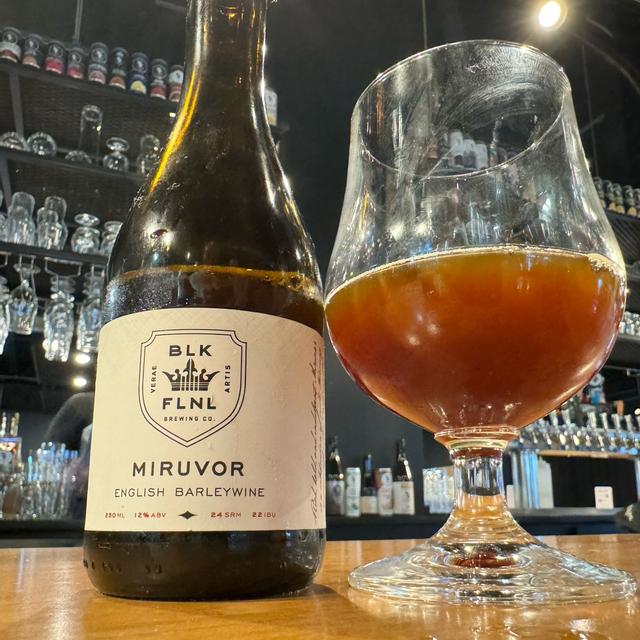
English Barleywine | Miruvor

amber-color · british-isles · complex · high-strength · Malty · sipper · top-fermented · Traditional style

A showcase of malty richness and complex, intense flavors. Chewy and rich in body, with warming alcohol and a pleasant fruity or hoppy interest. When aged, it can take on port-like flavors. A wintertime sipper.

Color

8 – 22 SRM

Bitterness

35 – 70 IBU

Alcohol

8.0 – 12.0% ABV

Sweetness

Very malty, but not overly sweet or cloying

Balance

History

Historical Development

"…it rather mended my health, and gave me brisk spirits. As I had not been used to drinking, especially in the morning, I admired at this, and found, on the most strict scrutiny, that nothing was used in this liquor but malt and hops, and that its happy vinos flavor was merely the result of good ingredients, well cured, a fine chalk water, and not being too much boiled. I readily concluded, that something might be done to give a distinguished reputation to malt liquors, and operate as a counterbalance to the too free use of wine…"

  • Samuel Childs, from Every Man His Own Brewer, 1768.

For nearly a thousand years, wine has enjoyed an elevated status as the drink of wealth, nobility, and finer palates (yeah…we think it's nonsense too). When William the Conqueror, Duke of Normandy, took hold of England in 1066, he brought with him an aristocratic court with a taste for French wine. Sparing the detail of beer history to that point (we'll definitely write on that sometime!), agriculture played a huge role in the distinction between wine-making and beer-brewing regions. Grapes grew better in warmer climates, whereas grain varieties used for beer (which would actually have been called "ale" in Britain during that period) grew better in cooler climates. When William of Normandy took power, that seemingly innocent aristocratic taste for fine wine put northern Europe-and with it the entire western hemisphere-on a path to regard wine as a drink for the wealthy, thereby relegating beer to a lower status. We still haven't come close to shaking that perception to this day, despite centuries of history. Even in the US, disconnected by an ocean and a revolution, wine is often held higher in society than beer.

Centuries after that conquest, brewers still clearly had a chip on their shoulder about wine's status in the world, as shown by the quote that started this post. Surely Childs wasn't alone in his annoyance with wine's status, and he set out to correct the unexamined offense by writing a book on how to brew great "malt liquor" (there's a term that has clearly evolved…). In one portion of Childs's book, he describes in detail how to produce what he calls "malt wine." This would have been very similar in strength and approach to the October beers we encountered in our posts on Old Ale and IPA. Brewed to higher strength with the goal of more complex flavor and aging potential.

In looking at Childs's recipe and comparing it to another from around the same time, these beers would have been big, even by today's standards. After looking up several measurements we rarely see (like quarters, hogsheads, and bushels) and drafting some of these recipes into our brewing software, it looks like these recipes would have created beers that were 12.3-14% ABV. Who needs wine when you've got that?.

Different historians place the first modern iterations of English Barleywine with different brewers, but wherever and whenever it returned to boil kettles, it came back to from a similar drive. To create a big, boozy, ageable, complex, and, most importantly, elegantly malty beer that could be sipped, pondered, and enjoyed, especially in colder months by a warm fire. This is one of those beers you'll want to age a bit after its bottled (2-3 years is perfection), then open with a few good friends you haven't seen in a while. If you pick a good bottle, you might even convince a wine-lover that there's plenty of culture and elegance in beer too.

Modern Evolution

Strong ales of various formulations have long been brewed in England, and were known by several names. The modern barleywine traces back to Bass No. 1, which was first called a barleywine in 1872. Barleywines were darker beers until Tennant (now Whitbread) first produced Gold Label, a gold-colored barleywine in 1951. Usually the strongest ale offered by a brewery, and in recent years many commercial examples are now vintage-dated and offered as a limited-release winter seasonal specialty. The original barleywine style that inspired derivative variations in Belgium, the United States, and elsewhere in the world.

Classic characteristics

Appearance

Amber to dark copper and ruby

Aroma

Strong maltiness with toffee, molasses, rich caramel, and dark fruit

Wine and sherry notes if aged

Alcohol warmth

Flavor

Very malty, but not overly sweet or cloying

Mouthfeel

Full bodied and chewy

Lower-than-average carbonation

Alcohol warmth is expected, but shouldn't burn the palate

Flavor Profile Deep Dive

Service notes

BJCP designation

Overall Impression: A showcase of malty richness and complex, intense flavors. Chewy and rich in body, with warming alcohol and a pleasant fruity or hoppy interest. When aged, it can take on port-like flavors. A wintertime sipper.

Aroma: Very rich and strongly malty, often with a caramellike aroma in darker versions or a light toffee character in paler versions. May have moderate to strong fruitiness, often with a dark- or dried-fruit character, particularly in dark versions. The hop aroma may range from mild to assertive, and is typically floral, earthy, or marmalade-like. Alcohol aromatics may be low to moderate, but are soft and rounded. The intensity of these aromatics often subsides with age. The aroma may have a rich character including bready, toasty, toffee, and/or molasses notes. Aged versions may have a sherry-like quality, possibly vinous or port-like aromatics, and generally more muted malt aromas.

Appearance: Color may range from rich gold to very dark amber or even dark brown (often has ruby highlights, but should not be opaque). Low to moderate off-white head; may have low head retention. May be cloudy with chill haze at cooler temperatures, but generally clears to good to brilliant clarity as it warms. The color may appear to have great depth, as if viewed through a thick glass lens. High alcohol and viscosity may be visible in "legs" when beer is swirled in a glass.

Flavor: Strong, intense, complex, multi-layered malt flavors ranging from bready, toffee, and biscuity in paler versions through nutty, deep toast, dark caramel, and/or molasses in darker versions. Moderate to high malty sweetness on the palate, although the finish may be moderately sweet to moderately dry (depending on aging). Some oxidative or vinous flavors may be present, and often complex alcohol flavors should be evident. Moderate to fairly high fruitiness, often with a dark- or dried-fruit character. Hop bitterness may range from just enough for balance to a firm presence; balance therefore ranges from malty to somewhat bitter. Pale versions are often more bitter, better attenuated, and might show more hop character than darker versions; however, all versions are malty in the balance. Low to moderately high hop flavor, often floral, earthy, or marmalade-like English varieties.

Mouthfeel: Full-bodied and chewy, with a velvety, luscious texture (although the body may decline with long conditioning). A smooth warmth from aged alcohol should be present. Carbonation may be low to moderate, depending on age and conditioning.

Comments: The richest and strongest of modern English Ales. The character of these ales can change significantly over time; both young and old versions should be appreciated for what they are. The malt profile can vary widely; not all examples will have all possible flavors or aromas. Paler varieties won't have the caramel and richer malt flavors, nor will they typically have the darker dried fruits – don't expect flavors and aromatics that are impossible from a beer of that color. Typically written as "Barley Wine" in the UK, and "Barleywine" in the US.

History: Strong ales of various formulations have long been brewed in England, and were known by several names. The modern barleywine traces back to Bass No. 1, which was first called a barleywine in 1872. Barleywines were darker beers until Tennant (now Whitbread) first produced Gold Label, a gold-colored barleywine in 1951. Usually the strongest ale offered by a brewery, and in recent years many commercial examples are now vintage-dated and offered as a limited-release winter seasonal specialty. The original barleywine style that inspired derivative variations in Belgium, the United States, and elsewhere in the world.

Characteristic Ingredients: High-quality, well-modified pale malt should form the backbone of the grist, with judicious amounts of caramel malts. Dark malts should be used with great restraint, if at all, as most of the color arises from a lengthy boil. English hops such as Northdown, Target, East Kent Goldings and Fuggles are typical. Characterful British yeast.

Style Comparison: Although often a hoppy beer, the English Barleywine places less emphasis on hop character than the American Barleywine and features English hops. English versions can be darker, maltier, fruitier, and feature richer specialty malt flavors than American Barleywines. Has some overlap British Old Ale on the lower end, but generally does not have the vinous qualities of age; rather, it tends to display the mature, elegant signs of age.

Vital Statistics: OG: 1.080 – 1.120 IBUs: 35 – 70 FG: 1.018 – 1.030 SRM: 8 – 22 ABV: 8.0 – 12.0%

Commercial Examples: Adnams Tally-Ho, Burton Bridge Thomas Sykes Old Ale, Coniston No. 9 Barley Wine, Fuller's Golden Pride, J.W. Lee's Vintage Harvest Ale, Robinson's Old Tom

Brewers Association designation

British-Style Barley Wine Ale

Color: Tawny copper to deep red/copper-garnet

Clarity: Chill haze is acceptable at low temperatures

Perceived Malt Aroma & Flavor: Residual malty sweetness is high

Perceived Hop Aroma & Flavor: Hop aroma and flavor are very low to medium. English type hops are often used but are not required for this style.

Perceived Bitterness: Low to medium

Fermentation Characteristics: Complexity of alcohols and fruity ester attributes are often high and balanced with the high alcohol content. Low levels of diacetyl are acceptable. Caramel and some oxidized character (vinous aromas and/or flavors) may be considered positive attributes.

Body: Full

Original Gravity (°Plato) 1.085-1.120 (20.4-28 °Plato)

Apparent Extract/Final Gravity (°Plato) 1.024-1.028 (6.1-7.1 °Plato)

Alcohol by Weight (Volume) 6.7%-9.6% (8.5%-12.2%)

Bitterness (IBU) 40-65

Color SRM (EBC) 11-36(22-72 EBC)

Style comparison

Parent Categories

Although often a hoppy beer, the English Barleywine places less emphasis on hop character than the American Barleywine and features English hops. English versions can be darker, maltier, fruitier, and feature richer specialty malt flavors than American Barleywines. Has some overlap British Old Ale on the lower end, but generally does not have the vinous qualities of age; rather, it tends to display the mature, elegant signs of age.

Similar Styles from Other Classifications

Ingredients

Grain Bill

British Pale Ale malt

Caramel malts

English hops

Expressive English ale yeast

Brewing process

Mash Profile

A single infusion mash is typical, with enough malt to drive the gravity quite high. The IBUs can be deceiving in the guidelines, because the maltiness and alcohol will distract your palate from hops, but don't make the mistake of underhopping this or you'll end up with a sweet boozy mess. Fermented with an expressive English yeast and sometimes aged in bottles or barrels.

Food pairings

At the Pub: Scotch Egg

Casual date: Charcuterie, focused on big blues like stilton or bayley hazen

Swanky date: Braised wild boar shanks with soy/sugar reduction

Desserts

Spirit pairings

Vermont Common

The soundtrack

New: My Brightest Diamond

Old: Mahler, Symphony No. 2, "Resurrection"

Keep exploring

Commercial Examples

Adnams Tally-Ho, Burton Bridge Thomas Sykes Old Ale, Coniston No. 9 Barley Wine, Fuller's Golden Pride, J.W. Lee's Vintage Harvest Ale, Robinson's Old Tom

International Breweries

Beer Cocktail Recipe

Some beers just weren't meant for cocktails…it'd be like making an old fashioned with 20-year-old Pappy.

Return to all beer styles

Scroll to Top