Black Flannel Academy

American Barleywine

amber-color ยท bitter ยท craft-style ยท hoppy ยท north-america ยท strong-ale-family ยท top-fermented ยท very-high-strength
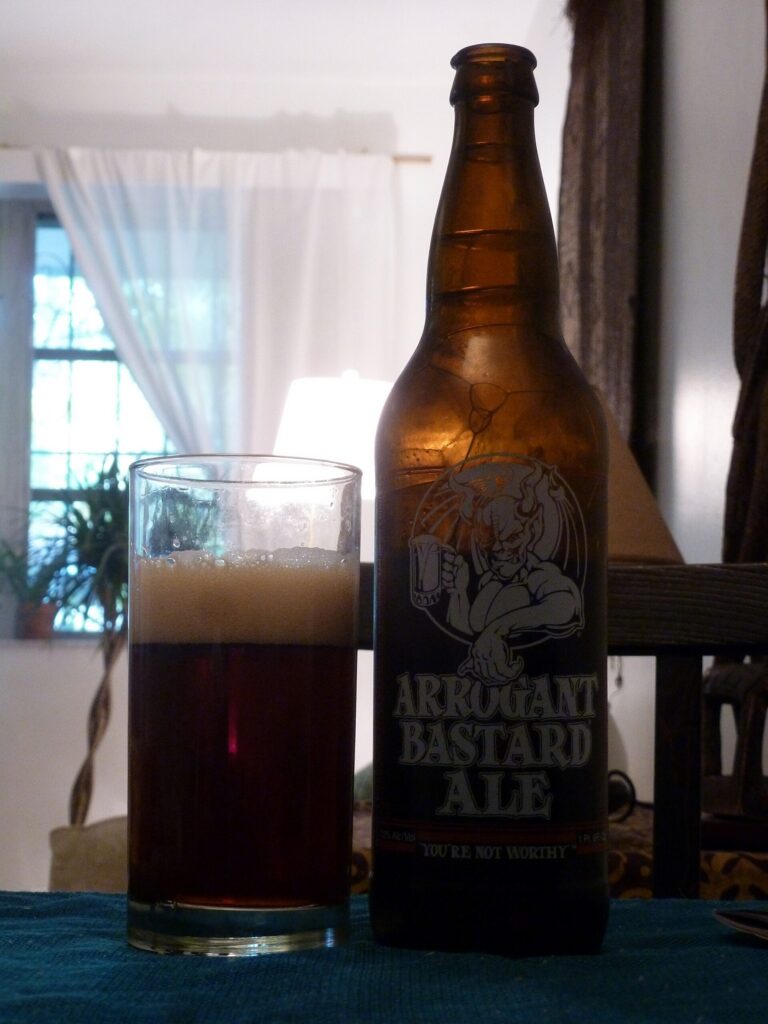
Arrogant Bastard Ale
Visual reference: Arrogant Bastard Ale. Not a confirmed example of American Barleywine. Photo: Erik Cleves Kristensen / Wikimedia Commons ยท CC BY 2.0. Resized and cropped for display.

One of the strongest ales offered by American brewers along with Imperial Stouts. As its name suggests, this rich, malty, hoppy, complex, and warming beer has vinous quality but American swagger.

Color

10 – 19 SRM

Bitterness

50 – 100 IBU

Alcohol

8.0 – 12.0% ABV

Sweetness

Moderately-low to moderately-high malty sweetness on palate with hop bitterness ranging from moderately strong to aggressive.

Balance

Strong, rich malt flavor with noticeable hop flavor and bitterness in balance.

History

Historical Development

American Barleywines were an early tell of the American brewing trend that would come to dominate recipes: take a European style, brew it with cleaner yeast, then add a ton of citrusy, piney, resinous American hops. The first brewery to venture into this category was Anchor, who in 1975 brewed their Old Foghorn for the first time. It was bottled first in 1976, and has remained one of the classic examples ever since.

Ken Grossman of Sierra Nevada, whose Pale Ale largely seeded the industry we know and love today, followed shortly after Anchor with Bigfoot Barleywine. Sierra Nevada's Bigfoot is still produced in open fermenting square vessels to this day, a throwback to earlier techniques.

Geographic Origin

American Barleywine developed in the United States as American craft brewers sought to create their own interpretation of English barleywines with American hops and cleaner yeast.

Modern Evolution

These beers age incredibly well, as evidenced by Sierra Nevada printing the bottling year on the cap. They have become winter/holiday seasonal staples for many breweries and age beautifully over years.

Classic characteristics

Appearance

Color ranges from light amber to medium copper, may rarely be as dark as light brown. Often has ruby highlights. Moderately-low to large off-white to light tan head with possible low head retention. May show "legs" when swirled in a glass.

Aroma

Hop character moderate to assertive showcasing citrusy, fruity, or resiny New World varieties. Rich maltiness with character that may be sweet, caramelly, bready, or fairly neutral. Low to moderately-strong fruity esters and alcohol aromatics.

Flavor

Strong, rich malt flavor with noticeable hop flavor and bitterness in balance. Moderately-low to moderately-high malty sweetness on palate with hop bitterness ranging from moderately strong to aggressive. Moderate to high hop flavor with New World hop characteristics. Low to moderate fruity esters with noticeable alcohol presence.

Mouthfeel

  • ABV: 8.0-12.0%
  • Body: Full-bodied and chewy
  • Carbonation: Low to moderate
  • Finish: Velvety, luscious texture with noticeable alcohol warmth

Flavor Profile Deep Dive

Primary Flavors

Assertive citrusy, piney, resinous hop character balanced by rich malt sweetness. Strong caramel and bready notes support complex hop profile.

Secondary Flavors

Fruity esters from fermentation. Vinous or sherry-like character may develop with age. Complex alcohol warmth integrates smoothly.

Aftertaste

Long, lingering finish with balanced hop bitterness and malt sweetness. The hop character persists but should not be harsh. Some bready or caramelly malt lingering.

Service notes

Serve in a snifter glass at 52ยฐF. These beers benefit from aging and can be cellared for years. Age a few bottles for vertical tasting.

BJCP designation

Overall Impression: A well-hopped American interpretation of the richest and strongest of the English ales. The hop character should be evident throughout, but does not have to be unbalanced. The alcohol strength and hop bitterness often combine to leave a very long finish.

Aroma: Hop character moderate to assertive and often showcases citrusy, fruity, or resiny New World varieties (although other varieties, such as floral, earthy or spicy English varieties or a blend of varieties, may be used). Rich maltiness, with a character that may be sweet, caramelly, bready, or fairly neutral. Low to moderately-strong fruity esters and alcohol aromatics. However, the intensity of aromatics often subsides with age. Hops tend to be nearly equal to malt in the aroma, with alcohol and esters far behind.

Appearance: Color may range from light amber to medium copper; may rarely be as dark as light brown. Often has ruby highlights. Moderately-low to large off-white to light tan head; may have low head retention. May be cloudy with chill haze at cooler temperatures, but generally clears to good to brilliant clarity as it warms. The color may appear to have great depth, as if viewed through a thick glass lens. High alcohol and viscosity may be visible in "legs" when beer is swirled in a glass.

Flavor: Strong, rich malt flavor with a noticeable hop flavor and bitterness in the balance. Moderately-low to moderately-high malty sweetness on the palate, although the finish may be somewhat sweet to quite dry (depending on aging). Hop bitterness may range from moderately strong to aggressive. While strongly malty, the balance should always seem bitter. Moderate to high hop flavor (any variety, but often showing a range of New World hop characteristics). Low to moderate fruity esters. Noticeable alcohol presence, but well-integrated. Flavors will smooth out and decline over time, but any oxidized character should be muted (and generally be masked by the hop character). May have some bready or caramelly malt flavors, but these should not be high; roasted or burnt malt flavors are inappropriate.

Mouthfeel: Full-bodied and chewy, with a velvety, luscious texture (although the body may decline with long conditioning). Alcohol warmth should be noticeable but smooth. Should not be syrupy and under-attenuated. Carbonation may be low to moderate, depending on age and conditioning.

Comments: Sometimes known as "Barley Wine" or "Barleywine style ale" (the latter due to legal requirements, not brewery preference).

History: Usually the strongest ale offered by a brewery, often associated with the winter or holiday season and vintage-dated. As with many American craft beer styles, derived from English examples but using American ingredients and featuring a much more forward hop profile. One of the first American craft beer versions was Anchor Old Foghorn, first brewed in 1975. Sierra Nevada Bigfoot, first brewed in 1983, set the standard for the hop-forward style of today. The story goes that when Sierra Nevada first sent Bigfoot out for lab analysis, the lab called and said, "your barleywine is too bitter" – to which Sierra Nevada replied, "thank you."

Characteristic Ingredients: Well-modified pale malt should form the backbone of the grist. Some specialty or character malts may be used. Dark malts should be used with great restraint, if at all, as most of the color arises from a lengthy boil. New World hops are common, although any varieties can be used in quantity. Generally uses an attenuative American ale yeast.

Style Comparison: The American version of the Barleywine tends to have a greater emphasis on hop bitterness, flavor and aroma than the English Barleywine, and often features American hop varieties. Typically paler than the darker English Barleywines (and lacking in the deeper malt flavors) but darker than the golden English Barleywines. Differs from a Double IPA in that the hops are not extreme, the malt is more forward, and the body is fuller and often richer. An American Barleywine typically has more residual sweetness than a Double IPA, which affects the overall drinkability (sipping vs. drinking).

Vital Statistics: OG: 1.080 – 1.120 IBUs: 50 – 100 FG: 1.016 – 1.030 SRM: 10 – 19 ABV: 8.0 – 12.0%

Commercial Examples: Avery Hog Heaven Barleywine, Anchor Old Foghorn, Great Divide Old Ruffian, Rogue Old Crustacean, Sierra Nevada Bigfoot, Victory Old Horizontal

Brewers Association designation

  • American-Style Barley Wine Ale
    • Color: Amber to deep red/copper-garnet
    • Clarity: Chill haze is acceptable at low temperatures
    • Perceived Malt Aroma & Flavor: Caramel and/or toffee malt aromas are often present. High residual malty sweetness, often with caramel and/or toffee flavors, should be present.
    • Perceived Hop Aroma & Flavor: Medium to very high. American hop varieties are often used, but are not required for this style.
    • Perceived Bitterness: High
    • Fermentation Characteristics: Complex alcohols are evident. Fruity esters are often high. Diacetyl is usually absent in these beers but may be present at very low levels.
    • Body: Full
    • Additional notes: Vinous, sherry-like or port-like attributes arising from oxidation may be considered positive when in harmony with overall flavor profile.
  • Original Gravity (ยฐPlato) 1.090-1.120(21.6-28 ยฐPlato) – Apparent Extract/Final Gravity (ยฐPlato) 1.024-1.028(6.1-7.1 ยฐPlato) – Alcohol by Weight (Volume) 6.7%-9.6%(8.5%-12.2%) – Bitterness (IBU) 60-100 – Color SRM (EBC) 11-18(22-36 EBC)

Style comparison

Parent Categories

Variant Styles

Similar Styles

  • English Barleywine (22A)
  • Imperial Stout (20B)

Ingredients

Grain Bill

Well-modified pale malt backbone, specialty or character malts, dark malts used with restraint (as most color arises from lengthy boil), New World hops in quantity, attenuative American ale yeast.

Yeast

Attenuative American ale yeast for clean fermentation profile.

Water Profile

Varies, but typically adjusted to balance the high hop and malt character.

Brewing process

Mash Profile

Single infusion mash with enough malt to drive gravity quite high.

Fermentation

A single infusion mash is typical, with enough malt to drive the gravity quite high. IBUs should be high with finishing hops for massive American citrus, pine, and resin aroma. Fermented with clean American yeast and sometimes aged in bottles or barrels.

Food pairings

At the Pub: Scotch Egg

Casual date: Charcuterie, focused on big blues like stilton or bayley hazen

Swanky date: Braised wild boar shanks with soy/sugar reduction

Cheese

Big blues like Stilton or Bayley Hazen Blue

Meat & Seafood

Scotch egg, braised wild boar shanks with soy/sugar reduction, hearty stews

Desserts

Rich chocolate desserts, caramel treats, dark fruit pastries

Spirit pairings

Vermont Common

The soundtrack

New: Sufjan Stevens, Bryce Dessner, and Nico Muhly: Planetarium

Old: George Gershwin, Rhapsody in Blue

Keep exploring

Commercial Examples

Avery Hog Heaven Barleywine, Anchor Old Foghorn, Great Divide Old Ruffian, Rogue Old Crustacean, Sierra Nevada Bigfoot, Victory Old Horizontal

Beer Cocktail Recipe

Some beers just weren't meant for cocktails…it'd be like making an old fashioned with 20-year-old Pappy.

Return to all beer styles

Scroll to Top