
Wheat Whiskey
A wheat-led American whiskey often associated with soft cereal, bread, nuts, gentle fruit and new-oak vanilla or spice. Some examples are delicate and rounded, while active wood and higher strength can create substantial structure. Wheat does not guarantee sweetness, softness or an absence of spicy sensations.
Color
Maturation
Alcohol
Sweetness
Balance
History
Wheat whiskey’s history extends beyond recent premium bottlings: Mount Vernon records wheat among the grains used at Washington’s distillery. A much later commercial milestone was Bernheim’s introduction in 2005, documented by Heaven Hill. These are different kinds of evidence—early production practice and a modern branded release. Bernheim’s launch should not therefore be described as the first whiskey ever made from wheat. Mount Vernon: ten facts about Washington’s distillery; Heaven Hill: Bernheim history in its 2014 announcement.
Classic characteristics
Appearance
Gold through amber or copper; maturation and wood activity determine depth.
Aroma
Medium cereal, bread, nuts, fruit and vanilla, sometimes with pronounced oak or baking spice.
Flavor
Wheat-associated cereal with variable fruit, caramel-like aromas and new-oak spice; not necessarily mild.
Sweetness
Usually dry with sweet-associated grain and wood impressions; perceived softness is not measured sugar.
Mouthfeel
Medium to full, often rounded or creamy but potentially firm with tannin and alcohol.
Finish
Medium to long, with cereal, nuts, fruit or oak continuing in balance.
Flavor Profile Deep Dive
Assess wheat-led expression and oak integration; soft sweetness is possible but not a compulsory result. Investigate persistent solvent-like pungency, unpleasant stale character or wood astringency that overwhelms the intended expression. A descriptor alone cannot prove a distillation-cut error, additive use or chemical safety.
Service notes
Compare a wheat whiskey with a wheated bourbon at similar strength, explicitly naming the different dominant grains. Avoid presenting the comparison as a controlled experiment if age, distillery and casks differ. Ask tasters to assess bread, cereal, fruit, vanilla and tannin separately. For consumers, describe observed texture and flavour rather than relying on “smooth” alone; the latter gives little information about intensity or preferred serve.
Style parameters
| Parameter | Boundary or expectation |
|---|---|
| Base material | At least 51% wheat under cited U.S. identity |
| Bottled strength | U.S. whiskey minimum applies; stronger bottlings can significantly alter perceived weight and warmth. |
| United States: bottled ABV | at least 40%; Whiskey identity; protected origin and named types have additional rules. |
| Color and clarity | Gold through amber or copper; maturation and wood activity determine depth. |
| Maturation | New charred oak under W; basic wheat whiskey has no fixed age minimum. |
| Additions | Straight wheat excludes colouring/flavouring; verify the complete designation for other versions. |
Legal limits apply only to the named jurisdiction and identity. ADI entry conditions and typical sensory expectations are separate; a product example is not a universal range.
Cocktail connections
Style comparison
Wheat whiskey and wheated bourbon are not synonyms, even when both taste rounded and vanilla-led. The distinction comes from qualifying mash composition and identity. A wheat vodka also uses the grain differently, through a different distillation and storage framework. Grain descriptors should help explain the bottle, not become a claim that every taster must recognize wheat through substantial oak influence.
Ingredients
At least 51% wheat under cited U.S. identity
Production notes
the U.S. whiskey standard supplies the named wheat-whiskey threshold and production limits. The remainder of the mash can include corn, malted barley or other permitted grain, so recipes vary. This is different from wheated bourbon, whose principal qualifying grain is corn and whose wheat is part of the supporting recipe. Straight wheat whiskey adds its own age and additive constraints. Fermentation and barrel management remain important alongside the majority grain.
Commercial examples
Retained example and source context. Bernheim Original in Heaven Hill's brand specifications is a documented seven-year, 90-proof straight wheat whiskey. ADI scope: S130; the U.S. whiskey standard. The example's age and strength are product facts, not requirements for the entire style.
Photo credit
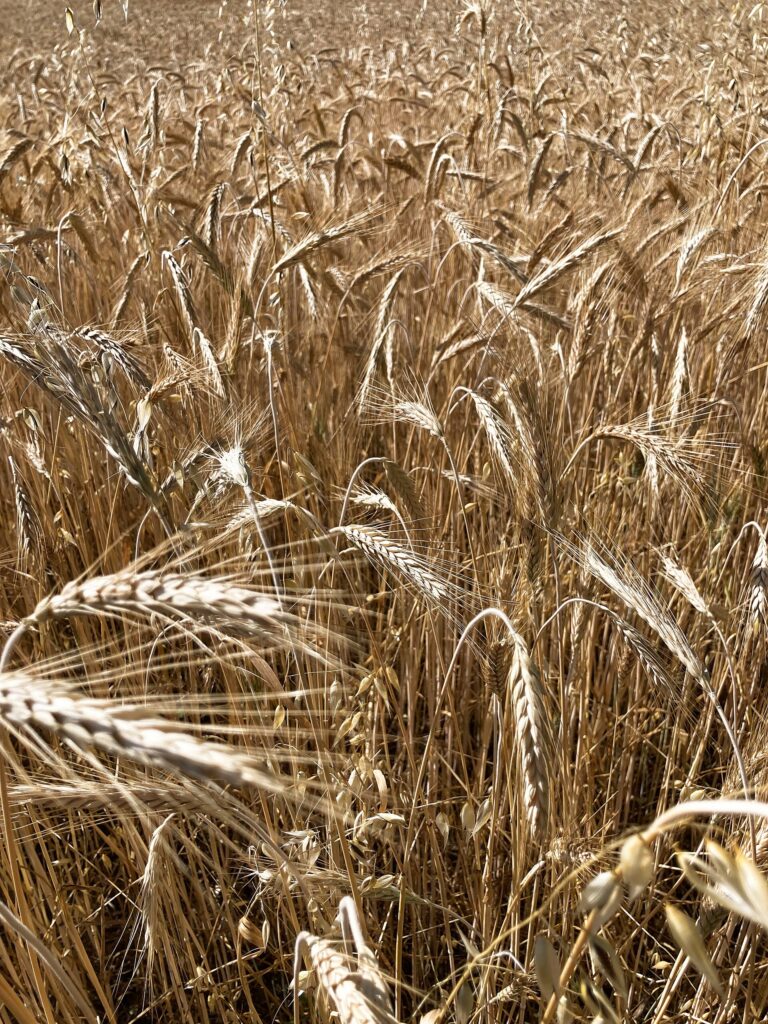
Ingredient or production reference: Wheat growing in a field. This photograph illustrates the raw material or process, not a bottle of this specific style. Photo: Michele Castagnetti / Wikimedia Commons. CC BY-SA 4.0. Display resized; no other edits.

Keep exploring
- 27 CFR 5.143 — evidence reviewed 2026-09-18.