
Somel (Honey Spirit)
A spirit whose fermentable origin is honey. Depending on honey source, fermentation and degree of rectification, it may be delicately floral and lightly waxy or comparatively neutral. A successful expression is clean and coherent; honey origin does not require the finished distillate to taste like liquid honey.
Color
Maturation
Alcohol
Sweetness
Balance
History
Somel is a modern name applied to honey spirit in the ADI list. A 2019 interview traces Dominic DeSano’s commercial project to production with Yahara Bay in 2017. Honey distillation itself is older than that naming event: the European Union’s 2008 spirits framework already included honey spirit. The history should therefore distinguish the recent commercial name from the broader, pre-existing practice of distilling fermented honey. Isthmus: interview on the creation of Domeloz Somel, 2019; European Union: Regulation 110/2008, consolidated text.
Classic characteristics
Appearance
Usually colourless when unaged; gold or amber is possible with documented wood maturation.
Aroma
Neutral to medium or pronounced; flowers, light wax, fruit and fermentation notes may appear.
Flavor
Delicate honey-associated floral character or a cleaner, more rectified profile; avoid assuming literal honey sweetness.
Sweetness
Usually dry in unsweetened distillates; any post-distillation honey or sugar addition must be established separately.
Mouthfeel
Light to rounded and gently coating; strength and rectification can matter more than raw-material associations.
Finish
Short to long; floral, waxy, fruity or clean warming character according to production.
Flavor Profile Deep Dive
Assess fermented-honey spirit character; sweet aroma does not mean honey or sugar remains in the finished distillate. Investigate persistent unpleasant solvent-like, stale or sulfurous character in context. Do not diagnose a specific production error from one aroma; appropriate fermentation character and proof-related warmth are not automatic faults.
Service notes
Compare the aroma of the source honey with the spirit when available, while explaining that fermentation and distillation transform the material. Ask tasters to distinguish floral aroma from actual sweetness. For guest communication, “distilled from fermented honey” is the clearest starting point. Do not describe honey added to a grain-based gin as proof that the gin itself was distilled from honey.
Style parameters
| Parameter | Boundary or expectation |
|---|---|
| Base material | Honey as sole primary fermentable substrate |
| Bottled strength | No numerical ADI requirement supplied; record actual strength and the label's legal designation. |
| Color and clarity | Usually colourless when unaged; gold or amber is possible with documented wood maturation. |
| Maturation | Not required by ADI; distinguish neutral resting from any substantiated wood treatment. |
| Additions | Honey-derived fermentation defines the base; additional flavouring directs attention toward S076 or another applicable category. |
Legal limits apply only to the named jurisdiction and identity. ADI entry conditions and typical sensory expectations are separate; a product example is not a universal range.
Cocktail connections
Browse published cocktails. Documented recipes, conditional style choices and development substitutions are labeled separately.
No established classic or recognized modern cocktail match was found for this specific style in the sources reviewed. This records a research gap, not proof that no cocktail exists. No neighboring style has been substituted to fill the space.
Style comparison
Honey spirit is not mead, which remains a fermented beverage rather than a distillate. It is also not automatically honey liqueur. A highly rectified honey spirit may legally be vodka, creating an overlap between raw-material and legal classifications. That overlap should be explained instead of forcing the bottle into only one educational description.
Related styles: Flavored Somel (Honey Spirit) · Vodka — Residual Base Character.
Ingredients
Honey as sole primary fermentable substrate
Production notes
ADI defines Somel using honey as the sole primary fermentable substrate. Fermentation converts honey sugars into alcohol before distillation; this differs from sweetening another spirit with honey afterward. The supplied definition gives no mandatory still type, distillation ceiling, bottling strength or ageing period. “Somel” is used here as ADI's category term, not presented as a universally recognized legal spirit identity.
Commercial examples
No newly verified benchmark is designated in this revision. The original example discussion below remains a research lead, with its original qualifications.
Retained example and source context. Barr Hill's production account identifies its vodka as distilled entirely from raw honey, illustrating a honey-origin spirit and category overlap rather than a mandatory Somel recipe. ADI scope: S084.
Photo credit
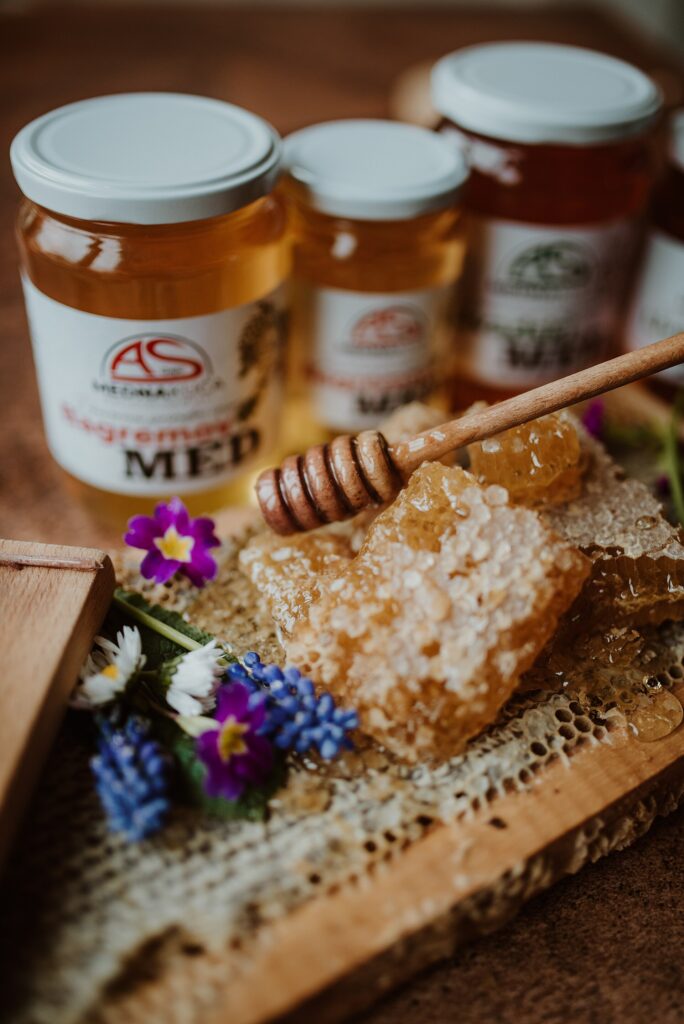
Ingredient or production reference: Honey and honeycomb, the base ingredient for honey spirit. This photograph illustrates the raw material or process, not a bottle of this specific style. Photo: Shixart1985 / Wikimedia Commons. CC BY 2.0. Display resized; no other edits.
