
Flavored Somel (Honey Spirit)
A honey-derived distillate with an additional declared flavour. Floral or softly waxy fermentation character may support fruit, herbs or spices, but the added ingredient can dominate. Successful examples integrate the two rather than rely on sweetness to obscure indistinct or coarse spirit character.
Color
Maturation
Alcohol
Sweetness
Balance
History
Flavored Somel extends a recently named honey-spirit category. A 2019 interview documents Dominic DeSano’s work with Yahara Bay, production beginning in 2017 and the adoption of the name Somel for his honey-derived spirit. That history concerns the name and a particular commercial project. It does not establish the first honey distillate, and the sources reviewed do not identify a separate founding event for the flavored subdivision. Isthmus: interview on the creation of Domeloz Somel, 2019.
Classic characteristics
Appearance
Colourless through deeply coloured according to flavour extraction, maturation and declared formulation.
Aroma
Variable intensity; floral or honey-associated notes beneath the named fruit, herb, spice or botanical flavour.
Flavor
Declared added flavour should be recognizable; assess whether the distillate contributes meaningful supporting character.
Sweetness
Dry to sweet because ADI permits optional sugar; honey origin alone does not establish sweetness.
Mouthfeel
Light to rich or syrupy depending on strength and additions; assess integration rather than maximum weight.
Finish
Short to long; coherent flavour persistence, with sweetness or bitterness proportionate to the recipe.
Flavor Profile Deep Dive
Assess the declared honey-derived base and natural flavoring; sweetness alone cannot establish the honey percentage. Investigate stale ingredients, an unpleasant solvent-like edge, or sweetness/bitterness that overwhelms the declared flavor. Intentional color or sweetening is not itself a defect.
Service notes
Start with documentation of the honey-derived base and named added flavour. Compare with plain honey spirit only when the relationship is substantiated. Teach staff to say whether honey was fermented, added after distillation, or both. Without that distinction, an appealing “honey spirit” description can misrepresent the production process and create an unwarranted expectation of sweetness.
Style parameters
| Parameter | Boundary or expectation |
|---|---|
| Base material | Honey-derived spirit and natural flavoring; ADI percentage basis unresolved |
| Bottled strength | No ADI numerical limit supplied here; use verified label strength and the applicable legal designation. |
| Color and clarity | Colourless through deeply coloured according to flavour extraction, maturation and declared formulation. |
| Maturation | Optional where documented; neither wood nor a minimum period is required by the supplied definition. |
| Additions | Natural flavouring is defining; optional sugar, with other ingredients governed by the actual product category. |
Legal limits apply only to the named jurisdiction and identity. ADI entry conditions and typical sensory expectations are separate; a product example is not a universal range.
Cocktail connections
Browse published cocktails. Documented recipes, conditional style choices and development substitutions are labeled separately.
No established classic or recognized modern cocktail match was found for this specific style in the sources reviewed. This records a research gap, not proof that no cocktail exists. No neighboring style has been substituted to fill the space.
Style comparison
Fermenting honey to create the spirit is different from adding honey to grain spirit, gin or whiskey. A honey liqueur therefore does not automatically qualify. Conversely, a dry botanical honey distillate need not be a liqueur. The source of fermentable material, flavouring method and sugar addition must be treated as three separate questions.
Related styles: Somel (Honey Spirit) · Herbal / Botanical / Spiced Liqueur.
Ingredients
Honey-derived spirit and natural flavoring; ADI percentage basis unresolved
Production notes
ADI specifies at least 51% honey in the distillate's source formulation, followed by natural flavouring, with or without sugar. This differs materially from plain Somel, for which ADI calls for honey as the sole primary fermentable substrate. The supplied percentage is an ADI competition boundary; its calculation basis is not explained and should be confirmed for an actual entry. This guide does not invent a harmonized legal identity for “Somel.”
Commercial examples
No newly verified benchmark is designated in this revision. Select a documented qualifying expression before running a benchmark tasting.
Retained example and source context. ADI supplied source, S076. Barr Hill's production account illustrates why honey-distilled vodka and honey-finished gin are different; neither is offered as a verified benchmark for this specific category.
Photo credit
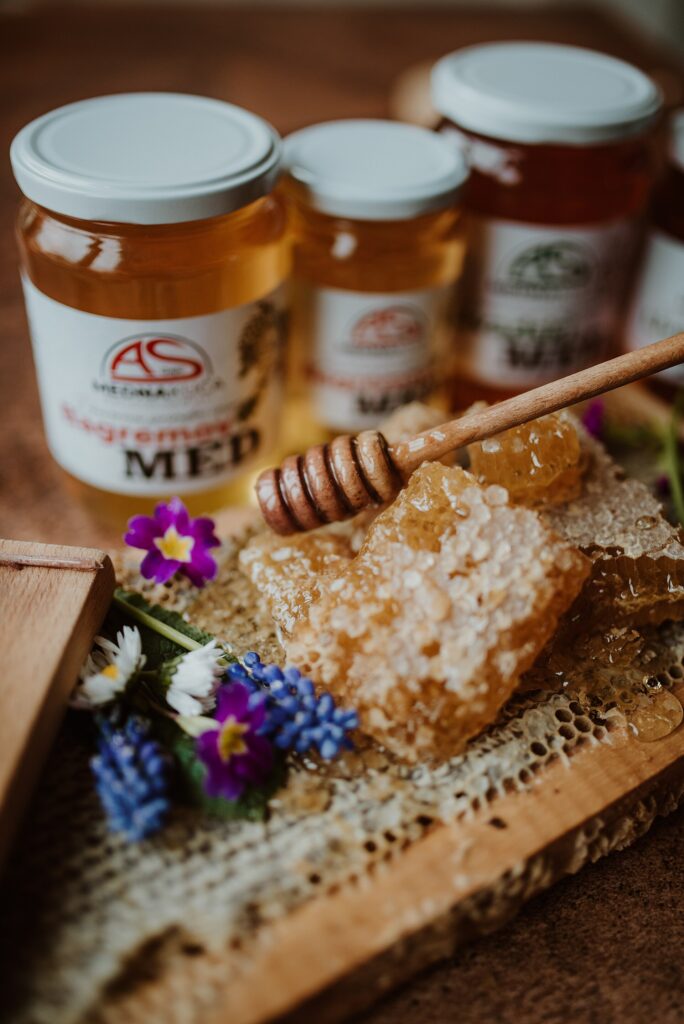
Ingredient or production reference: Honey and honeycomb, the base ingredient for honey spirit. This photograph illustrates the raw material or process, not a bottle of this specific style. Photo: Shixart1985 / Wikimedia Commons. CC BY 2.0. Display resized; no other edits.
