
Vodka — Residual Base Character
A highly rectified vodka retaining subtle character associated with its agricultural substrate and production. Cereal, bread, pepper, fruit, flowers or a rounded texture may distinguish examples. The expression should remain a vodka-scale nuance rather than require the intensity of a lower-proof fruit or grain distillate.
Color
Maturation
Alcohol
Sweetness
Balance
History
Vodka with Residual Base Character gained useful recognition in the U.S. regulatory conversation when TTB removed the requirement that vodka lack distinctive character, aroma, taste or color in its 2020 modernization rule. That change acknowledged the limitations of the earlier language. It did not invent grain- or potato-derived character, nor create an ancient separate lineage; ADI’s heading organizes a sensory distinction within vodka. TTB: modernization final rule, April 2, 2020.
Classic characteristics
Appearance
Clear and colourless in the unflavoured style; base character need not produce visible colour.
Aroma
Low to medium intensity, occasionally more expressive; subtle grain, bread, fruit or floral impressions.
Flavor
Detectable but restrained base-associated character, with clean alcohol and no required added-flavour intensity.
Sweetness
Generally dry to faintly sweet in impression; ripe-fruit or cereal aromas do not establish added sugar.
Mouthfeel
Light to full for vodka, sometimes creamy or oily; raw material and processing both contribute.
Finish
Short to medium or longer in expressive examples; gentle grain, fruit or spice persistence.
Flavor Profile Deep Dive
Assess restrained source-derived character without demanding a low-strength-distillate intensity; compare at matched serving conditions. Investigate persistent unpleasant solvent-like, stale or sulfurous character in context. Do not diagnose a specific production error from one aroma; appropriate fermentation character and proof-related warmth are not automatic faults.
Service notes
Compare documented substrates at equal strength and temperature, ideally blind before revealing ingredients. Treat a taster's correct guess as observation rather than proof of a universal raw-material signature. Staff should explain the ingredient origin and then describe the actual bottle's subtle character. Avoid claiming that a potato base invariably produces creaminess or that every rye vodka must be spicy.
Style parameters
| Parameter | Boundary or expectation |
|---|---|
| Base material | Agricultural neutral spirit; identify source material and any flavoring |
| Bottled strength | ADI distillation at least 95% ABV; U.S. bottling requirements and treatments appear in the U.S. vodka rule. |
| United States: bottled ABV | at least 40%; see identity requirements. |
| Color and clarity | Clear and colourless in the unflavoured style; base character need not produce visible colour. |
| Maturation | Neutral resting may occur; active wood ageing would raise the separate classification issue in S099. |
| Additions | Added botanical or fruit flavour belongs elsewhere; document any permitted minor treatments independently. |
Legal limits apply only to the named jurisdiction and identity. ADI entry conditions and typical sensory expectations are separate; a product example is not a universal range.
Cocktail connections
Browse published cocktails. Documented recipes, conditional style choices and development substitutions are labeled separately.
No established classic or recognized modern cocktail match was found for this specific style in the sources reviewed. This records a research gap, not proof that no cocktail exists. No neighboring style has been substituted to fill the space.
Style comparison
Residual character comes from the base and production rather than flavouring after distillation. A grain vodka with peppery notes is not necessarily pepper-flavoured vodka, and a fruit-derived vodka need not smell overtly of the fruit. This category also overlaps origin-based entries such as honey spirit when the same liquid meets both descriptions.
Related styles: Vodka — Neutral Character · Somel (Honey Spirit).
Ingredients
Agricultural neutral spirit; identify source material and any flavoring
Production notes
ADI specifies distillation at or above 95% ABV while retaining some base-derived flavour. That high distillation threshold separates the category from simply bottling a richly flavoured low-proof distillate and calling it vodka. Current U.S. vodka wording accommodates a broader sensory discussion than the former “without distinctive character” language; see the U.S. vodka rule. Production choices influence character, so the agricultural material alone cannot predict every bottle's flavour.
Commercial examples
No newly verified benchmark is designated in this revision. The original example discussion below remains a research lead, with its original qualifications.
Retained example and source context. Chopin's potato, rye and wheat collection provides a producer-documented comparative set. St. George vodka production notes document pear distillation to vodka strength. ADI scope: S103; the U.S. vodka rule.
Photo credit
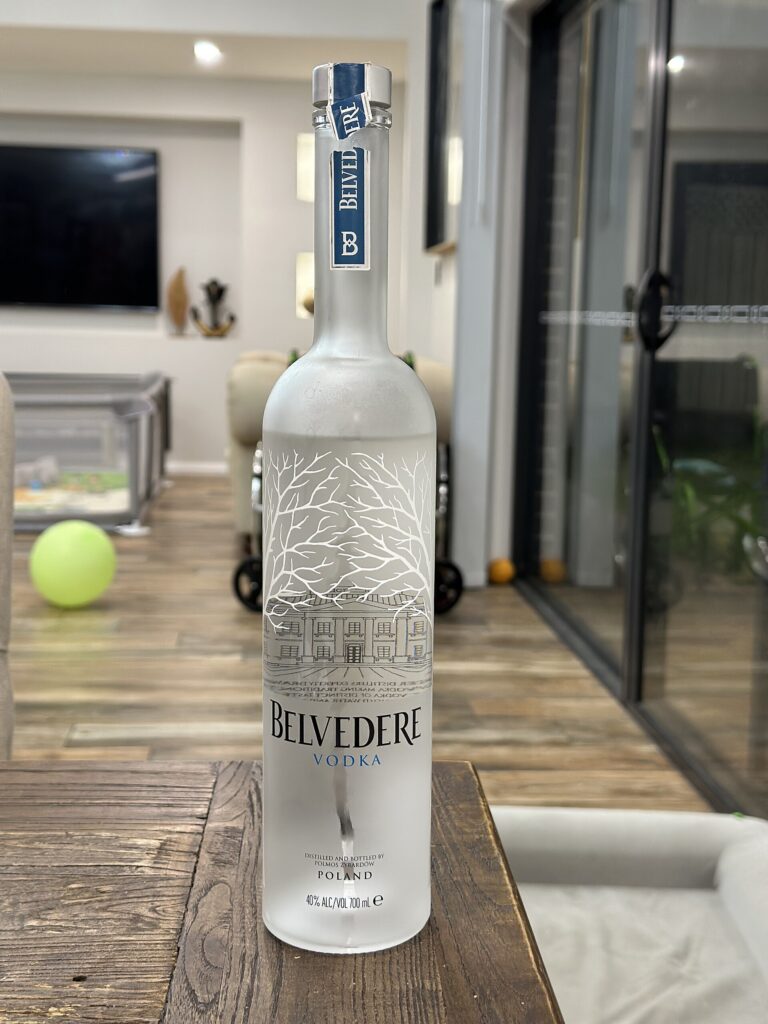
Belvedere rye vodka. Photo: Indrajit Das / Wikimedia Commons. CC BY-SA 4.0. Display resized; no other edits.

Keep exploring
- 27 CFR 5.142 — evidence reviewed 2026-09-17.