
Soju
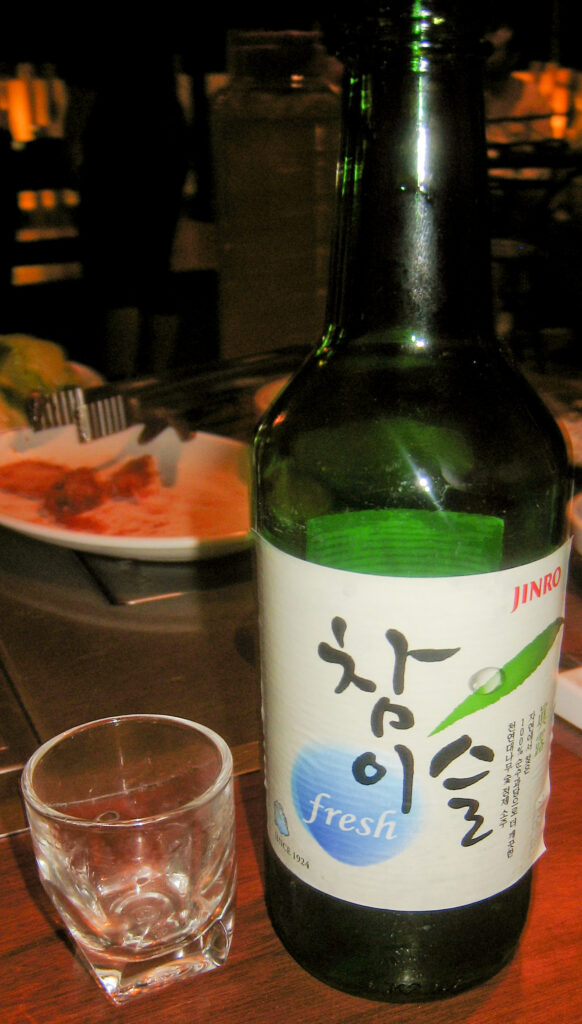
A Korean spirit family encompassing restrained diluted-spirit expressions and more characterful grain distillates. It can be lightly sweet-seeming and delicate, or show pronounced rice, fermentation and maturation character. A single neutral profile would omit an important part of the category.
Color
Maturation
Alcohol
Sweetness
Balance
History
Historical scholarship connects the appearance of soju in fourteenth-century Korea with the movement of distillation knowledge through Mongol-era networks. A later transformation was equally important to the modern drink: restrictions on grain use in 1965 helped shift the market toward diluted spirit made from other permitted materials. Traditional distilled soju and the widely distributed diluted style consequently share a name while representing different stages of Korean alcohol history. Hyunhee Park: Mongols and the rise of soju in Koryŏ Korea; Academy of Korean Studies: soju.
Classic characteristics
Appearance
Usually clear and colourless; oak-treated examples may be coloured.
Aroma
Light and restrained through grainy, fruity or fermentation-led.
Flavor
Neutral-style delicacy or identifiable rice and fermentation character; wood when documented.
Sweetness
Dry through lightly sweet, depending on formulation.
Mouthfeel
Light through rounded or oily; ABV varies enough to alter warmth substantially.
Finish
Short through long; evaluate within the intended production style.
Flavor Profile Deep Dive
Identify diluted/rectified or characterful distilled soju before comparison; strength and production route materially change the target. Investigate persistent unpleasant solvent-like, stale or sulfurous character in context. Do not diagnose a specific production error from one aroma; appropriate fermentation character and proof-related warmth are not automatic faults.
Service notes
Compare a restrained commercial expression with a documented rice-and-nuruk distillate. Record strength before discussing intensity so that alcohol differences do not masquerade as production conclusions. For guests, identify the actual bottle's character and serving strength. This is especially important when moving between familiar green-bottle products and more concentrated expressions.
Style parameters
| Parameter | Boundary or expectation |
|---|---|
| Base material | Grain distillate or rectified agricultural spirit, depending on subtype |
| Bottled strength | Examples: Chamisul Original 20.1%; Tokki White 23%, Black 40%, Gold 46%. |
| Color and clarity | Usually clear and colourless; oak-treated examples may be coloured. |
| Maturation | Unaged and oak-treated expressions exist; no universal age requirement is inferred. |
| Additions | Producer-specific; distinguish sweetened diluted styles from additive-free claims supported by the maker. |
Legal limits apply only to the named jurisdiction and identity. ADI entry conditions and typical sensory expectations are separate; a product example is not a universal range.
Cocktail connections
Style comparison
Soju and shochu share historical connections but are not interchangeable category names. Nor is all soju made from rice. A colorless rice distillate should not automatically be described as vodka, and a wood-treated soju should not automatically be renamed whisky. The documented production route is the most useful organizing principle.
Related styles: Multiple Distilled Shochu · Single Distilled Shochu.
Ingredients
Grain distillate or rectified agricultural spirit, depending on subtype
Production notes
ADI's discontinuous-distillation description captures only part of the market. Soju also includes products assembled from highly rectified spirit and water. Traditional-style producers may ferment rice with nuruk before distillation. Production route, ingredients and strength should therefore accompany the name whenever known. U.S. recognition specifically protects Andong Soju as a Korean distinctive product; do not extend that ruling indiscriminately to every use of the generic word.
Commercial examples
No newly verified benchmark is designated in this revision. Select a documented qualifying expression before running a benchmark tasting.
Retained example and source context. Tokki range and production; Chamisul Original specification; TTB ruling on Andong Soju. The examples demonstrate breadth, not national minimum or maximum strengths.
Photo credit
Jinro soju. Photo: Charles Haynes / Wikimedia Commons. CC BY-SA 2.0. Display resized; no other edits.
