.jpg)
Commercial Examples
Köstritzer Schwarzbier, Guinness Foreign Extra Stout (as a modern example), various Franconian regional breweries' versions

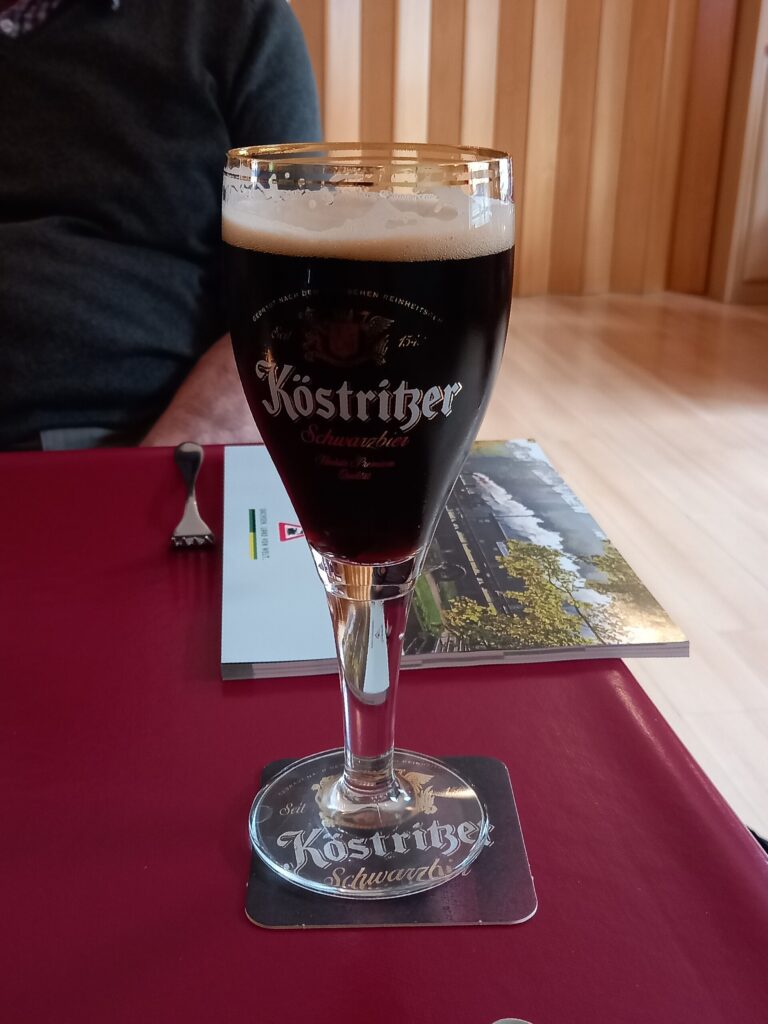
A dark German lager with a paradoxical character—black or very dark brown in color, yet crisp and clean in flavor. Schwarzbiers deliver dark grain and subtle roast character without the harshness or bitterness of stouts or porters. The roast character is sophisticated and refined, balanced by clean malt and restrained hopping.
Schwarzbier emerged in Franconia, specifically in the Kulm area of Bavaria, in the 19th century. The style represents an evolution of dark lager brewing traditions, where brewers sought to create dark beers that maintained the clean, crisp character of pale lagers rather than the heavy, complex character of imperial-style dark beers. This was a uniquely German approach—creating a beer that was simultaneously dark and light.
The style gained broader popularity in Germany during the 20th century and became identified with Franconia, though it has never achieved the international recognition of Pilsners or other lager styles. The specific character comes from using partially roasted malts that provide color and subtle roast character without harsh or burnt flavors.
Schwarzbier originated in Franconia, particularly around the Kulm area of Bavaria. The style remains most closely associated with Germany and Franconia specifically, though it has been produced by craft breweries in other countries in recent decades.
While the fundamental character of Schwarzbier has remained consistent, modern craft breweries have brought the style to international attention. Contemporary versions remain true to the original concept—dark lager with clean character—though individual breweries may emphasize different aspects of the flavor profile.
Very dark brown to black color, presenting an opaque appearance. White to off-white head that is persistent. The darkness of the beer is striking, contrasting with the clean, light character of the flavor.
Subtle and restrained, with notes of dark grain and maybe mild roasted malt character. Clean lager character dominates. No strong roast or burnt character. Gentle hop aroma may be present but should not be prominent. The aroma should invite rather than intimidate.
Clean lager character with subtle roast and dark grain notes. Dark malt provides depth without harsh roasted character. Hop bitterness is restrained, typically in the 20-30 IBU range, providing balance without aggression. The finish is dry to slightly sweet, clean, and refreshing. The paradox of the style is that it tastes much lighter than it appears.
Clean lager character with dark grain and subtle roast notes. The roast character is refined and sophisticated, not harsh or burnt. The beer tastes much lighter than it appears, with crisp finish dominating.
Subtle caramel notes if specialty malts are used, minimal hop character. The focus should be on clean lager character rather than complex malt or hop flavors.
Dry, crisp finish with lingering subtle roast character. The finish should be refreshing despite the dark color.
Serve in a standard glass at 48-55°F. Schwarzbier works well as a session beer despite its dark appearance, making it an excellent all-day drinking option.
Overall Impression: A dark German lager that balances roasted yet smooth malt flavors with moderate hop bitterness. The lighter body, dryness, and lack of a harsh, burnt, or heavy aftertaste helps make this beer quite drinkable.
Aroma: Low to moderate malt, with low aromatic malty sweetness and/or hints of roast malt often apparent. The malt can be clean and neutral or moderately rich and bready, and may have a hint of dark caramel. The roast character can be somewhat dark chocolate- or coffee-like but should never be burnt. A low spicy, floral, or herbal hop aroma is optional. Clean lager yeast character, although a light sulfur is possible.
Appearance: Medium to very dark brown in color, often with deep ruby to garnet highlights, yet almost never truly black. Very clear. Large, persistent, tan-colored head.
Flavor: Light to moderate malt flavor, which can have a clean, neutral character to a moderately rich, bread-malty quality. Light to moderate roasted malt flavors can give a bitterchocolate palate that lasts into the finish, but which are never burnt. Medium-low to medium bitterness, which can last into the finish. Light to moderate spicy, floral, or herbal hop flavor. Clean lager character. Aftertaste tends to dry out slowly and linger, featuring hop bitterness with a complementary but subtle roastiness in the background. Some residual sweetness is acceptable but not required.
Mouthfeel: Medium-light to medium body. Moderate to moderately-high carbonation. Smooth. No harshness or astringency, despite the use of dark, roasted malts.
Comments: Literally means "black beer" in German. While sometimes called a "black Pils," the beer is rarely as dark as black or as bitter as a Pils; don't expect strongly roasted, porter-like flavors.
History: A regional specialty from Thuringia, Saxony and Franconia in Germany. History is a bit sketchy, but is suspected of being originally a top-fermented beer. Popularity grew after German reunification. Served as the inspiration for black lagers brewed in Japan.
Characteristic Ingredients: German Munich malt and/or Pilsner malts for the base, supplemented by a judicious use of roasted malts (such as Carafa types) for the dark color and subtle roast flavors. Huskless dark roasted malts can add roast flavors without burnt flavors. German hop varieties and clean German lager yeasts are traditional.
Style Comparison: In comparison with a Munich Dunkel, usually darker in color, drier on the palate, lighter in body, and with a noticeable (but not high) roasted malt edge to balance the malt base. Should not taste like an American Porter made with lager yeast. Drier, less malty, with less hop character than a Czech Dark Lager.
Vital Statistics: OG: 1.046 – 1.052 IBUs: 20 – 30 FG: 1.010 – 1.016 SRM: 17 – 30 ABV: 4.4 – 5.4%
Commercial Examples: Devils Backbone Schwartz Bier, Einbecker Schwarzbier, Eisenbahn Dunkel, Kostritzer Schwarzbier, Monchshof Schwarzbier, Nuezeller Original Badebier
Pale malt base (such as German Pilsner malt), constituting 70-80% of the grain bill. Chocolate malt and/or black malt (dehusked varieties preferred) providing 10-20% for color and subtle roast character without harshness. Small amounts of caramel malt can be added for body. The key is using dehusked roasted malts to avoid harsh tannins.
Light hopping with noble varieties such as Hallertau, Tettnang, or Spalt providing gentle bittering and minimal aroma. German hop character should be restrained and clean. Total IBUs typically 20-30.
Lager yeast fermented cool for clean, crisp character. German lager strains work well for authentic character.
Soft to moderately balanced water typical of Bavarian regions. Avoid heavily sulfate or chloride-forward water.
Single infusion mash in the lower to mid-range saccharification temperature (around 150-153°F) to ensure dry finish and good attenuation.
Ferment cool (around 50-55°F) and lager for at least 4-6 weeks. The clean character depends on proper lagering and temperature control.
At the pub: Pretzel with pub mustard Also at the pub: Smash Burger with Thrice Cooked Chips At a biergarten: Sausages, mustard, and kraut
Mild to medium cheeses, fresh mozzarella, semi-hard cheeses
Grilled meats, light preparations, fish, seafood, pork
Salads, roasted vegetables, light preparations
Not typical with sweets; best as a casual session beer
Vermont Common
New: Smashing Pumpkins, Mellon Collie and the Infinite Sadness Old: Brahms, Piano Concerto No. 1 in D Minor
Köstritzer Schwarzbier, Guinness Foreign Extra Stout (as a modern example), various Franconian regional breweries' versions