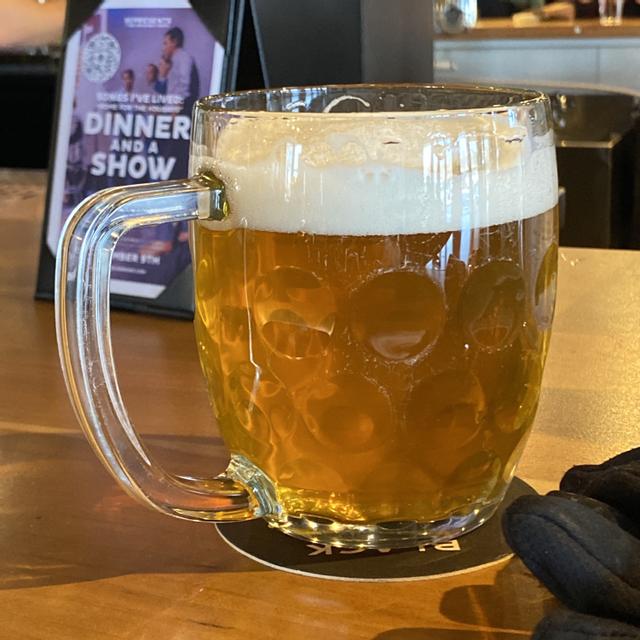
Aroma: Reflects base style. Typically has additional yeast character, with byproducts not frequently found in well-lagered German beers (such as diacetyl, sulfur, and acetaldehyde).
Appearance: Reflects base style. Typically can be somewhat hazy or cloudy, and likely a little darker in appearance than the base style.
Flavor: Reflects base style. Typically has additional yeast character, with some byproducts not frequently found in well-lagered German beers (such as diacetyl, sulfur, and acetaldehyde), although not at objectionable levels.
Mouthfeel: Reflects base style. Has a bit more body and creamy texture due to yeast in suspension, and may have a slight slickness if diacetyl is present. May have a lower carbonation than the base style.
Comments: Young, unfiltered, unpasteurized versions of the traditional German beer styles, traditionally served on tap from the lagering vessel. The name literally means "cellar beer" – implying a beer served straight from the lagering cellar. Since this serving method can be applied to a wide range of beers, the style is somewhat hard to pin down. However, there are several common variants that can be described and used as templates for other versions. Sometimes described as Naturtrub or naturally cloudy. Also sometimes called Zwickelbier, after the name of the tap used to sample from a lagering tank.
History: Originally, Kellerbier referred to any Lager beer being matured in the caves or cellars under the brewery. In the 19th century, Kellerbier was a strong, aged beer meant to last the summer (Sommerbier), stored in rock cellars and served straight from them. But when refrigeration began to be used, the term shifted to describing special beers that were served young, directly from the cellar or lagering vessel. Today some breweries use the term purely for marketing purposes to make their beers appear special. While a kellerbier is sometimes considered more of a serving style than a beer style, the serving technique is still predominately used with certain styles in certain regions (such as Helles around the Munich area, or a Marzen in the Franconia region).
Entry Instructions: The entrant must specify whether the entry is a Pale Kellerbier (based on Helles) or an Amber Kellerbier (based on Marzen). The entrant may specify another type of Kellerbier based on other base styles such as Pils, Bock, Schwarzbier, but should supply a style description for judges.
Kellerbier: Pale Kellerbier – A very common seasonal summer beer brewed by many of the Munich area breweries and served in the beer gardens, where they are very popular.
Overall Impression: A young, fresh Helles, so while still a malty, fully-attenuated Pils malt showcase, the hop character (aroma, flavor and bitterness) is more pronounced, and the beer is cloudy, often with some level of diacetyl, and possibly has some green apple and/or other yeast-derived notes. As with the traditional Helles, the Keller version is still a beer intended to be drunk by the liter, so overall it should remain a light, refreshing, easy drinking golden lager.
Characteristic Ingredients: Pilsner malt, German hops, German lager yeast; same as a Munich Helles.
Style Comparison: Most commonly, a young, unfiltered and unpasteurized version of a Munich Helles, though it can be a young, unfiltered and unpasteurized version of other golden German lagers, such as a Pilsner or a seasonal golden lager made specifically for serving young.
Vital Statistics: OG: 1.045 – 1.051 IBUs: 20 – 35 FG: 1.008 – 1.012 SRM: 3 – 7 ABV: 4.7 – 5.4%
Commercial Examples: (local) Paulaner, Paulaner Brauhaus, Hofbrau, Tegernseer Tal. (bottled) Ayinger Kellerbier, Hacker-Pschorr Munchner Kellerbier Anno 1417, Hofbrau Munchner Sommer Naturtrub, Wolnzacher Hell Naturtrub
Kellerbier: Amber Kellerbier – The original style of Kellerbier from the Franconia area of Germany. A much older style compared to the relatively more recent pale Helles-Style Kellerbier that is popular in the Munich area today.