
Flavored Soju
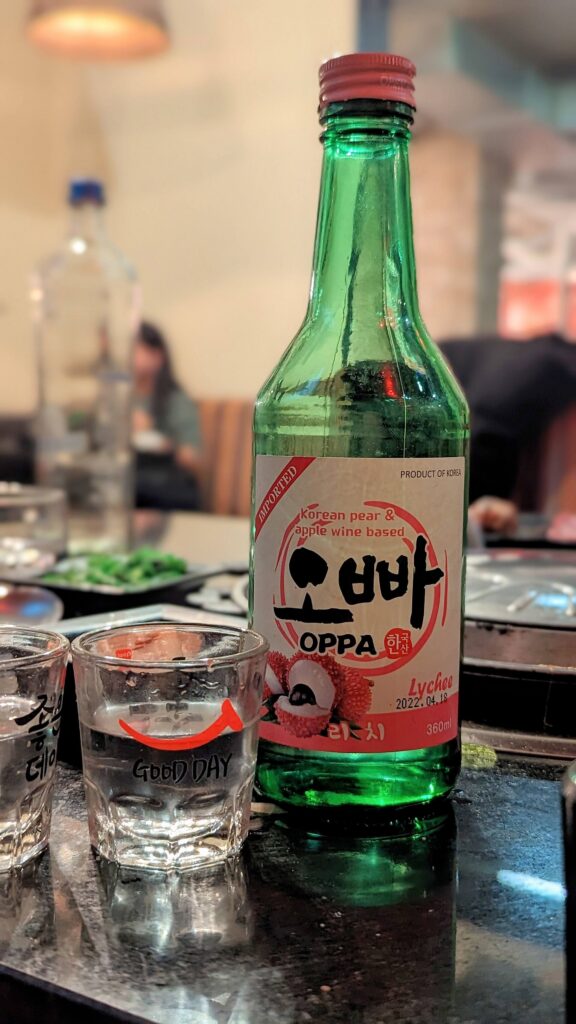
A soju-based flavored beverage, often fruit-led and approachable, with sweetness and alcohol balanced for its intended presentation. The family includes many formulations, so a single colour, sugar level or intensity would be misleading.
Color
Maturation
Alcohol
Sweetness
Balance
History
Modern flavored soju is best documented through the expansion of branded fruit-flavored products and international distribution. Lotte Chilsung’s 2019 announcement records Soonhari exports beginning in 2015 and a subsequent yogurt-flavored product for the United States. This supplies a dated example of the recent commercial development of flavored soju, without implying that Koreans first flavored distilled liquor in that year or that all such products have one origin. Lotte Chilsung: Soonhari export history and 2019 product announcement.
Classic characteristics
Appearance
Often clear and colourless, but colour depends on formulation.
Aroma
Usually fruit-led; grapefruit, grape, plum, strawberry and other expressions exist.
Flavor
Declared flavor generally dominates, with variable acidity, sweetness and base character.
Sweetness
Commonly sweet or medium-sweet in popular fruit examples; verify the sample.
Mouthfeel
Light through rounded; sweetness can soften perceived alcohol warmth.
Finish
Commonly short to medium, with flavor and sweetness rather than wood as the focus.
Flavor Profile Deep Dive
Judge the declared fruit/flavor and sweetness balance at actual strength; do not require traditional pot-distilled character. Investigate stale ingredients, an unpleasant solvent-like edge, or sweetness/bitterness that overwhelms the declared flavor. Intentional color or sweetening is not itself a defect.
Service notes
Taste at the intended serving temperature and identify aroma, sweetness and acidity separately. Fruit aroma does not prove fruit juice content, and a soft palate does not establish low alcohol. Staff should read the current bottle rather than rely on remembered strengths, which can change by market or release. For guests, state the flavor and actual ABV clearly and avoid describing all soju as equivalent in strength or production.
Style parameters
| Parameter | Boundary or expectation |
|---|---|
| Base material | Soju base plus declared flavoring |
| Bottled strength | Product- and market-specific; never transfer one brand's strength to the category. |
| Color and clarity | Often clear and colourless, but colour depends on formulation. |
| Maturation | Typically no intended wood character; verify exceptional presentations. |
| Additions | Flavoring is central; sweeteners, acids and colour depend on formulation. |
Legal limits apply only to the named jurisdiction and identity. ADI entry conditions and typical sensory expectations are separate; a product example is not a universal range.
Cocktail connections
Browse published cocktails. Documented recipes, conditional style choices and development substitutions are labeled separately.
No established classic or recognized modern cocktail match was found for this specific style in the sources reviewed. This records a research gap, not proof that no cocktail exists. No neighboring style has been substituted to fill the space.
Style comparison
This entry differs from unflavored soju through intentional flavor addition, not simply through a fruity aroma. The finished product's legal designation may differ between markets. In particular, a low-strength flavored product should not automatically be assigned the U.S. flavored-spirit class, whose minimum is discussed in the shared legal note.
Ingredients
Soju base plus declared flavoring
Production notes
ADI's “Flavord” spelling is corrected here. Its supplied definition duplicates the unflavored entry and does not explain flavoring; this guide therefore identifies added flavor as the practical distinction. The underlying soju may come from different production routes. Do not claim that every fruit-flavored product is traditionally pot-distilled or that the flavor comes from fresh fruit unless documented.
Commercial examples
No newly verified benchmark is designated in this revision. The original example discussion below remains a research lead, with its original qualifications.
Retained example and source context. Jinro Grapefruit illustrates a citrus-flavored presentation; HiteJinro's portfolio documents the broader fruit range. ADI supplies the entry boundary, with its duplicated definition corrected editorially.
Photo credit
Oppa Lychee Soju. Photo: Mitsjol / Wikimedia Commons. CC BY 4.0. Display resized; no other edits.
