
Flavored Agave Spirit
An agave-based spirit carrying an intentional additional flavor outside, or more broadly than, a named protected tequila category. Fruit, flowers, herbs and spices can each provide the leading impression. There is no defensible single target colour, sweetness or finish for the entire entry.
Color
Maturation
Alcohol
Sweetness
Balance
History
Flavored Agave Spirit is a broad product grouping, rather than a single geographically rooted tradition. Its modern classification context includes TTB’s creation of an agave-spirits class in 2020. That event helps explain the umbrella terminology, but does not date the first flavored agave drink. No independent founder or common origin date for this ADI category was established in the sources reviewed. TTB: modernization final rule, April 2, 2020.
Classic characteristics
Appearance
Clear or intentionally coloured; haze must be interpreted against formulation.
Aroma
Light to pronounced; declared flavor may lead or share space with agave.
Flavor
Product-specific balance of agave, added flavor, bitterness and spice.
Sweetness
Dry through sweet; formulation, rather than the category name, determines expectation.
Mouthfeel
Light, oily, rounded or viscous according to ingredients and strength.
Finish
Short through long; flavor persistence should fit the intended presentation.
Flavor Profile Deep Dive
Judge the declared flavor and agave base together; color and sweetness must be assessed against the actual formulation. Investigate stale ingredients, an unpleasant solvent-like edge, or sweetness/bitterness that overwhelms the declared flavor. Intentional color or sweetening is not itself a defect.
Service notes
Ask staff to create two descriptions: one stating verified production facts and another describing the glass. Compare them for unsupported assumptions. A fruity aroma should not become a claim that real juice was added unless the producer confirms it. In mixed drinks, consider whether the product contributes sweetness, bitterness, acidity or only aroma; these are different functions. Evaluate its intended use without penalizing it for failing to resemble an unflavored spirit.
Style parameters
| Parameter | Boundary or expectation |
|---|---|
| Base material | Agave-derived fermentable material; verify species and source |
| Bottled strength | Read the label; ADI allows products below ordinary agave-spirit bottling strength. |
| United States: bottled ABV | at least 30%; Only products qualifying as flavored spirits under 5.151; not every ADI entrant. |
| Color and clarity | Clear or intentionally coloured; haze must be interpreted against formulation. |
| Maturation | Optional; identify the treatment of the base and any later processing. |
| Additions | Define the entry; separate flavoring, sweetening and colouring when documented. |
Legal limits apply only to the named jurisdiction and identity. ADI entry conditions and typical sensory expectations are separate; a product example is not a universal range.
Cocktail connections
Browse published cocktails. Documented recipes, conditional style choices and development substitutions are labeled separately.
No established classic or recognized modern cocktail match was found for this specific style in the sources reviewed. This records a research gap, not proof that no cocktail exists. No neighboring style has been substituted to fill the space.
Style comparison
This entry overlaps flavored tequila when a compliant tequila is the base, but also allows agave products without that protected identity. Its distinction is therefore partly classificatory, not necessarily detectable by taste. A blind tasting cannot reliably determine geographical eligibility, and intense fruit flavor can obscure the sensory evidence of the base entirely.
Ingredients
Agave-derived fermentable material; verify species and source
Production notes
ADI recognizes flavor introduced by processes including distillation and maceration. Establish the underlying agave material and any protected origin separately from the flavoring method. The generic name does not authorize a tequila or mezcal claim. U.S. classification depends on the base, ingredients and finished strength; the U.S. flavored-spirit rule applies only where its conditions are met.
Commercial examples
No newly verified benchmark is designated in this revision. Select a documented qualifying expression before running a benchmark tasting.
Retained example and source context. The supplied ADI definition establishes this broad entry. U.S. flavored-spirit rule supplies classification context. No single commercial example is treated as representative of this unrestricted flavor family.
Photo credit
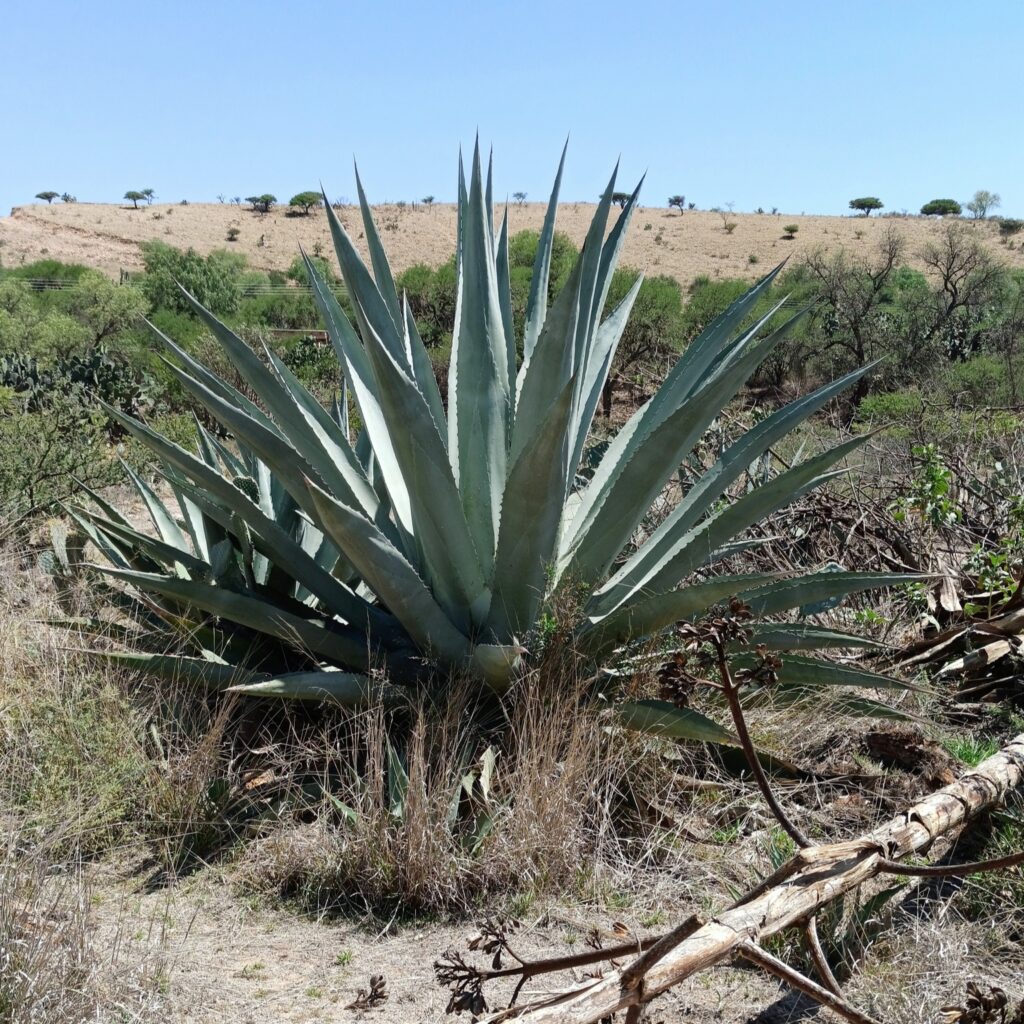
Ingredient or production reference: Agave americana, an example of the agave raw material. This photograph illustrates the raw material or process, not a bottle of this specific style. Photo: Juan Carlos Fonseca Mata / Wikimedia Commons. CC BY-SA 4.0. Display resized; no other edits.
,_Asparagaceae.jpg)
Keep exploring
- 27 CFR 5.151 — evidence reviewed 2026-09-17.