
Flavored Tequila
Tequila presented with a deliberate additional flavor. Successful examples make their intended flavor easy to recognize while maintaining a coherent balance among agave, sweetness, alcohol and any spice or bitterness. This is a formulation family, not one narrow aromatic style.
Color
Maturation
Alcohol
Sweetness
Balance
History
Flavored tequila belongs to the extension of tequila into explicitly flavored commercial products. A useful documented milestone is Mexico’s 2012 standard revision: the Ministry of Economy’s contemporary bulletin explains labeling provisions for added flavors, aromas and colors. That is evidence of formal recognition and labeling development, not a claim that flavoring tequila began in 2012. Mexico Ministry of Economy: December 2012 trade bulletin.
Classic characteristics
Appearance
Colourless through strongly coloured; depends on flavoring and presentation.
Aroma
Usually flavor-led; citrus, fruit, herbs or chili are possible directions.
Flavor
Added flavor with variable agave presence; bitterness or spice may be intentional.
Sweetness
Dry through sweet; do not infer sugar from a fruit name.
Mouthfeel
Light through rounded or viscous; chili sensation differs from alcohol warmth.
Finish
Variable length; assess natural-seeming flavor persistence and integration.
Flavor Profile Deep Dive
Judge the added flavor's definition and relationship to its tequila base; distinguish a liqueur from ordinary flavored spirit. Investigate stale ingredients, an unpleasant solvent-like edge, or sweetness/bitterness that overwhelms the declared flavor. Intentional color or sweetening is not itself a defect.
Service notes
Taste first without mixers to identify flavor concentration, sweetness and heat. Then test the intended drink at a consistent recipe. Citrus-flavored products may contribute aroma without supplying the acidity of fresh citrus juice, so substitution requires actual tasting. A guest description should state both the base and the added flavor. Staff should also distinguish chili warmth from increased alcohol strength and consult the product information when ingredients matter to a guest.
Style parameters
| Parameter | Boundary or expectation |
|---|---|
| Base material | Agave-derived fermentable material; verify species and source |
| Bottled strength | U.S. flavored-spirit class at least 30%; other designations have different conditions. |
| United States: bottled ABV | at least 30%; Only products qualifying as flavored spirits under 5.151; not every ADI entrant. |
| Color and clarity | Colourless through strongly coloured; depends on flavoring and presentation. |
| Maturation | Follows the documented base; flavoring does not establish barrel age. |
| Additions | Central to identity; confirm flavor, sweetening and colour information when available. |
Legal limits apply only to the named jurisdiction and identity. ADI entry conditions and typical sensory expectations are separate; a product example is not a universal range.
Cocktail connections
Browse published cocktails. Documented recipes, conditional style choices and development substitutions are labeled separately.
No established classic or recognized modern cocktail match was found for this specific style in the sources reviewed. This records a research gap, not proof that no cocktail exists. No neighboring style has been substituted to fill the space.
Style comparison
Compared with ordinary tequila, the added flavor is part of the intended identity rather than a tasting association. A cucumber-like note in an unflavored spirit does not make it cucumber-flavored tequila. Liqueur classification introduces its own compositional requirements; perceived sweetness alone should not be used to assign the legal class.
Related styles: 100% Agave Blanco Tequila · Flavored Agave Spirit.
Ingredients
Agave-derived fermentable material; verify species and source
Production notes
Flavor can be introduced through permitted production or blending methods, with the precise designation depending on market and formulation. The underlying tequila origin claim remains meaningful. Read the full label: a tequila-based liqueur, a flavored tequila and an ordinary tequila are not interchangeable descriptions. The U.S. flavored-spirit rule explains a material U.S. distinction.
Commercial examples
No newly verified benchmark is designated in this revision. The original example discussion below remains a research lead, with its original qualifications.
Retained example and source context. 21Seeds recipes and expressions illustrate cucumber-jalapeño and citrus directions. Legal framework: shared tequila and flavored-spirit references. These examples illustrate formulation choices, not a universal sweetness or quality standard.
Photo credit
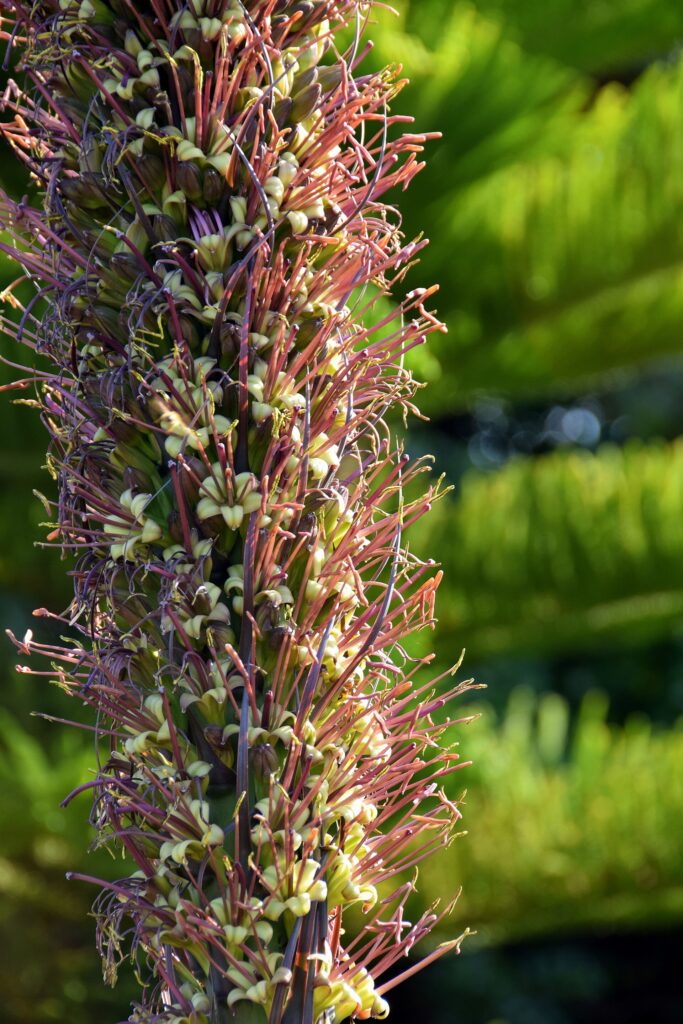
Ingredient or production reference: Blue agave, the tequila base ingredient. This photograph illustrates the raw material or process, not a bottle of this specific style. Photo: Tracie Hall from Orange County, us / Wikimedia Commons. CC BY-SA 2.0. Display resized; no other edits.
.jpg)
Keep exploring
- 27 CFR 5.151 — evidence reviewed 2026-09-17.