
Agave Spirit
A broad family of distilled agave products whose identity is established by raw material and production, rather than a single protected regional name. Expressions can emphasize green vegetation, cooked plant, fruit, fermentation or wood. A restrained example is not necessarily less representative than an intensely aromatic one.
Color
Maturation
Alcohol
Sweetness
Balance
History
Agave Spirit is an umbrella under which distinct regional traditions and newer products can be discussed. A significant U.S. milestone came in 2020, when TTB established an agave-spirits class containing tequila and mezcal. This was an American classification change, not the creation of agave distillation or the origin of the Mexican traditions it recognizes. TTB: modernization final rule, April 2, 2020.
Classic characteristics
Appearance
Usually clear and colourless when unaged; wood-treated examples may be gold or amber.
Aroma
Light to pronounced; vegetal, cooked agave, citrus, floral or fermentation-derived fruit.
Flavor
Agave expression varies; pepper, herbs and earthy associations are possibilities, not requirements.
Sweetness
Commonly dry; sweet-smelling agave does not establish residual sugar.
Mouthfeel
Light through oily or rounded, with strength-dependent warmth.
Finish
Short through long; assess whether plant, fruit or wood persists coherently.
Flavor Profile Deep Dive
Use the declared agave material, origin and treatment to set expectations; the umbrella has no single ideal flavor. Investigate persistent unpleasant solvent-like, stale or sulfurous character in context. Do not diagnose a specific production error from one aroma; appropriate fermentation character and proof-related warmth are not automatic faults.
Service notes
Compare two examples with different starting materials and record observations before reading their production stories. This tests whether the proposed explanation actually fits the glass. Describe a bottle to a guest through its observed flavour and origin, then explain the broader category. For cocktails, assess the balance of herbal character, warmth and weight before substituting it for another agave product.
Style parameters
| Parameter | Boundary or expectation |
|---|---|
| Base material | Agave-derived fermentable material; verify species and source |
| Bottled strength | ADI entry and ordinary U.S. class require at least 40%; read actual label. |
| United States: bottled ABV | at least 40%; U.S. agave-spirit designation; stricter protected-origin requirements may apply. |
| Color and clarity | Usually clear and colourless when unaged; wood-treated examples may be gold or amber. |
| Maturation | Unaged, rested or wood-treated; this name supplies no age guarantee. |
| Additions | Establish actual formulation and applicable designation; avoid assumptions from the plant name. |
Legal limits apply only to the named jurisdiction and identity. ADI entry conditions and typical sensory expectations are separate; a product example is not a universal range.
Cocktail connections
Browse published cocktails. Documented recipes, conditional style choices and development substitutions are labeled separately.
No established classic or recognized modern cocktail match was found for this specific style in the sources reviewed. This records a research gap, not proof that no cocktail exists. No neighboring style has been substituted to fill the space.
Style comparison
Agave spirit is not automatically tequila, mezcal or a lower grade of either. A geographical restriction can explain a different name even when raw material or technique resembles a protected product. Conversely, a generic agave label can cover a production approach with little sensory resemblance to traditional heart-cooked spirits. The useful distinction is documented composition and process.
Ingredients
Agave-derived fermentable material; verify species and source
Production notes
ADI includes spirits from agave hearts or agave-derived syrups. These starting points can produce substantially different profiles. The shared U.S. agave-spirit definition applies where that legal designation is used; being outside a Mexican denomination does not eliminate the need for an accurate statement of composition. Record country, species, sugar source, cooking, fermentation, still and maturation whenever available.
Commercial examples
No newly verified benchmark is designated in this revision. The original example discussion below remains a research lead, with its original qualifications.
Retained example and source context. Gavé's process describes Mexican distillate subsequently processed in California, illustrating why the complete production location matters. U.S. identity: shared agave reference in the shared references.
Photo credit
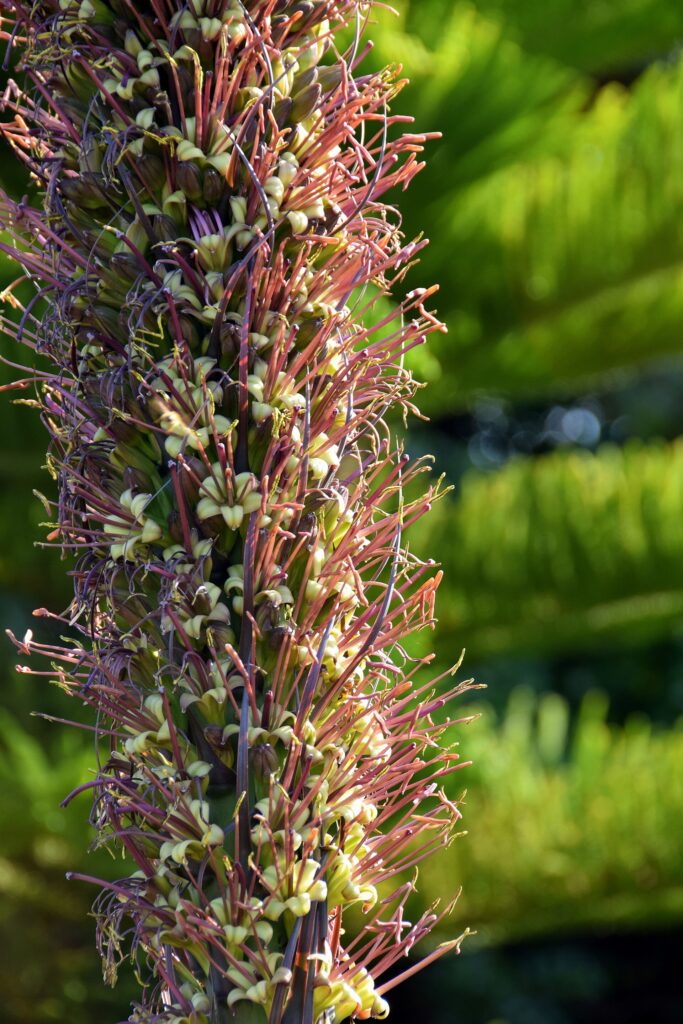
Ingredient or production reference: Blue agave flower stalk. This photograph illustrates the raw material or process, not a bottle of this specific style. Photo: Tracie Hall from Orange County, us / Wikimedia Commons. CC BY-SA 2.0. Display resized; no other edits.
.jpg)
Keep exploring
- 27 CFR 5.148 — evidence reviewed 2026-09-17.