
Mezcal
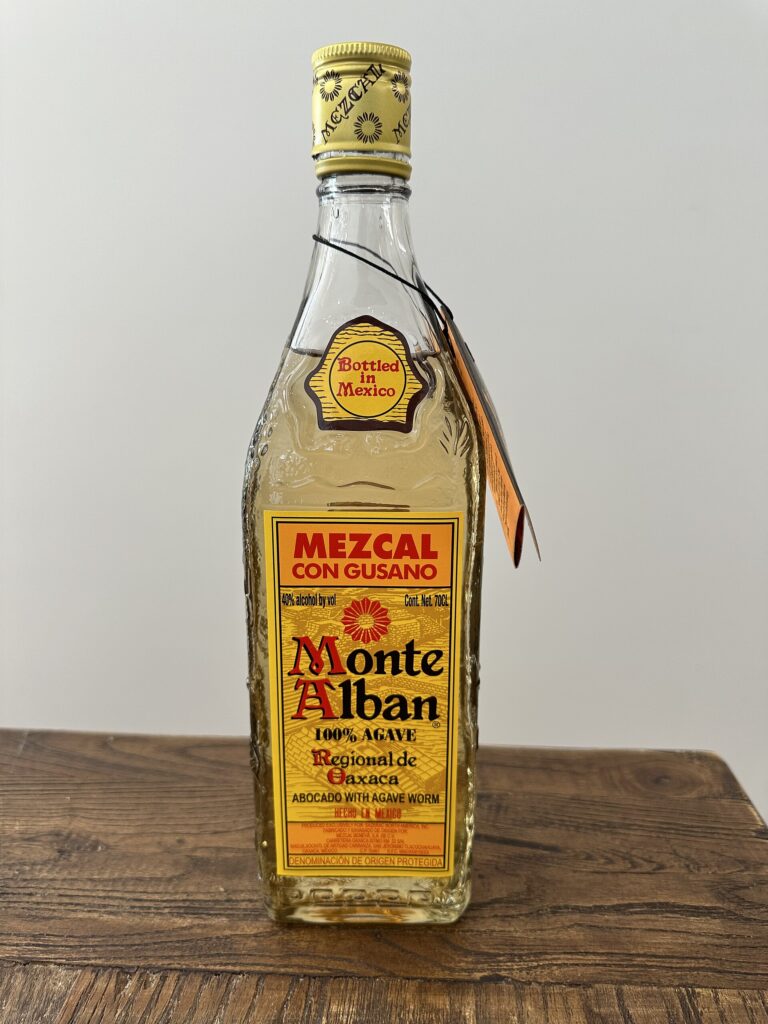
A broad protected agave-spirit identity and, within the Mexican standard, the name of a particular production category. Its sensory scope is too wide for a single smoke, sweetness or texture target. The guide retains this ADI entry without collapsing it into the two separately listed production categories.
Color
Maturation
Alcohol
Sweetness
Balance
History
Mezcal’s modern protected identity took an important step with Mexico’s denomination of origin in 1994. This brought a range of regional agave-distilling traditions under a legally protected name. The designation is a milestone in recognition and commercialization, not an invention date; individual communities, agave species and production traditions retain histories that cannot be reduced to that one national event. Mexico Agriculture Ministry: maguey and mezcal.
Classic characteristics
Appearance
Colourless through amber according to class and treatment.
Aroma
Light to pronounced; agave, fruit, herbs, earth, smoke or wood in varying balance.
Flavor
Broad; no single aromatic descriptor proves or disproves the category.
Sweetness
Often dry for untreated spirit; declared flavored presentations require separate assessment.
Mouthfeel
Light through rounded or oily, with strength-dependent warmth.
Finish
Short through long; evaluate whether identifiable character persists beyond alcohol heat.
Flavor Profile Deep Dive
Establish whether “Mezcal” means the specific production class or the wider family before scoring typicality. Investigate persistent unpleasant solvent-like, stale or sulfurous character in context. Do not diagnose a specific production error from one aroma; appropriate fermentation character and proof-related warmth are not automatic faults.
Service notes
Begin with a label-reading exercise separating category, class, species, producer and alcohol strength. Then taste without attempting to infer every production detail. This prevents the common mistake of treating “mezcal” as a synonym for smoke or “ancestral” as a synonym for quality. For guests, lead with the bottle's actual character and explain technical distinctions only when they help the choice. A concise, accurate description is preferable to an elaborate production story unsupported by the label.
Style parameters
| Parameter | Boundary or expectation |
|---|---|
| Base material | Agave-derived fermentable material; verify species and source |
| Bottled strength | Mexico 35–55% ABV; ordinary U.S. mezcal at least 40%. |
| Mexico: bottled ABV | at least 35% and at most 55%; Mezcal; production class and maturation class are separate. |
| United States: bottled ABV | at least 40%; U.S. agave-spirit designation; stricter protected-origin requirements may apply. |
| Color and clarity | Colourless through amber according to class and treatment. |
| Maturation | Use the actual certified class rather than inferring age from colour. |
| Additions | Abocado con and destilado con are distinct routes; identify the actual product. |
Legal limits apply only to the named jurisdiction and identity. ADI entry conditions and typical sensory expectations are separate; a product example is not a universal range.
Cocktail connections
Style comparison
A bottle certified simply as Mezcal should not automatically be described as artesanal because it is produced in small quantities. Conversely, the wider equipment allowance does not prove that a producer uses every available technique. Sensory judgment should evaluate what is present, while production classification should follow reliable documentation.
Ingredients
Agave-derived fermentable material; verify species and source
Production notes
As a specific category, Mezcal permits a wider range of cooking, extraction and distillation equipment, including options unavailable to artesanal or ancestral production. As an umbrella word on a menu, it may encompass all three. Establish which meaning is intended before explaining a bottle. Maturation and ingredient classes remain separate, as shown in the shared table.
Commercial examples
No newly verified benchmark is designated in this revision. Select a documented qualifying expression before running a benchmark tasting.
Retained example and source context. Shared NOM-070 and U.S. agave references establish the boundaries. No commercial bottle is assigned to the specific Mezcal production category here without its certification being verified; examples in adjacent entries illustrate the broader family only.
Photo credit
Monte Alban Mezcal. Photo: Indrajit Das / Wikimedia Commons. CC BY-SA 4.0. Display resized; no other edits.

Keep exploring
- NOM-070-SCFI-2016 — evidence reviewed 2026-09-18.
- 27 CFR 5.148 — evidence reviewed 2026-09-17.