
Mezcal Artisanal
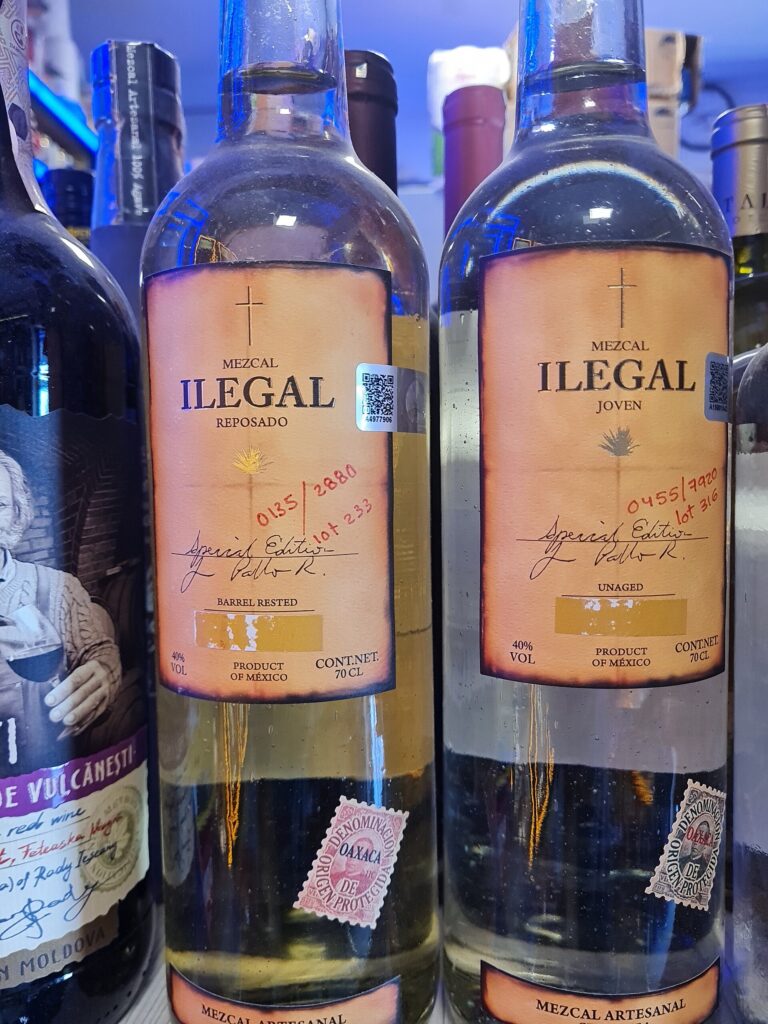
A mezcal category with wide sensory scope: cooked agave, fruit, herbs, earth and smoke can appear in different proportions. A well-described example communicates those proportions rather than relying on “smoky” as a complete tasting note.
Color
Maturation
Alcohol
Sweetness
Balance
History
Mezcal Artisanal received its present formal category identity in the mezcal standard published in 2017, alongside Mezcal and Mezcal Ancestral. The classification distinguished production approaches within an already established regional spirit. It therefore marks regulatory recognition of particular methods, not the beginning of small-scale mezcal making or a single historical school followed by every artisanal producer. Mexico: NOM-070-SCFI-2016, published 2017.
Classic characteristics
Appearance
Usually clear and colourless for joven; maturation can add colour.
Aroma
Medium to pronounced in many examples; cooked agave, citrus, herbs or smoke.
Flavor
Vegetal, fruity, earthy and spicy elements; their balance varies substantially.
Sweetness
Commonly dry in untreated expressions, with possible sweet aromatic impressions.
Mouthfeel
Light through oily; warming, sometimes with a firm peppery sensation.
Finish
Medium to long in expressive examples; describe development as well as persistence.
Flavor Profile Deep Dive
Judge the maker's actual artisanal expression; the legal equipment class does not require identical aroma across batches. Investigate persistent unpleasant solvent-like, stale or sulfurous character in context. Do not diagnose a specific production error from one aroma; appropriate fermentation character and proof-related warmth are not automatic faults.
Service notes
Use two artesanal mezcals from different producers or villages to demonstrate variation within the same legal category. Ask which notes are shared and which distinguish the samples. Keep descriptions concrete: citrus peel, mint or cooked agave is more useful than “authentic.” When discussing production, separate verified details from plausible explanations. For guests, combine the regional and producer identity with a short sensory description, allowing them to choose by flavour rather than an assumed hierarchy of labels.
Style parameters
| Parameter | Boundary or expectation |
|---|---|
| Base material | Agave-derived fermentable material; verify species and source |
| Bottled strength | Mexico 35–55% ABV; ordinary U.S. mezcal at least 40%; strength alone does not establish concentration or quality. |
| Mexico: bottled ABV | at least 35% and at most 55%; Mezcal; production class and maturation class are separate. |
| United States: bottled ABV | at least 40%; U.S. agave-spirit designation; stricter protected-origin requirements may apply. |
| Color and clarity | Usually clear and colourless for joven; maturation can add colour. |
| Maturation | Separate joven, glass-rested and wood-aged classes must be identified. |
| Additions | Declared distillation ingredients or later additions require separate explanation. |
Legal limits apply only to the named jurisdiction and identity. ADI entry conditions and typical sensory expectations are separate; a product example is not a universal range.
Cocktail connections
Browse published cocktails. Documented recipes, conditional style choices and development substitutions are labeled separately.
No established classic or recognized modern cocktail match was found for this specific style in the sources reviewed. This records a research gap, not proof that no cocktail exists. No neighboring style has been substituted to fill the space.
Style comparison
Artesanal is a regulated production category, not a general compliment. It does not identify one species, one village or one degree of smoke. Compared with ancestral, some equipment options differ; compared with the general Mezcal production category, the permitted toolkit is narrower. None of those differences creates a compulsory sensory ranking.
Ingredients
Agave-derived fermentable material; verify species and source
Production notes
ADI's English label corresponds to Mezcal Artesanal. Its production rules allow pit or masonry cooking and specified milling, fermentation and direct-fired pot-distillation approaches. Copper or clay distillation can be used within the permitted configuration. It is therefore broader in equipment than ancestral while remaining distinct from the unrestricted assumption that any small producer is legally artesanal.
Commercial examples
No newly verified benchmark is designated in this revision. The original example discussion below remains a research lead, with its original qualifications.
Retained example and source context. Del Maguey Chichicapa specification documents a 48% expression with cooked-agave, earthy and mint/chocolate associations. Legal category: NOM-070 reference.
Photo credit
Ilegal Mezcal Artisanal bottles. Photo: Belenois / Wikimedia Commons. CC BY-SA 4.0. Display resized; no other edits.

Keep exploring
- NOM-070-SCFI-2016 — evidence reviewed 2026-09-18.
- 27 CFR 5.148 — evidence reviewed 2026-09-17.