
Feni
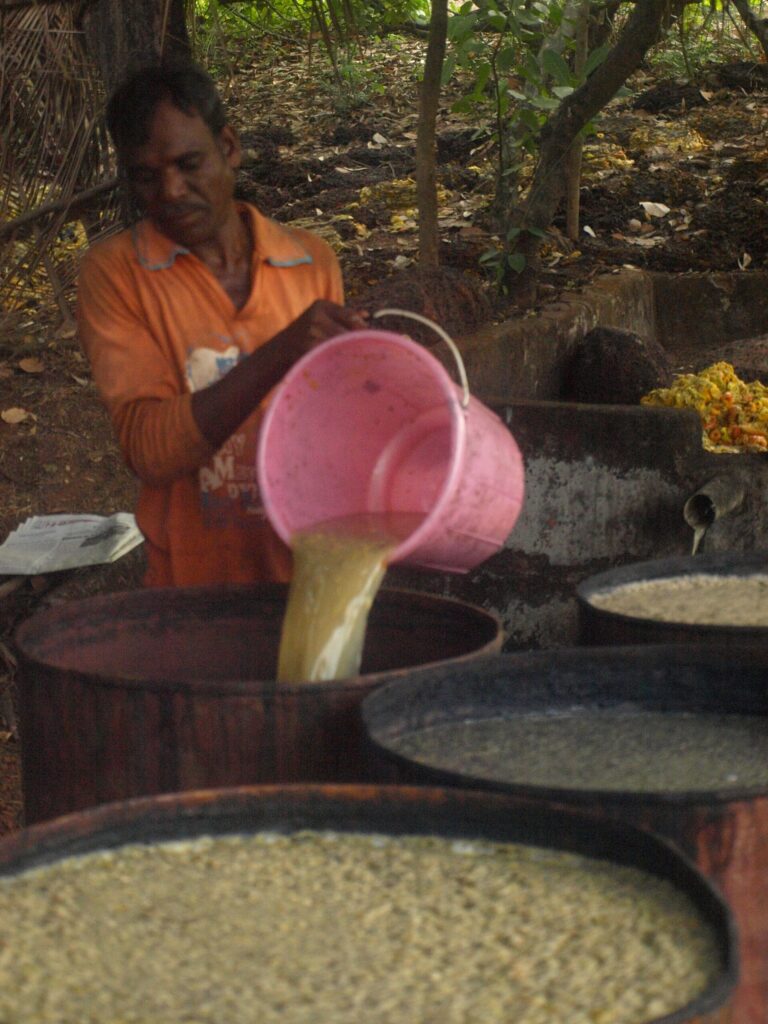
A Goan spirit with two major raw-material traditions: cashew apple and coconut-palm sap. Cashew examples can be vividly fruity and pungent; coconut-sap expressions have a different fermentation character and should not be expected to taste like sweet coconut cream.
Color
Maturation
Alcohol
Sweetness
Balance
History
Feni reflects Goa’s intertwined agricultural and social history. Coconut-based production and cashew-based production should be distinguished: cashew’s arrival through Portuguese-era exchange created a different raw-material lineage from coconut palm sap. Field research on geographical protection documents the local knowledge, small producers and trade relationships behind the drink. The modern protection campaign focused on cashew feni, so its history should not erase the separate coconut-feni tradition. Dwijen Rangnekar: field research on protecting Feni.
Classic characteristics
Appearance
Commonly clear and colourless; wood-treated products require separate identification.
Aroma
Cashew: pronounced fruit and fermentation character; coconut: a separate sap-derived profile.
Flavor
Fruit-led or sap-led according to type, often with earthy or spicy associations.
Sweetness
Generally dry to sweet-seeming in untreated examples; not inherently a liqueur.
Mouthfeel
Warming, potentially rounded; concentration varies by producer and strength.
Finish
Medium or longer in expressive examples, with persistent raw-material character.
Flavor Profile Deep Dive
Identify cashew or coconut first; judge each on its own material and fermentation expression. Investigate persistent unpleasant solvent-like, stale or sulfurous character in context. Do not diagnose a specific production error from one aroma; appropriate fermentation character and proof-related warmth are not automatic faults.
Service notes
Present cashew and coconut examples side by side when possible. Ask tasters to describe fruit, fermentation and texture separately. Pungency alone does not establish poor quality; assess whether the aroma is coherent and the finish balanced. When introducing cashew Feni, explicitly explain the apple-versus-nut distinction while relying on the actual product's ingredient information for guest questions.
Style parameters
| Parameter | Boundary or expectation |
|---|---|
| Base material | Cashew-apple juice or coconut toddy |
| Bottled strength | FSSAI table lists 19–43% for cashew and coconut Feni; verify local presentation. |
| India: bottled ABV | at least 19% and at most 43%; Feni, cashew or coconut, Table 1. |
| Color and clarity | Commonly clear and colourless; wood-treated products require separate identification. |
| Maturation | Glass resting is documented; it does not impart oak flavour. |
| Additions | Establish the product's formulation; flavored preparations should be described separately. |
Legal limits apply only to the named jurisdiction and identity. ADI entry conditions and typical sensory expectations are separate; a product example is not a universal range.
Cocktail connections
Browse published cocktails. Documented recipes, conditional style choices and development substitutions are labeled separately.
No established classic or recognized modern cocktail match was found for this specific style in the sources reviewed. This records a research gap, not proof that no cocktail exists. No neighboring style has been substituted to fill the space.
Style comparison
Raw material is the first distinction to teach. Feni is not one homogeneous flavour and coconut Feni is not coconut-flavored neutral spirit. Glass resting should also be distinguished from barrel maturation: elapsed time and wood extraction are different production variables. In U.S. service, preserve the labeled identity rather than assuming that the product meets a familiar Western spirit standard.
Ingredients
Cashew-apple juice or coconut toddy
Production notes
Fermented cashew-apple juice or coconut toddy is distilled, commonly in small-batch equipment. India's FSSAI definition recognizes both sources. The registered Feni geographical indication must be read within its cashew-specific context rather than automatically extended to every palm spirit. The fruit used for cashew Feni is the fleshy apple, not a distillate of the nut.
Commercial examples
No newly verified benchmark is designated in this revision. Select a documented qualifying expression before running a benchmark tasting.
Retained example and source context. FSSAI regulations, §2.3 and Table 1; GI register; Cazulo cashew production and two expressions.
Photo credit
Ingredient or production reference: Cashew fruit fermentation in Chorao, Goa. This photograph illustrates the raw material or process, not a bottle of this specific style. Photo: Fredericknoronha / Wikimedia Commons. CC BY-SA 3.0. Display resized; no other edits.

Keep exploring
- FSSAI consolidated alcoholic-beverage regulations, August 2025 — evidence reviewed 2026-09-18.