
Extra Añejo Tequila
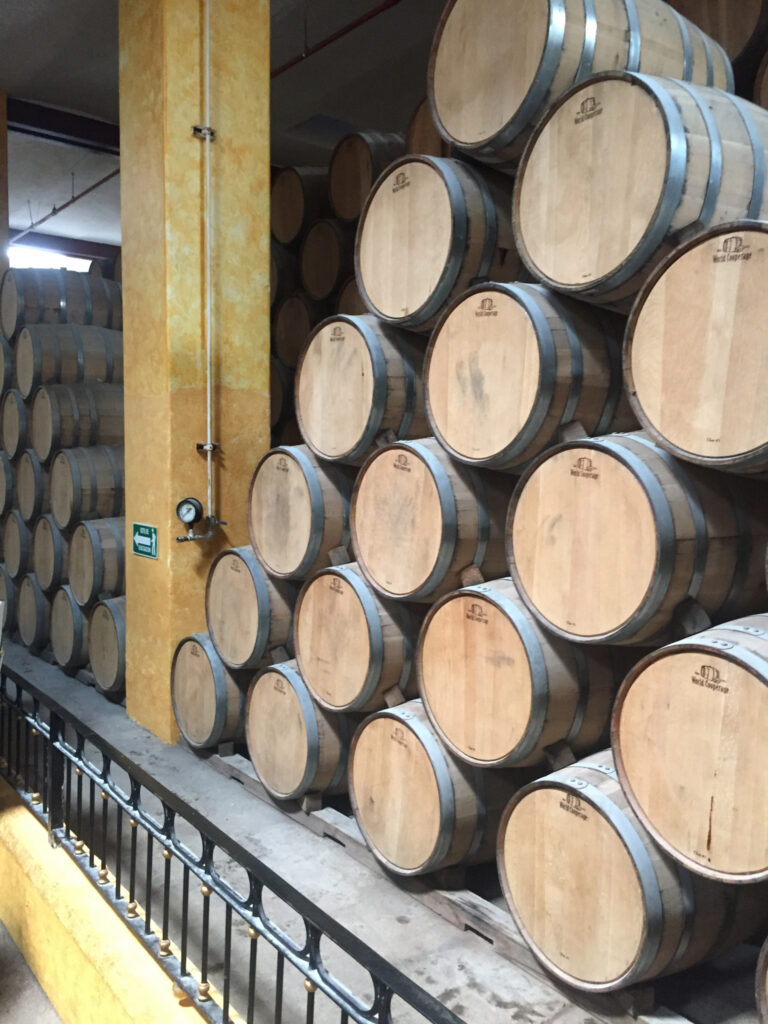
A tequila in the extended maturation class, potentially rich in wood-derived character. Its unqualified category name leaves the fermentation-sugar declaration to the individual label rather than determining it by omission.
Color
Maturation
Alcohol
Sweetness
Balance
History
Mexico’s tequila standard published in 2006 formally recognized extra añejo, distinguishing it from añejo. That milestone applies across tequila’s raw-material categories. The ADI separation from 100% agave extra añejo is therefore a judging distinction within one maturation history, not evidence of two independently invented spirits. Mexico: NOM-006-SCFI-2005, published 2006.
Classic characteristics
Appearance
Often amber or deeper; filtered variants require their own presentation note.
Aroma
Medium to pronounced; developed oak, spice and retained agave character.
Flavor
Broadly mature and barrel-influenced; the degree of agave expression varies.
Sweetness
Dry through sweet-seeming; age does not establish sugar concentration.
Mouthfeel
Rounded through drying; assess wood grip and alcohol together.
Finish
Often sustained, but short examples are possible; duration is not guaranteed.
Flavor Profile Deep Dive
Judge extended maturation within the documented sugar category; do not demand a distinct flavor from the overlapping S002 entry. Investigate persistent solvent-like pungency, unpleasant stale character or wood astringency that overwhelms the intended expression. A descriptor alone cannot prove a distillation-cut error, additive use or chemical safety.
Service notes
Ask participants to build an explanation using three separate facts: what the label guarantees, what the producer additionally documents, and what they observe in the glass. This prevents an attractive age story from replacing a useful sensory description. For a guest interested in barrel-aged spirits, offer the actual bottle's dominant characteristics and explain how much agave remains apparent. In a staff comparison, include an añejo with a different cask regime to show why maturation category and flavour intensity are related imperfectly.
Style parameters
Legal limits apply only to the named jurisdiction and identity. ADI entry conditions and typical sensory expectations are separate; a product example is not a universal range.
Cocktail connections
Browse published cocktails. Documented recipes, conditional style choices and development substitutions are labeled separately.
No established classic or recognized modern cocktail match was found for this specific style in the sources reviewed. This records a research gap, not proof that no cocktail exists. No neighboring style has been substituted to fill the space.
Style comparison
Relative to añejo, the decisive distinction is the documented maturation class. Relative to S002, it is the scope of the name rather than a defensible universal sensory boundary. Neither a strong vanilla impression nor a very rounded texture proves whether other fermentable sugars or permitted additions were involved. A tasting note can describe those sensations without claiming to diagnose the recipe.
Related styles: 100% Agave Extra Añejo Tequila · Añejo Tequila.
Ingredients
Agave tequilana Weber var. azul; verify declared fermentation category
Production notes
Apply extra añejo (at least three years in oak vessels no larger than 600 L) and identify whether the product carries the 100% agave declaration. The ADI source preserves this row separately from S002 but supplies the same legal reference. Accordingly, the guide treats it as a broader named entry with sensory overlap, not a separate flavour species.
Commercial examples
| Expression | Stated ABV | Source/market review | Eligibility note |
|---|---|---|---|
| Patrón Extra Añejo | 40% | Producer-listed expression; local availability not verified; checked 2026-09-18 | 100% agave expression. ADI headings without “100%” overlap this product; they do not establish mixed-sugar production. |
Retained example and source context. See the documented 100% example in S002 as an overlapping expression, not proof of a separate mixed-sugar market norm. Legal identity: shared tequila rules and ADI's supplied category definition.
Photo credit
Ingredient or production reference: Tequila aging barrels in Jalisco. This photograph illustrates the raw material or process, not a bottle of this specific style. Photo: Javier Salazar Villagomez / Wikimedia Commons. CC BY-SA 4.0. Display resized; no other edits.

Keep exploring
- NOM-006-SCFI-2012 — evidence reviewed 2026-09-18.
- 27 CFR 5.148 — evidence reviewed 2026-09-17.