
100% Agave Extra Añejo Tequila
A mature tequila with substantial cask influence, often inviting comparison with other aged sipping spirits. Its character should still be assessed as an expression of agave, not as an attempt to reproduce whiskey or brandy.
Color
Maturation
Alcohol
Sweetness
Balance
History
Extra añejo became a formally named tequila class in the Mexican standard published in 2006. That recognition gave extensively matured tequila a distinct identity beyond añejo. The 100% agave version shares this regulatory milestone; the date records formal classification, not the first occasion on which someone kept tequila in wood for several years. Mexico: NOM-006-SCFI-2005, published 2006.
Classic characteristics
Appearance
Usually gold through deep amber; filtration can alter this expectation.
Aroma
Often pronounced; wood, baking spice, vanilla and nut-like notes around quieter agave.
Flavor
Medium to pronounced; layered oak and spice with retained plant character.
Sweetness
Dry to rounded and sweet-seeming; measure sugar separately if needed.
Mouthfeel
Commonly substantial, with warmth and a progressively drying finish.
Finish
Often medium-long to long; examine flavour persistence, not just tannin.
Flavor Profile Deep Dive
Assess whether extended cask influence remains coherent; more wood or a longer finish is not automatically better. Investigate persistent solvent-like pungency, unpleasant stale character or wood astringency that overwhelms the intended expression. A descriptor alone cannot prove a distillation-cut error, additive use or chemical safety.
Service notes
Compare with an añejo and describe whether the wood creates additional detail or simply greater dominance. Avoid a scoring exercise that rewards intensity alone. A good discussion asks whether agave, wood, alcohol and texture form a coherent impression. For consumer education, “longer oak maturation with more opportunity for barrel character” communicates the category without promising a particular degree of smoothness. Try the actual bottle before proposing a substitution in a whiskey cocktail: sweetness, tannin and aromatic balance may require recipe adjustments.
Style parameters
Legal limits apply only to the named jurisdiction and identity. ADI entry conditions and typical sensory expectations are separate; a product example is not a universal range.
Cocktail connections
Browse published cocktails. Documented recipes, conditional style choices and development substitutions are labeled separately.
No established classic or recognized modern cocktail match was found for this specific style in the sources reviewed. This records a research gap, not proof that no cocktail exists. No neighboring style has been substituted to fill the space.
Style comparison
This is the more extended maturation class relative to añejo. It need not be the sweetest, darkest or strongest tequila on a table. Those properties must be observed or documented independently. In a blind exercise, extensive barrel influence may make identification harder; that difficulty is not evidence that the producer used a different base material.
Related styles: 100% Agave Añejo Tequila · Extra Añejo Tequila.
Ingredients
100% Agave tequilana Weber var. azul fermentable sugars
Production notes
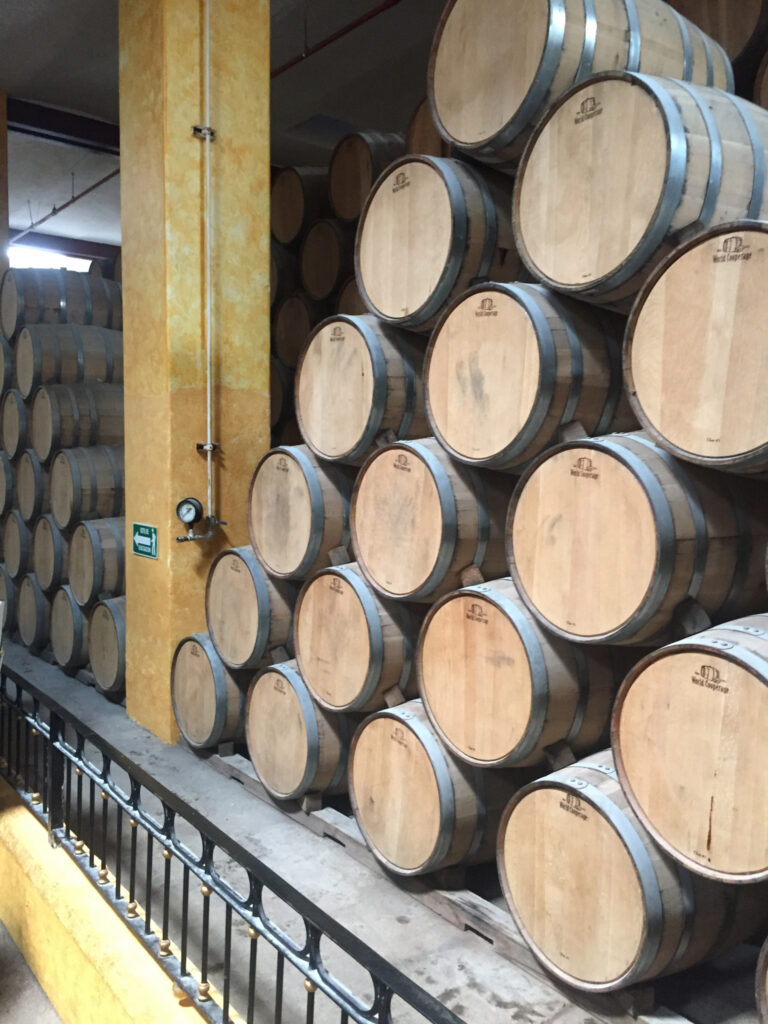
The 100% agave category and extra añejo (at least three years in oak vessels no larger than 600 L) maturation class apply together. Additional years or a special cask finish are product information, not universal requirements. The choice and condition of wood help explain why two similarly aged bottles can differ markedly in colour, drying sensation and aromatic emphasis.
Commercial examples
| Expression | Stated ABV | Source/market review | Eligibility note |
|---|---|---|---|
| Patrón Extra Añejo | 40% | Producer-listed expression; local availability not verified; checked 2026-09-18 | Producer identifies 100% blue agave and the named class; stated bottle strength checked. |
Retained example and source context. Patrón Extra Añejo illustrates a multi-oak approach and nut, spice and vanilla associations. Legal parameters: shared tequila rules.
Photo credit
Ingredient or production reference: Tequila aging barrels in Jalisco. This photograph illustrates the raw material or process, not a bottle of this specific style. Photo: Javier Salazar Villagomez / Wikimedia Commons. CC BY-SA 4.0. Display resized; no other edits.

Keep exploring
- NOM-006-SCFI-2012 — evidence reviewed 2026-09-18.
- 27 CFR 5.148 — evidence reviewed 2026-09-17.