
100% Agave Añejo Tequila
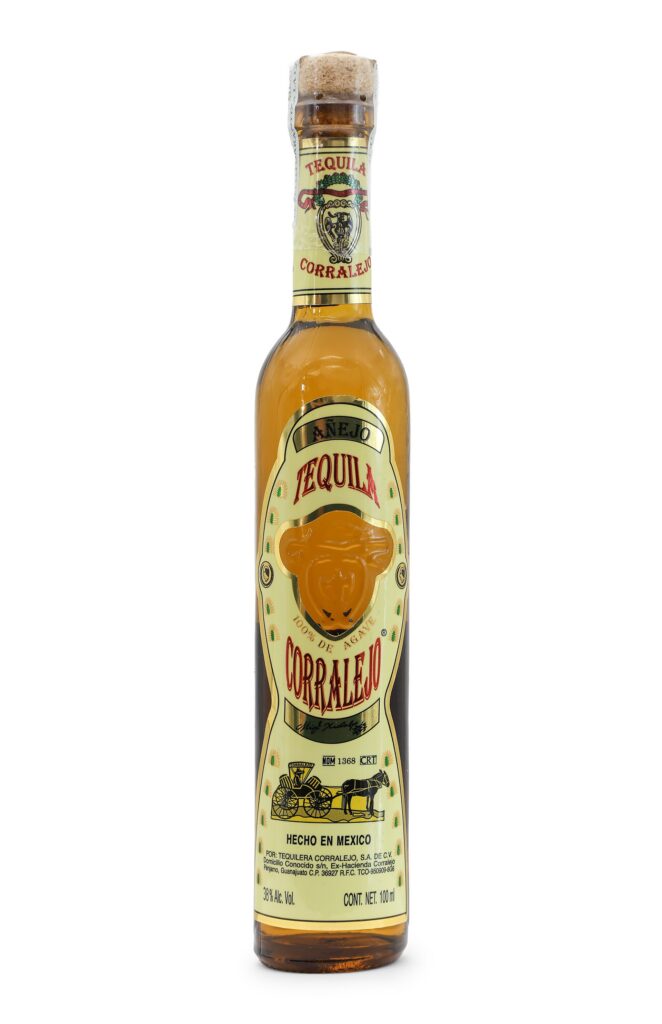
An oak-matured tequila in which cooked agave meets a developed barrel character. Its educational value is the relationship between the two: a recognizably agave-based spirit with the additional structure and aromatic detail of maturation.
Color
Maturation
Alcohol
Sweetness
Balance
History
Añejo belongs to tequila’s evolution from regional agave distilling into an industrial and commercial spirit. UNESCO dates the Tequila region’s distilling tradition to the sixteenth century and emphasizes its later industrial growth. The 100% agave designation identifies the fermentation source; it does not establish a separate invention story for aged tequila. UNESCO: Agave Landscape and Ancient Industrial Facilities of Tequila.
Classic characteristics
Appearance
Clear gold to amber; depth varies with cask and presentation.
Aroma
Medium to pronounced; baked agave, vanilla, caramel and wood spice.
Flavor
Medium to pronounced; agave remains identifiable beneath oak, sometimes with chocolate or orange associations.
Sweetness
Often dry to softly sweet-seeming; sweet aromas do not quantify sugar.
Mouthfeel
Rounded entry followed by warming alcohol and some drying wood grip.
Finish
Medium to long; agave, spice and oak may develop in sequence.
Flavor Profile Deep Dive
Assess agave definition alongside developed oak; dryness from tannin should not erase the base spirit. Investigate persistent solvent-like pungency, unpleasant stale character or wood astringency that overwhelms the intended expression. A descriptor alone cannot prove a distillation-cut error, additive use or chemical safety.
Service notes
Taste beside a blanco from the same producer and ask which observations appear in both glasses. Then identify the additional features in the añejo. For a guest who enjoys aged spirits, explain it as “agave with a substantial oak contribution,” and name only the flavours observed in the actual pour. Neat service or a measured addition of water makes a useful learning comparison; neither is a mandatory way to enjoy it.
Style parameters
Legal limits apply only to the named jurisdiction and identity. ADI entry conditions and typical sensory expectations are separate; a product example is not a universal range.
Cocktail connections
Browse published cocktails. Documented recipes, conditional style choices and development substitutions are labeled separately.
No established classic or recognized modern cocktail match was found for this specific style in the sources reviewed. This records a research gap, not proof that no cocktail exists. No neighboring style has been substituted to fill the space.
Style comparison
Compare with reposado for the balance between plant-derived and barrel-derived character, rather than simply asking which is darker. Compared with extra añejo, an añejo can retain a more immediate agave impression, but age alone cannot establish that difference. A highly active cask can complicate any neat progression from light to heavy.
Related styles: 100% Agave Reposado Tequila · 100% Agave Extra Añejo Tequila · Añejo Tequila.
Ingredients
100% Agave tequilana Weber var. azul fermentable sugars
Production notes
This entry combines the 100% agave fermentation category with the añejo (at least one year in oak vessels no larger than 600 L) maturation class. It does not require a single estate, a particular extraction method or one barrel per bottling. Those production claims belong to individual products. The tequila additions provisions governs additions; the agricultural declaration should not be used as shorthand for an additive-free process.
Commercial examples
| Expression | Stated ABV | Source/market review | Eligibility note |
|---|---|---|---|
| Patrón Añejo | 40% | Producer-listed expression; local availability not verified; checked 2026-09-18 | Producer identifies 100% blue agave and the named class; stated bottle strength checked. |
Retained example and source context. Patrón Añejo documents agave, wood, spice and a developed finish. Legal parameters: shared tequila rules.
Photo credit
Corralejo 100% agave añejo tequila. Photo: Chris Woodrich / Wikimedia Commons. CC BY 4.0. Display resized; no other edits.

Keep exploring
- NOM-006-SCFI-2012 — evidence reviewed 2026-09-18.
- 27 CFR 5.148 — evidence reviewed 2026-09-17.