
Calvados
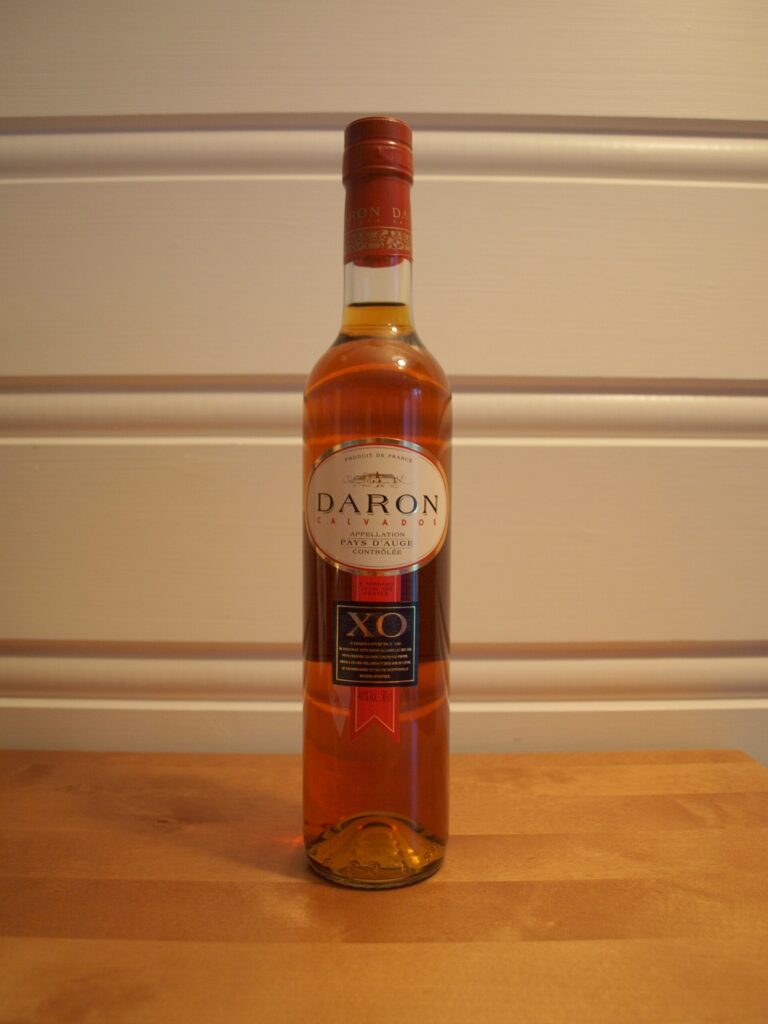
A protected Normandy cider or perry spirit matured in oak, with apple, pear and wood appearing in different balances. Young expressions may emphasize fresh orchard fruit; longer maturation can introduce baked fruit, spice, nuts and more developed savoury detail.
Color
Maturation
Alcohol
Sweetness
Balance
History
Calvados’s history is rooted in Normandy’s orchards and cider culture. The record of cider distillation made by Gilles de Gouberville in 1553 is an important documentary landmark, although it does not establish him as the inventor. The regional tradition subsequently acquired a distinct commercial and protected identity. Its history should therefore separate the early evidence for distillation from the later organization of Calvados as a named appellation. Calvados interprofession: history.
Classic characteristics
Appearance
Pale gold through deep amber, depending on maturation and presentation.
Aroma
Apple or pear, flowers, cider-like fruit, vanilla, baking spice and mature nutty notes.
Flavor
Orchard-fruit identity supported by oak; freshness and developed character vary with age.
Sweetness
Commonly dry to sweet-seeming; baked-apple aromas do not establish sugar content.
Mouthfeel
Light and lively through rounded and tannic; wood can add drying structure.
Finish
Medium to long in expressive examples, carrying fruit, spice and maturation detail.
Flavor Profile Deep Dive
Identify appellation and age class; pear-derived character and distillation differences are legitimate variation. Investigate persistent solvent-like pungency, unpleasant stale character or wood astringency that overwhelms the intended expression. A descriptor alone cannot prove a distillation-cut error, additive use or chemical safety.
Service notes
Compare two appellations or two ages from one producer. Describe the fruit before discussing wood, then assess whether the finish remains balanced. For a consumer, identify Normandy and the actual orchard-fruit character; mention pear when relevant instead of automatically promising an apple-only profile. In mixed drinks, account for oak grip and aromatic concentration rather than assuming all apple-derived spirits behave identically.
Style parameters
| Parameter | Boundary or expectation |
|---|---|
| Base material | Cider and permitted perry by appellation |
| Bottled strength | Check the labeled strength; ordinary U.S. brandy minimum applies on that market. |
| United States: bottled ABV | at least 40%; Ordinary brandy identity; protected-origin specifications also apply. |
| Color and clarity | Pale gold through deep amber, depending on maturation and presentation. |
| Maturation | Two years minimum generally; three for Domfrontais, as described in the shared references. |
| Additions | Check producer and appellation specification; colour alone cannot establish treatment. |
Legal limits apply only to the named jurisdiction and identity. ADI entry conditions and typical sensory expectations are separate; a product example is not a universal range.
Cocktail connections
Style comparison
Calvados is not a generic synonym for apple brandy and is not necessarily exclusively apple-derived. Pear contribution is central to Domfrontais. The spirit comes from fermented cider or perry rather than fruit simply steeped in alcohol. Pommeau, addressed under mistelles, is a different product combining juice and spirit.
Ingredients
Cider and permitted perry by appellation
Production notes
Three appellations matter: Calvados, Calvados Pays d'Auge and Calvados Domfrontais. The first two require at least two years in oak; Domfrontais requires three and at least 30% perry pears in the cider for distillation. Pays d'Auge requires double distillation; Domfrontais uses continuous distillation. These distinctions organize production expectations without supplying a guaranteed blind-tasting answer.
Commercial examples
No newly verified benchmark is designated in this revision. Select a documented qualifying expression before running a benchmark tasting.
Retained example and source context. Calvados industry FAQ; interprofessional publication on the three appellations. U.S. recognition: the protected-brandy origin provisions. Sensory parameters are an editorial synthesis across ages and appellations.
Photo credit
Daron Calvados XO. Photo: ChickenFalls / Wikimedia Commons. CC BY-SA 3.0. Display resized; no other edits.

Keep exploring
- 27 CFR 5.145 — evidence reviewed 2026-09-17.