
Armagnac
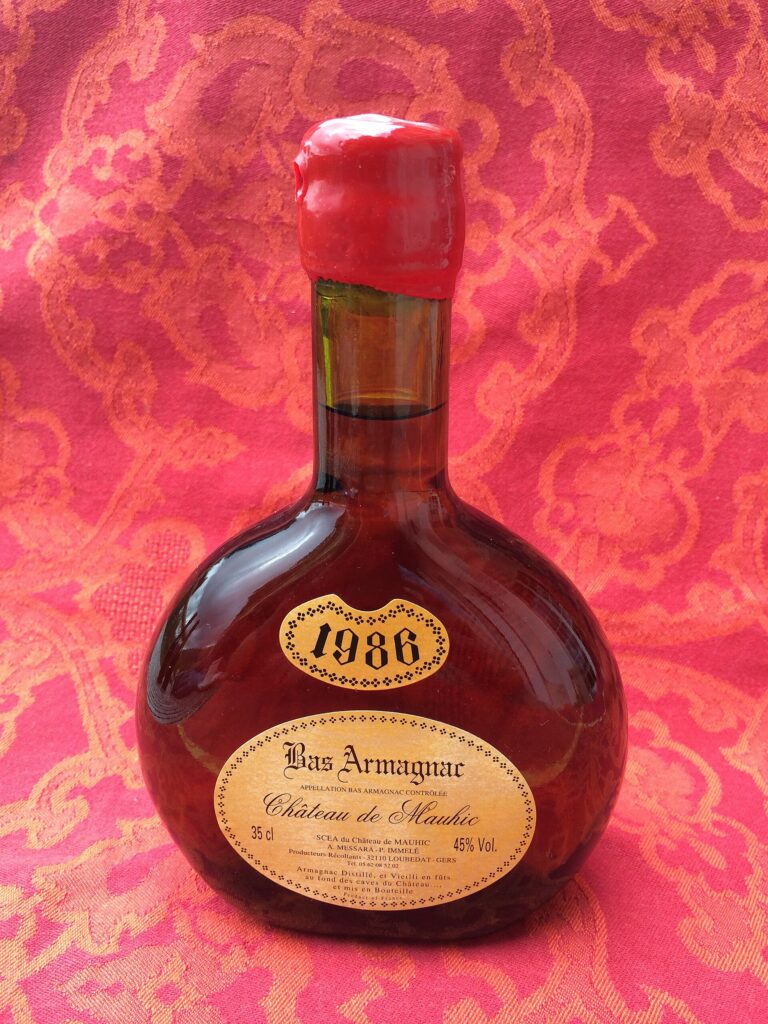
A protected Gascon grape spirit, most often encountered after oak maturation, with fruit, spice and developed earthy or nutty detail. It can be supple or robust. “Rustic” is not a sufficient tasting note and should not be treated as a mandatory quality or style characteristic.
Color
Maturation
Alcohol
Sweetness
Balance
History
Armagnac’s interprofessional body traces its documentary heritage to a 1310 text attributed to Vital du Four describing the virtues of eau-de-vie. That medical context should not be mistaken for a specification of modern barrel-aged Armagnac. Later milestones are more directly institutional: delimitation of the production area in 1909 and appellation recognition in 1936 helped establish the protected regional identity used today. BNIA: 700 years of Armagnac history.
Classic characteristics
Appearance
Aged examples: gold through amber or brown; Blanche is colourless.
Aroma
Fruit, dried plum, flowers, vanilla, spice and potentially mature nutty or earthy notes.
Flavor
Medium to pronounced; fruit and wood, with richer developed character in some older expressions.
Sweetness
Usually dry to sweet-seeming; assess the actual presentation.
Mouthfeel
Supple through full and firm, often with noticeable wood structure.
Finish
Medium to long in expressive examples, sometimes developing from fruit toward spice.
Flavor Profile Deep Dive
Choose aged Armagnac or Blanche expectations before tasting; continuous distillation is not itself a quality penalty. Investigate persistent solvent-like pungency, unpleasant stale character or wood astringency that overwhelms the intended expression. A descriptor alone cannot prove a distillation-cut error, additive use or chemical safety.
Service notes
Compare a young and a mature expression without presuming the older one must be better. Identify whether fruit remains expressive and whether tannin supports or dominates the finish. When discussing a vintage, look for the bottling date and maturation account. For consumers, describe the actual balance of fruit, spice and wood rather than positioning Armagnac solely as an alternative to Cognac.
Style parameters
| Parameter | Boundary or expectation |
|---|---|
| Base material | Eligible grape wine |
| Bottled strength | At least 40% for consumption under the cited Armagnac guidance. |
| France: bottled ABV | at least 40%; see identity requirements. |
| United States: bottled ABV | at least 40%; Ordinary brandy identity; protected-origin specifications also apply. |
| Color and clarity | Aged examples: gold through amber or brown; Blanche is colourless. |
| Maturation | Identify age category or vintage and bottling information; time in bottle is not barrel age. |
| Additions | Consult the applicable specification and producer; do not infer untreated status from origin. |
Legal limits apply only to the named jurisdiction and identity. ADI entry conditions and typical sensory expectations are separate; a product example is not a universal range.
Cocktail connections
Browse published cocktails. Documented recipes, conditional style choices and development substitutions are labeled separately.
No established classic or recognized modern cocktail match was found for this specific style in the sources reviewed. This records a research gap, not proof that no cocktail exists. No neighboring style has been substituted to fill the space.
Style comparison
Compared with Cognac, Armagnac has a different protected geography and production tradition, including its characteristic continuous still. That does not justify an absolute single-versus-double rule. Vintage bottlings are an important presentation, but a harvest year alone does not reveal how long the spirit remained in wood. Blended age declarations concern the youngest component under the applicable system.
Ingredients
Eligible grape wine
Production notes
Armagnac originates in its defined southwestern French territory. The traditional continuous Armagnac still is strongly associated with the category, but authorized double-distillation methods also exist. Grape varieties and subregions contribute diversity. Blanche Armagnac is a separate unwooded presentation and should not be forced into the aged profile below.
Commercial examples
No newly verified benchmark is designated in this revision. Select a documented qualifying expression before running a benchmark tasting.
Retained example and source context. BNIA distillation and aging; BNIA FAQ; Blanche Armagnac. U.S. recognition: the protected-brandy origin provisions.
Photo credit
Château de Mauhic Bas Armagnac 1986. Photo: Acheley.antoine / Wikimedia Commons. CC BY-SA 4.0. Display resized; no other edits.

Keep exploring
- BNIA distillation and aging — evidence reviewed 2026-09-17.
- 27 CFR 5.145 — evidence reviewed 2026-09-17.