
Aged Grape Brandy
A grape-derived spirit combining fruit and fermentation character with oak maturation. Expressions range from relatively light, floral and fruity to concentrated, spicy and developed. Cognac and Armagnac occupy protected branches of this wider family; they do not define every possible grape brandy.
Color
Maturation
Alcohol
Sweetness
Balance
History
The history of aged grape brandy is closely connected to wine commerce, distillation and storage. In the Cognac region, Dutch trading connections and the development of double distillation helped establish an export spirit that subsequently became associated with wood maturation. This is one influential regional pathway, rather than the origin of every grape brandy: the ADI heading groups products with different places, commercial histories and maturation traditions. BNIC: Cognac history.
Classic characteristics
Appearance
Clear gold to deep amber; colour alone cannot establish age.
Aroma
Medium to pronounced; grape-derived fruit, flowers, dried fruit, vanilla and wood spice.
Flavor
Fruit and oak, potentially with nut, cocoa or mature savoury development.
Sweetness
Usually dry to softly sweet-seeming; formulations and permitted treatments vary.
Mouthfeel
Light and supple through full, rounded and tannic.
Finish
Medium to long in expressive examples; assess development and balance, not heat alone.
Flavor Profile Deep Dive
Judge wine-derived character and cask integration without imposing a Cognac or Armagnac flavor template. Investigate persistent solvent-like pungency, unpleasant stale character or wood astringency that overwhelms the intended expression. A descriptor alone cannot prove a distillation-cut error, additive use or chemical safety.
Service notes
Compare two products with documented grape and cask differences. Identify fruit, fermentation and wood observations before assigning possible causes. A fruit note may be transformed by maturation rather than disappear entirely. For a guest who enjoys whisky, describe the actual brandy's fruit and oak balance without claiming that all brandy is sweet. In a mixed drink, assess the particular bottling's intensity and sugar contribution rather than relying on the generic category name.
Style parameters
| Parameter | Boundary or expectation |
|---|---|
| Base material | Grape wine or eligible fermented grape material |
| Bottled strength | the U.S. brandy strength requirements; documented commercial strengths may exceed the minimum. |
| United States: bottled ABV | at least 40%; Ordinary brandy identity; protected-origin specifications also apply. |
| Color and clarity | Clear gold to deep amber; colour alone cannot establish age. |
| Maturation | the U.S. grape-brandy maturation rule for ordinary U.S. grape brandy; origin-specific rules can differ. |
| Additions | Determine sweetening, colouring or other treatment from reliable product information. |
Legal limits apply only to the named jurisdiction and identity. ADI entry conditions and typical sensory expectations are separate; a product example is not a universal range.
Cocktail connections
Browse published cocktails. Documented recipes, conditional style choices and development substitutions are labeled separately.
- Brandy Crusta — qualified; base.
- Champs Elysées — qualified; base.
- Coffee Cocktail — qualified; co-base.
- Corpse Reviver No. 1 — qualified; base.
- Fog Cutter — qualified; co-base.
- Japanese — qualified; base.
- Porto Flip — qualified; base.
Style comparison
Grape brandy is made through fermentation and distillation of grape material, not by adding grape flavor to neutral spirit. It also differs from pomace brandy in the principal material distilled. Oak maturation creates similarities with whisky, but those similarities should not erase the fruit-derived identity.
Ingredients
Grape wine or eligible fermented grape material
Production notes
Wine or eligible grape material is fermented and distilled, then matured. Grape variety, wine preparation, still design, distillation strength and cask program all influence expression. ADI points to the U.S. standard, summarized in the U.S. brandy strength requirements and the U.S. grape-brandy maturation rule. A product made elsewhere must also be described under its relevant local rules rather than automatically assigned French age terms.
Commercial examples
No newly verified benchmark is designated in this revision. The original example discussion below remains a research lead, with its original qualifications.
Retained example and source context. Germain-Robin expressions illustrate California brandy with peach, apricot and citrus associations; production account. U.S. boundaries: shared brandy rules.
Photo credit
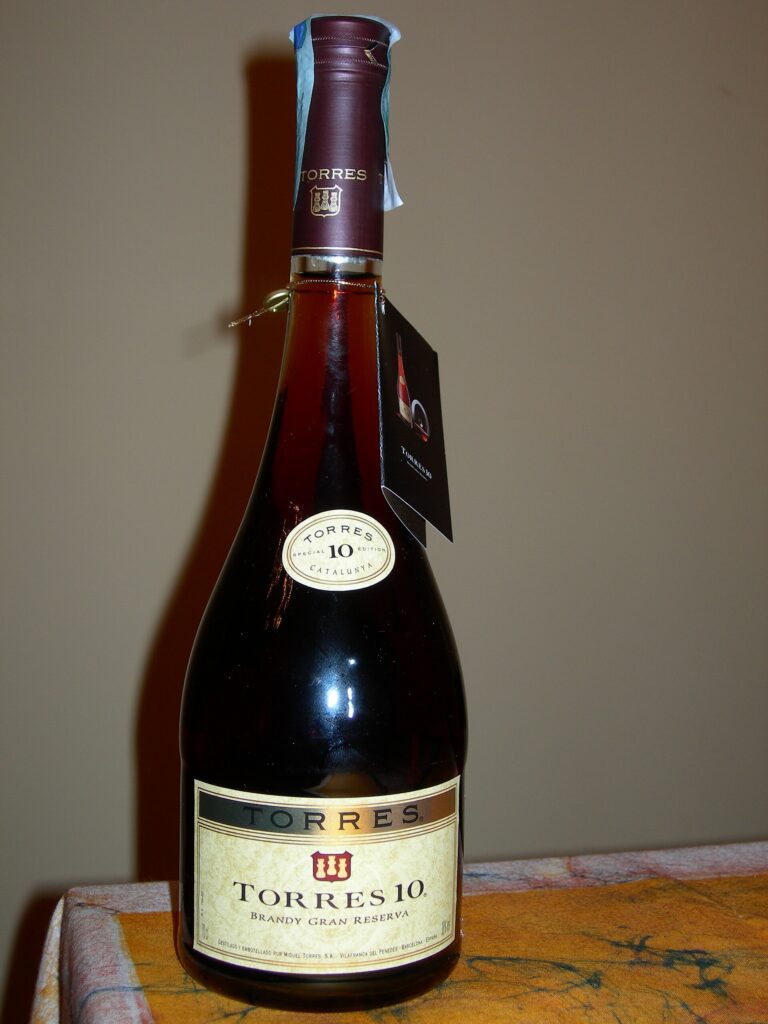
Torres 10 brandy. Photo: The original uploader was Maxx1972 at Italian Wikipedia. / Wikimedia Commons. CC BY-SA 3.0. Display resized; no other edits.

Keep exploring
- 27 CFR 5.145 — evidence reviewed 2026-09-17.