
Apple Brandy / Applejack
An apple-derived spirit ranging from fresh, aromatic unaged expressions to richly oaked examples with baked-apple and spice associations. The apple may be vivid or woven into the mature character. This entry is distinct from the separately listed blend with neutral spirits.
Color
Maturation
Alcohol
Sweetness
Balance
History
Apple brandy became part of the economy of American cider-growing regions. Laird & Company traces its family tradition to 1698 and identifies a 1780 ledger as an early commercial record. The ledger is a firmer documentary milestone than treating a family-origin account as proof of the first American apple spirit. “Applejack” also should not imply that every historical product bearing the name was made by freezing cider. Laird & Company: company history.
Classic characteristics
Appearance
Colourless if unaged; gold through amber after wood contact.
Aroma
Fresh apple, cider-like fruit or baked apple; oak may add vanilla and spice.
Flavor
Apple-derived character, sometimes with peel, orchard-fruit or mature nutty notes.
Sweetness
Commonly dry to sweet-seeming; not inherently sweet like apple juice.
Mouthfeel
Light through rounded; matured examples may add drying wood structure.
Finish
Variable length; apple and spice can persist together or develop sequentially.
Flavor Profile Deep Dive
Look for apple-derived expression and appropriate wood, if present; an applejack name does not prove freeze concentration. Investigate persistent solvent-like pungency, unpleasant stale character or wood astringency that overwhelms the intended expression. A descriptor alone cannot prove a distillation-cut error, additive use or chemical safety.
Service notes
Compare an apple brandy with a blended applejack, recording their strengths before judging concentration. In a Jack Rose or another standardized drink, observe whether apple, oak or neutral alcohol structure is most apparent. For consumers, explain the actual label in one sentence: apple-derived spirit, its maturation if known, and its dominant flavour. Avoid using the history of freeze concentration as a claim about a modern bottle's production unless the producer documents that method.
Style parameters
| Parameter | Boundary or expectation |
|---|---|
| Base material | Fermented apples |
| Bottled strength | the U.S. brandy strength requirements; actual strength is especially relevant when comparing cocktail bottlings. |
| United States: bottled ABV | at least 40%; Ordinary brandy identity; protected-origin specifications also apply. |
| Color and clarity | Colourless if unaged; gold through amber after wood contact. |
| Maturation | Optional within this broad entry; verify the declared age and wood treatment. |
| Additions | Distinguish apple brandy from apple-flavored spirits and blended applejack. |
Legal limits apply only to the named jurisdiction and identity. ADI entry conditions and typical sensory expectations are separate; a product example is not a universal range.
Cocktail connections
Style comparison
Apple brandy identifies the fermented fruit source. Blended applejack identifies a mixture that may include substantial neutral spirit. Calvados identifies a protected French branch with separate origin and production rules. These distinctions cannot be resolved reliably by colour or by how intense the apple aroma seems.
Ingredients
Fermented apples
Production notes
Apples are fermented before distillation. In U.S. identity rules, applejack is a permitted alternative name for apple brandy; the term does not require freeze concentration. Modern production information should be taken from the maker. Age, cask type and strength need to be established independently because the broad category name does not supply them.
Commercial examples
No newly verified benchmark is designated in this revision. The original example discussion below remains a research lead, with its original qualifications.
Retained example and source context. Laird's product family distinguishes apple brandies from its blended expression. U.S. naming: the U.S. fruit-brandy naming rule. A specific bottle's age or composition should be checked on its current specification rather than transferred across the producer's range.
Photo credit
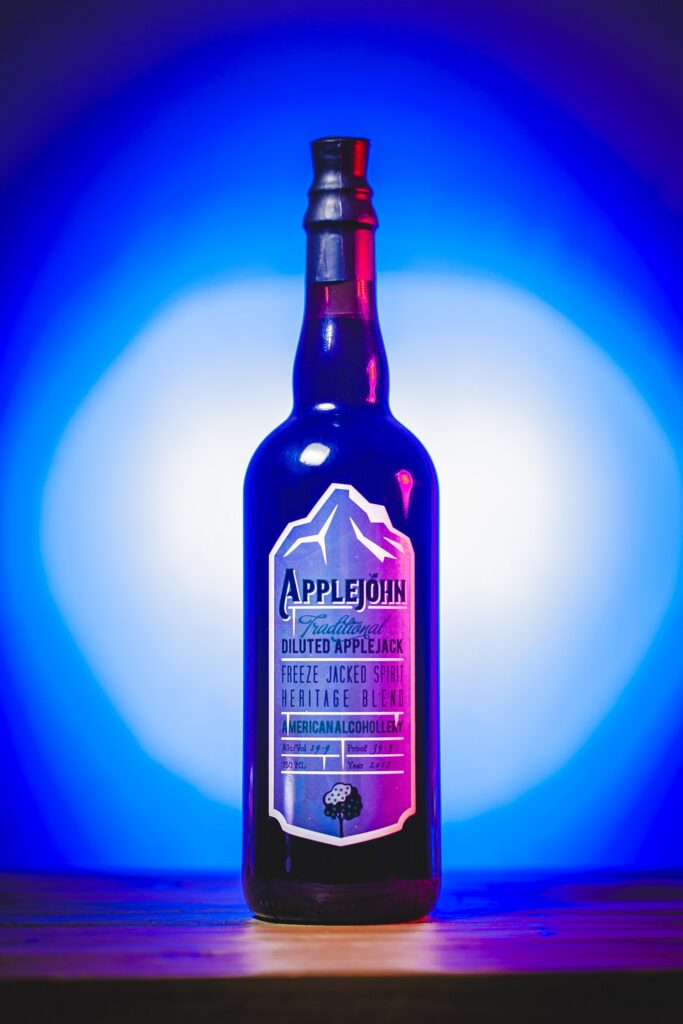
Applejohn applejack. Photo: Alcohollery / Wikimedia Commons. CC BY-SA 4.0. Display resized; no other edits.

Keep exploring
- 27 CFR 5.145 — evidence reviewed 2026-09-17.