
Blended Applejack
An apple-brandy blend designed around a lighter or more restrained expression than some all-brandy products. Apple and wood can remain noticeable, but their intensity depends on the actual formulation. The class should be evaluated on balance and intended use rather than automatically ranked below apple brandy.
Color
Maturation
Alcohol
Sweetness
Balance
History
Blended applejack has a particularly clear modern commercial milestone. Laird & Company dates its move toward a lighter blend of apple brandy and neutral spirit to a 1972 petition responding to consumer preferences. This development belongs to the twentieth-century blended product, not the origin of apple distillation in America. Keeping those histories separate prevents the modern blend from being projected backward onto every early use of the name applejack. Laird & Company: blended applejack history.
Classic characteristics
Appearance
Usually gold or amber in familiar commercial expressions; colour is not a blend ratio.
Aroma
Light to medium apple and wood, though more concentrated formulations are possible.
Flavor
Restrained apple, vanilla or spice over a comparatively light spirit structure.
Sweetness
Dry to sweet-seeming; formulation must be checked.
Mouthfeel
Commonly light to medium, with warming alcohol and some rounded brandy character.
Finish
Often short to medium; assess whether apple remains distinct as the finish fades.
Flavor Profile Deep Dive
Judge the blend's integration and apple expression within its intended lighter presentation; neutral spirit is an authorized component. Investigate persistent unpleasant solvent-like, stale or sulfurous character in context. Do not diagnose a specific production error from one aroma; appropriate fermentation character and proof-related warmth are not automatic faults.
Service notes
Use a matched cocktail comparison to show how a lighter apple profile changes the finished drink. Keep the initial recipe constant, then adjust only after noting the difference. Staff should explain the blend accurately without disparaging it or implying that every applejack contains neutral spirit. For a guest choosing a neat pour, describe the actual concentration and texture rather than treating the legal minimum as the producer's recipe.
Style parameters
| Parameter | Boundary or expectation |
|---|---|
| Base material | Apple brandy and neutral spirits |
| Bottled strength | U.S. class minimum 40%; record actual bottling strength. |
| United States: bottled ABV | at least 40%; see identity requirements. |
| Color and clarity | Usually gold or amber in familiar commercial expressions; colour is not a blend ratio. |
| Maturation | Qualifying apple-brandy component spends at least two years in oak. |
| Additions | Neutral spirit is a defining permitted component, not an inferred contaminant. |
Legal limits apply only to the named jurisdiction and identity. ADI entry conditions and typical sensory expectations are separate; a product example is not a universal range.
Cocktail connections
Style comparison
This is not merely a blend of different apple-brandy barrels. The legal class explicitly permits neutral spirits. The word applejack without the blend qualification has a different relationship to apple brandy, as explained in S035. Neither a pale colour nor a quiet apple aroma proves a particular percentage.
Ingredients
Apple brandy and neutral spirits
Production notes
The U.S. class requires at least 20% apple brandy on a proof-gallon basis, with that brandy stored at least two years in oak; neutral spirits may provide up to 80%. Bottling strength must be at least 40%. Those legal percentages describe alcohol contribution, not simply a recipe measured by pouring unequal-strength liquids into a measuring cup.
Commercial examples
No newly verified benchmark is designated in this revision. The original example discussion below remains a research lead, with its original qualifications.
Retained example and source context. Laird's range includes a clearly identified blended applejack. 27 CFR §5.146 establishes the class; it does not specify the composition of every commercial example.
Photo credit
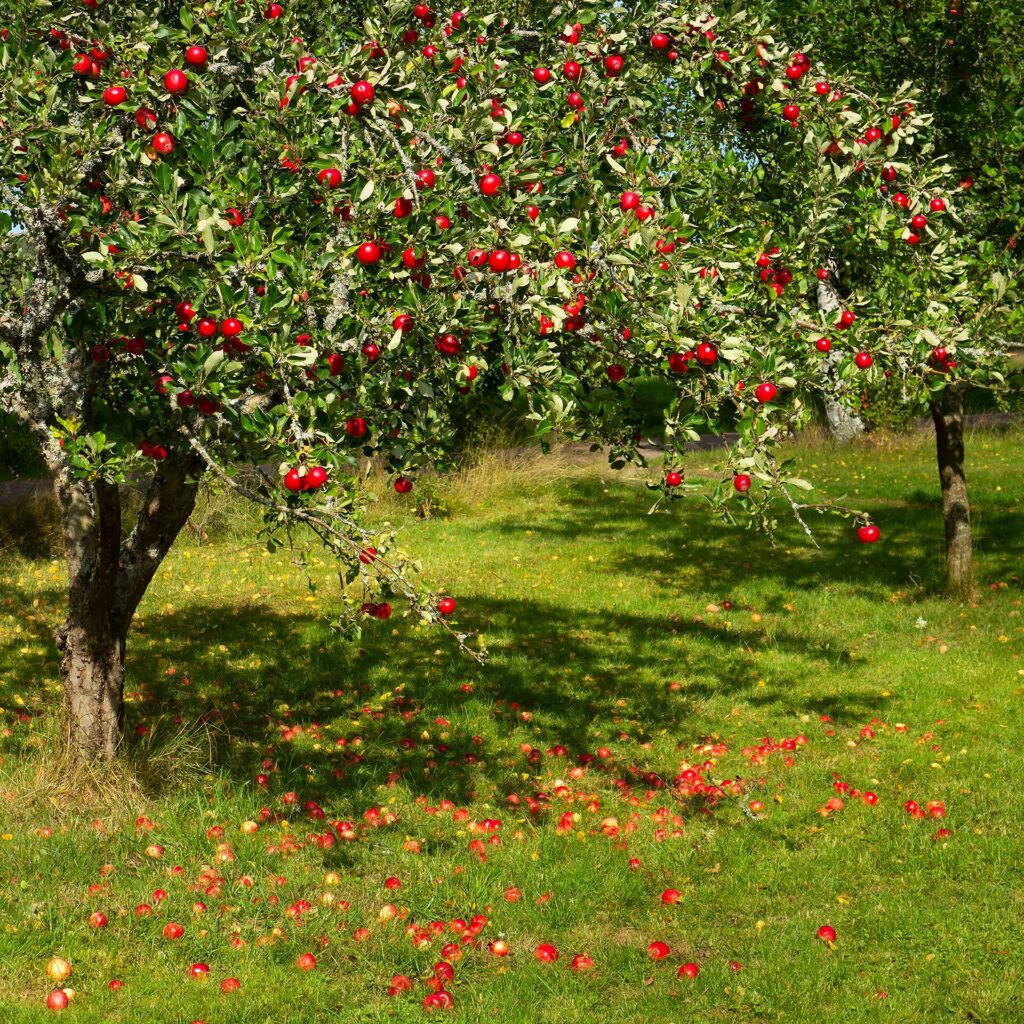
Ingredient or production reference: Apples growing in an orchard. This photograph illustrates the raw material or process, not a bottle of this specific style. Photo: W.carter / Wikimedia Commons. CC0. Display resized; no other edits.

Keep exploring
- 27 CFR 5.146 — evidence reviewed 2026-09-17.