
Baijiu
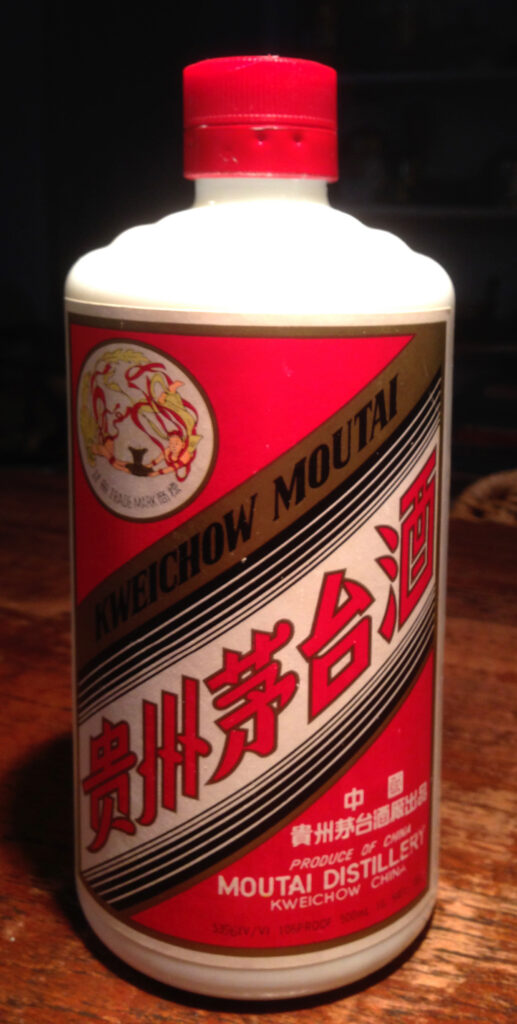
A diverse Chinese grain-spirit family ranging from delicate, floral expressions to intensely fruity or deeply savoury ones. The appropriate expectation depends on the aroma family. One generic “baijiu taste” would conceal more than it explains.
Color
Maturation
Alcohol
Sweetness
Balance
History
Baijiu developed from Chinese fermentation and distillation traditions, but the history of Chinese fermented alcohol is much older than evidence for the distilled spirit. A scholarly review identifies the late-sixteenth-century writer Li Shizhen’s attribution of distilled liquor to the Yuan period as an important historical reference. Regional fermentation methods and production practices subsequently produced the diverse baijiu traditions, rather than one universally applicable founding recipe. Zheng and colleagues: Chinese baijiu, production and flavor.
Classic characteristics
Appearance
Normally clear and colourless, including many rested products.
Aroma
Light-aroma: floral/dried fruit; strong-aroma: tropical fruit/spice; sauce-aroma: savoury/fermented; rice-aroma: delicate floral.
Flavor
Mirrors the family: restrained grain and fruit through concentrated fruity or umami character.
Sweetness
Usually dry to sweet-seeming; aromatic richness is not a sugar measurement.
Mouthfeel
Light through full and oily; alcoholic warmth can be substantial.
Finish
Variable; strong and sauce expressions may leave persistent, evolving flavour.
Flavor Profile Deep Dive
Declare the aroma family before scoring; intense esters or savory fermentation notes can be intentional rather than faults. Investigate persistent unpleasant solvent-like, stale or sulfurous character in context. Do not diagnose a specific production error from one aroma; appropriate fermentation character and proof-related warmth are not automatic faults.
Service notes
Build the introductory flight around contrasting aroma families. Let staff describe unfamiliar aromas in everyday terms without dismissive language. Separate intensity from quality: a forceful aroma can be well integrated, while a quieter spirit can be expressive. For a consumer, name the family and its dominant character before discussing a serving choice. Avoid presenting a cocktail substitution as proof that baijiu is equivalent to rum or vodka.
Style parameters
| Parameter | Boundary or expectation |
|---|---|
| Base material | Grains and qu; aroma-family-dependent |
| Bottled strength | Product-specific; check bottling strength rather than assuming one national range. |
| Color and clarity | Normally clear and colourless, including many rested products. |
| Maturation | Often rested in non-wood vessels; a clear appearance does not establish age. |
| Additions | Check product identity; do not interpret savoury aromas as proof of added soy sauce. |
Legal limits apply only to the named jurisdiction and identity. ADI entry conditions and typical sensory expectations are separate; a product example is not a universal range.
Cocktail connections
Browse published cocktails. Documented recipes, conditional style choices and development substitutions are labeled separately.
No established classic or recognized modern cocktail match was found for this specific style in the sources reviewed. This records a research gap, not proof that no cocktail exists. No neighboring style has been substituted to fill the space.
Style comparison
Strong, light, sauce and rice aroma are useful starting divisions, not an exhaustive list. “Strong aroma” describes a style, not simply a higher alcohol percentage. A sauce-aroma example should not be judged against a light-aroma example's delicacy, and pronounced fermentation character should be assessed in context rather than automatically called a fault.
Ingredients
Grains and qu; aroma-family-dependent
Production notes
Grain, fermentation starter known as qu, fermentation practice and distillation create the style. ADI emphasizes solid-state fermentation, which is important across much of the family but should not be imposed as a description of every rice-aroma process. Resting need not involve oak, so colourless does not mean newly distilled. Identify the aroma classification before assessing typicality.
Commercial examples
No newly verified benchmark is designated in this revision. Select a documented qualifying expression before running a benchmark tasting.
Retained example and source context. Ming River's category account describes the four major aroma families. The supplied ADI definition provides the broad scope. The matrix is a teaching synthesis, not a mandatory Chinese sensory standard.
Photo credit
Kweichow Moutai baijiu. Photo: Jula2812 / Wikimedia Commons. CC BY-SA 4.0. Display resized; no other edits.
