
Aguardiente
In this ADI grouping, a predominantly sugarcane-derived spirit that may be unflavoured or flavoured. The spectrum extends from relatively neutral or cane-led distillates to strongly anise-led expressions. No single sweetness, strength or aromatic intensity can represent every product encompassed by the entry.
Color
Maturation
Alcohol
Sweetness
Balance
History
Aguardiente has named different distilled drinks, so this sugarcane-spirit heading contains more than one national tradition. Colombia provides a documented institutional example: the Fábrica de Licores y Alcoholes de Antioquia was constituted on January 1, 1920, when the department took direct control of its distilled-liquor production and sales monopoly. Modernization followed during the 1930s. This history helps explain one influential commercial branch of aguardiente without claiming that the wider family began with that factory. Fábrica de Licores de Antioquia: institutional history.
Classic characteristics
Appearance
Commonly colourless and clear; colour can vary with flavouring or a documented maturation process.
Aroma
Light to pronounced; cane, grass or fruit in some examples, anise and herbs in flavoured branches.
Flavor
Base-led or anise-led as declared; balance botanical intensity, sweetness and alcohol without assuming a rum profile.
Sweetness
Dry to sweet; sugar-free-labelled versions and sweetened versions should be evaluated separately.
Mouthfeel
Light to rounded, occasionally oily from botanical character; warmth depends strongly on bottle strength.
Finish
Short to long; clean cane, herbal or anise persistence, appropriate to the declared expression.
Flavor Profile Deep Dive
Set expectations by the cane-based branch and declared flavor; anise belongs to some expressions, not all aguardiente. Investigate persistent unpleasant solvent-like, stale or sulfurous character in context. Do not diagnose a specific production error from one aroma; appropriate fermentation character and proof-related warmth are not automatic faults.
Service notes
Begin with country, cane origin, flavouring and ABV. Compare an unflavoured example separately from an anise-led one. Staff should describe the actual liquid rather than translate aguardiente simply as brandy. For guests unfamiliar with the style, identify whether the main experience is clean cane spirit or cooling anise and herbs, then state sweetness separately.
Style parameters
| Parameter | Boundary or expectation |
|---|---|
| Base material | Sugarcane juice, syrup, molasses or other cane-derived material; identify product |
| Bottled strength | No ADI numerical limit supplied; market examples include strengths below the U.S. rum minimum. |
| Color and clarity | Commonly colourless and clear; colour can vary with flavouring or a documented maturation process. |
| Maturation | No shared requirement; many examples are unaged, but the name alone does not establish treatment. |
| Additions | Flavouring is allowed by ADI; sweetening and other permissions depend on the actual legal identity. |
Legal limits apply only to the named jurisdiction and identity. ADI entry conditions and typical sensory expectations are separate; a product example is not a universal range.
Cocktail connections
Style comparison
Aguardiente is a linguistic and regional family, whereas this guide uses ADI's narrower cane-based scope. It should not be automatically renamed rum, particularly where added anise or lower strength changes the applicable category. Anise creates a sweet aromatic impression even when sugar is absent, so perceived sweetness and a sugar declaration can tell different stories.
Ingredients
Sugarcane juice, syrup, molasses or other cane-derived material; identify product
Production notes
ADI requires at least 51% sugarcane origin and allows flavouring. Outside this guide, aguardiente is a much broader Spanish-language term and may describe spirits from grapes or other materials. Those uses should not be forced into this cane-specific entry. Colombian anise-flavoured aguardiente provides an important commercial branch, but it is not the definition of all aguardiente. Legal composition and permitted labelling must be established by country and product.
Commercial examples
No newly verified benchmark is designated in this revision. The original example discussion below remains a research lead, with its original qualifications.
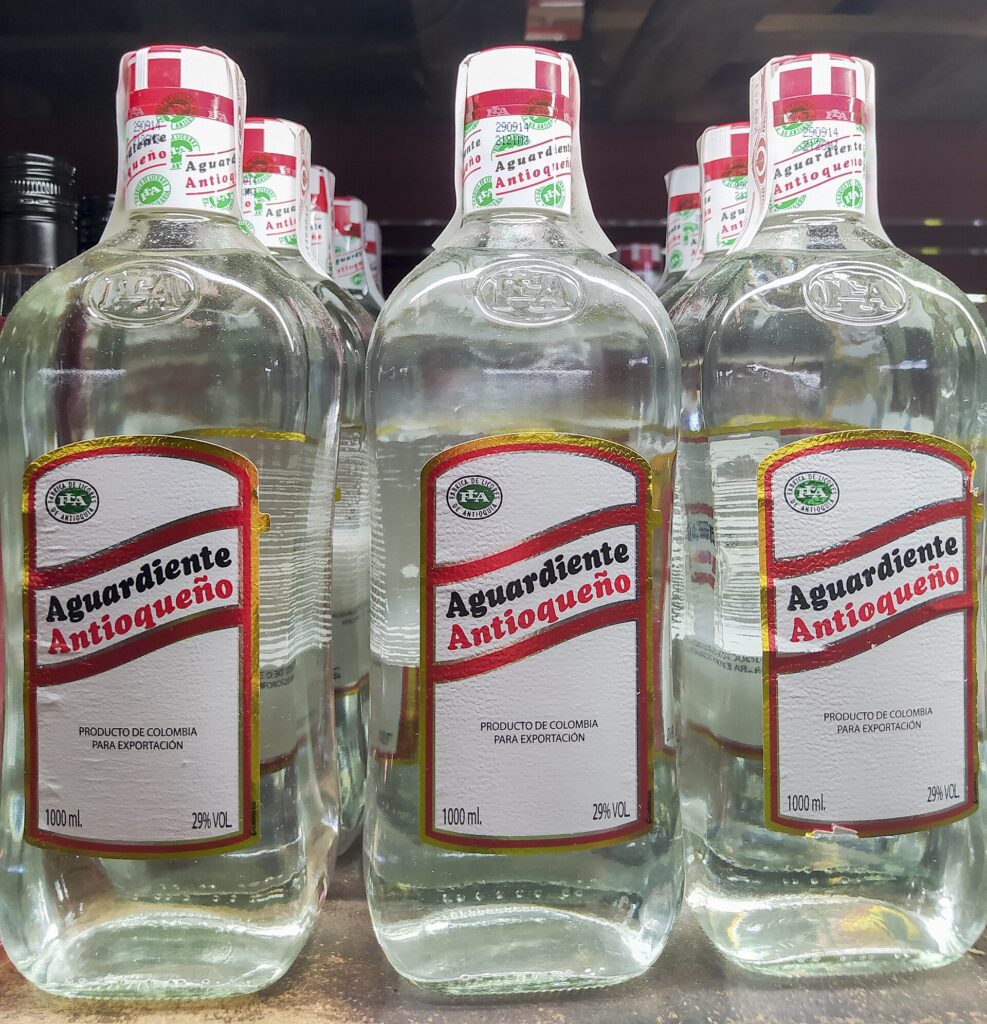
Retained example and source context. FLA's product-range statement documents Antioqueño expressions at 24% and 29%, illustrating strength variation rather than a universal standard. ADI scope: S087.
Photo credit
Aguardiente Antioqueño. Photo: El Mono Español / Wikimedia Commons. CC BY-SA 4.0. Display resized; no other edits.
