
Spirit Whiskey
A U.S. mixture in which neutral spirit can substantially outweigh whiskey, producing restrained cereal and wood character with relatively light aromatic intensity. It should taste coherent and clean within that objective. The category name is a precise legal identity, not an interchangeable phrase for all distilled whiskey.
Color
Maturation
Alcohol
Sweetness
Balance
History
Spirit Whiskey belongs to the American history of naming products that combine whiskey with more highly rectified spirit. Taft’s 1909 decision on whiskey terminology documents the commercial and regulatory dispute surrounding such mixtures. It provides context for the later distinct category, not a direct statement of every modern formula. The sources reviewed do not support assigning Spirit Whiskey to one inventor or treating the 1909 decision as its exact birth date. William Howard Taft: whisky decision, December 27, 1909.
Classic characteristics
Appearance
Colourless or pale through amber depending on whiskey contribution and permitted treatments; no narrow expected shade.
Aroma
Usually light cereal, vanilla, fruit or wood; a restrained profile is consistent with substantial neutral spirit.
Flavor
Light whiskey character over a comparatively neutral foundation, with balance and cleanliness taking priority.
Sweetness
Dry to sweet-seeming as formulated; verify treatments rather than infer them from softness.
Mouthfeel
Usually light to rounded; alcohol integration matters even when flavour concentration is modest.
Finish
Often short to medium; a concise clean finish is compatible with the category's intended restraint.
Flavor Profile Deep Dive
Judge integration and qualifying whiskey character within the legal blend; do not demand the concentration of straight whiskey. Investigate persistent solvent-like pungency, unpleasant stale character or wood astringency that overwhelms the intended expression. A descriptor alone cannot prove a distillation-cut error, additive use or chemical safety.
Service notes
Use a currently labelled, documented example if sourcing this category for training; no verified commercial benchmark is asserted here. Read the neutral-spirit disclosure and full designation before tasting. Compare with a restrained blended whiskey at the same strength, focusing on how much grain and wood character remains. Staff should explain the composition plainly and avoid implying either that it is pure mature whiskey or that its legal category alone determines whether a guest will enjoy it.
Style parameters
| Parameter | Boundary or expectation |
|---|---|
| Base material | Whiskey and neutral spirit; proof-gallon composition rules |
| Bottled strength | U.S. whiskey minimum 40% ABV; light flavour does not mean low alcohol. |
| United States: bottled ABV | at least 40%; Whiskey identity; protected origin and named types have additional rules. |
| Color and clarity | Colourless or pale through amber depending on whiskey contribution and permitted treatments; no narrow expected shade. |
| Maturation | Whiskey components carry their applicable storage history; no universal age of the entire mixture is implied. |
| Additions | Neutral spirit is central to the identity; permitted colouring, flavouring and blending treatments require exact review. |
Legal limits apply only to the named jurisdiction and identity. ADI entry conditions and typical sensory expectations are separate; a product example is not a universal range.
Cocktail connections
Browse published cocktails. Documented recipes, conditional style choices and development substitutions are labeled separately.
No established classic or recognized modern cocktail match was found for this specific style in the sources reviewed. This records a research gap, not proof that no cocktail exists. No neighboring style has been substituted to fill the space.
Style comparison
Spirit whiskey differs from blended whiskey principally through its component requirements, not a sensory test that can establish an exact percentage. It is also distinct from light whiskey, which describes distillation strength and wood storage rather than this mixture. The word “spirit” should not be mistaken for cask-strength new make or for an artisanal quality claim.
Ingredients
Whiskey and neutral spirit; proof-gallon composition rules
Production notes
U.S. spirit whiskey contains at least 5% whiskey on a proof-gallon basis; any straight-whiskey contribution remains below 20%, distinguishing it from ordinary blended whiskey. Neutral spirit can account for most of the alcohol. The U.S. whiskey standard gives the complete formulation boundaries. The finished product must retain the qualifying whiskey character required by the standard. These alcohol-based proportions should not be casually restated as simple liquid-volume percentages.
Commercial examples
No newly verified benchmark is designated in this revision. Select a documented qualifying expression before running a benchmark tasting.
Retained example and source context. ADI scope: S127; 27 CFR §5.143, spirit-whiskey row. Sensory expectations are editorial guidance for the defined composition.
Photo credit
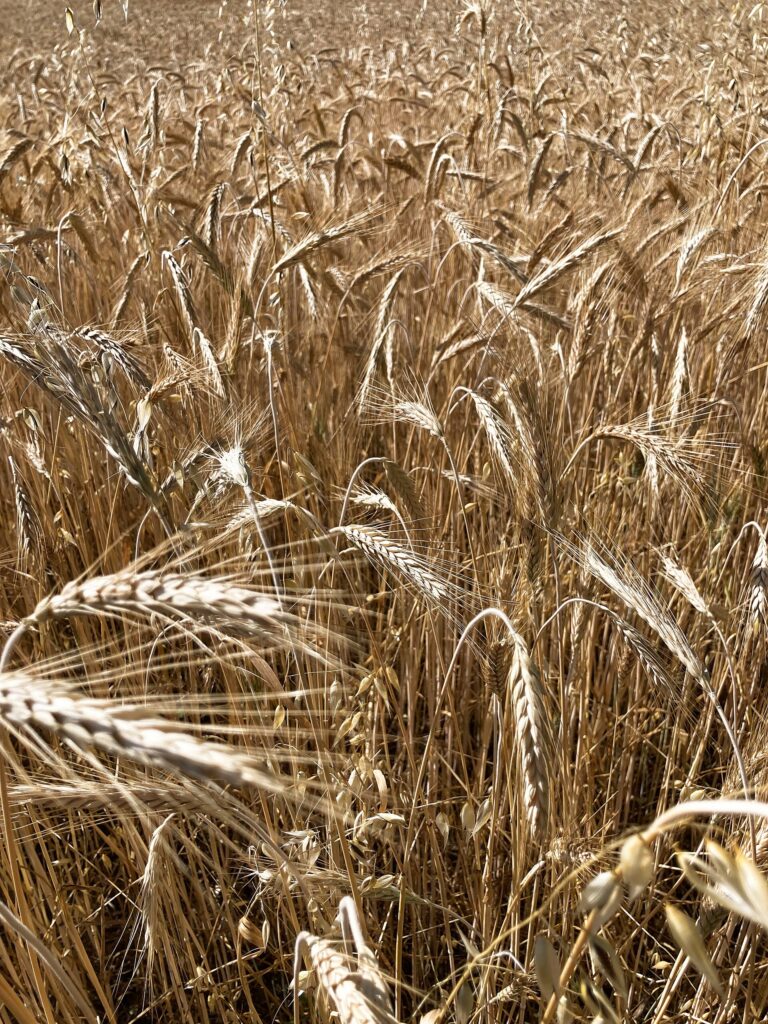
Ingredient or production reference: Wheat growing in a field, a grain-spirit raw material. This photograph illustrates the raw material or process, not a bottle of this specific style. Photo: Michele Castagnetti / Wikimedia Commons. CC BY-SA 4.0. Display resized; no other edits.

Keep exploring
- 27 CFR 5.143 — evidence reviewed 2026-09-18.