
Light Whiskey
A U.S. whiskey made at relatively high distillation strength, often with restrained grain character beneath vanilla, fruit and wood-derived sweetness of aroma. Mature examples can be powerful and richly cask-driven. “Light” describes the production category, not low alcohol, low calories, pale colour or necessarily a delicate finished drink.
Color
Maturation
Alcohol
Sweetness
Balance
History
Light whiskey emerged as a specifically American regulatory and commercial category in the late 1960s and early 1970s. Contemporary reporting in 1972 described production authorized from 1968 and the impending July market introduction. It was a response to interest in lighter-tasting spirits, not a synonym for low alcohol. The dated reporting gives this category a clearer modern origin than many older regional whiskey traditions. TIME: contemporary report on light whiskey, 1972.
Classic characteristics
Appearance
Pale gold to deep amber depending on cask activity and age; light does not mean colourless.
Aroma
Light to pronounced vanilla, soft cereal, fruit and confectionery-like oak aromas; maturity can increase concentration.
Flavor
Restrained grain with potentially substantial vanilla, spice, fruit and wood character.
Sweetness
Often sweet-seeming from aromatic associations; verify actual treatments rather than infer added sugar.
Mouthfeel
Light to full and oily; high bottling strength can make mature examples especially forceful.
Finish
Short to long; wood and alcohol should remain integrated with the underlying spirit.
Flavor Profile Deep Dive
Judge high-rectification whiskey and its maturation; “light” does not mean low proof, low calories or necessarily little oak flavor. Investigate persistent solvent-like pungency, unpleasant stale character or wood astringency that overwhelms the intended expression. A descriptor alone cannot prove a distillation-cut error, additive use or chemical safety.
Service notes
Show the ABV before pouring, especially when using a barrel-strength teaching sample. Compare diluted samples at similar strength and note the balance of grain-derived and wood-derived character. Staff should explicitly explain the technical meaning of “light” to avoid a misleading lower-alcohol implication. In a cocktail, assess actual sweetness, tannin and proof rather than designing around the category name alone.
Style parameters
| Parameter | Boundary or expectation |
|---|---|
| Base material | Fermented grain mash; identify grain and component types |
| Bottled strength | General U.S. whiskey bottling minimum applies; “light” gives no assurance of reduced strength. |
| United States: bottled ABV | at least 40%; Whiskey identity; protected origin and named types have additional rules. |
| Color and clarity | Pale gold to deep amber depending on cask activity and age; light does not mean colourless. |
| Maturation | Used or uncharred new oak; no universal minimum age for the basic identity. |
| Additions | Apply the precise U.S. identity and label; do not assume straight-whiskey restrictions without that designation. |
Legal limits apply only to the named jurisdiction and identity. ADI entry conditions and typical sensory expectations are separate; a product example is not a universal range.
Cocktail connections
Browse published cocktails. Documented recipes, conditional style choices and development substitutions are labeled separately.
No established classic or recognized modern cocktail match was found for this specific style in the sources reviewed. This records a research gap, not proof that no cocktail exists. No neighboring style has been substituted to fill the space.
Style comparison
Light whiskey is not grain neutral spirit, because its distillation remains within whiskey's threshold. It is also not simply a watered-down bourbon. An old, high-strength release can have more intense oak and alcohol than a younger bourbon even though its original distillate was more highly rectified. The name therefore makes a useful lesson in separating production terminology from sensory expectations.
Ingredients
Fermented grain mash; identify grain and component types
Production notes
U.S. light whiskey is distilled above 80% ABV while remaining below the general whiskey ceiling, then stored in used or uncharred new oak. This separates it from bourbon and the named low-distillation-strength grain types. Higher rectification changes the starting congener profile, but subsequent maturation can create considerable flavour. A corn-heavy mash does not override the distillation and wood distinctions. Blended light whiskey is a separate regulated formulation and should not be silently substituted for this entry.
Commercial examples
No newly verified benchmark is designated in this revision. The original example discussion below remains a research lead, with its original qualifications.
Retained example and source context. Penelope American Light Whiskey documents an 18-year, second-fill-oak release with a 99% corn mash and high bottling proof. ADI scope: S120; the U.S. whiskey standard.
Photo credit
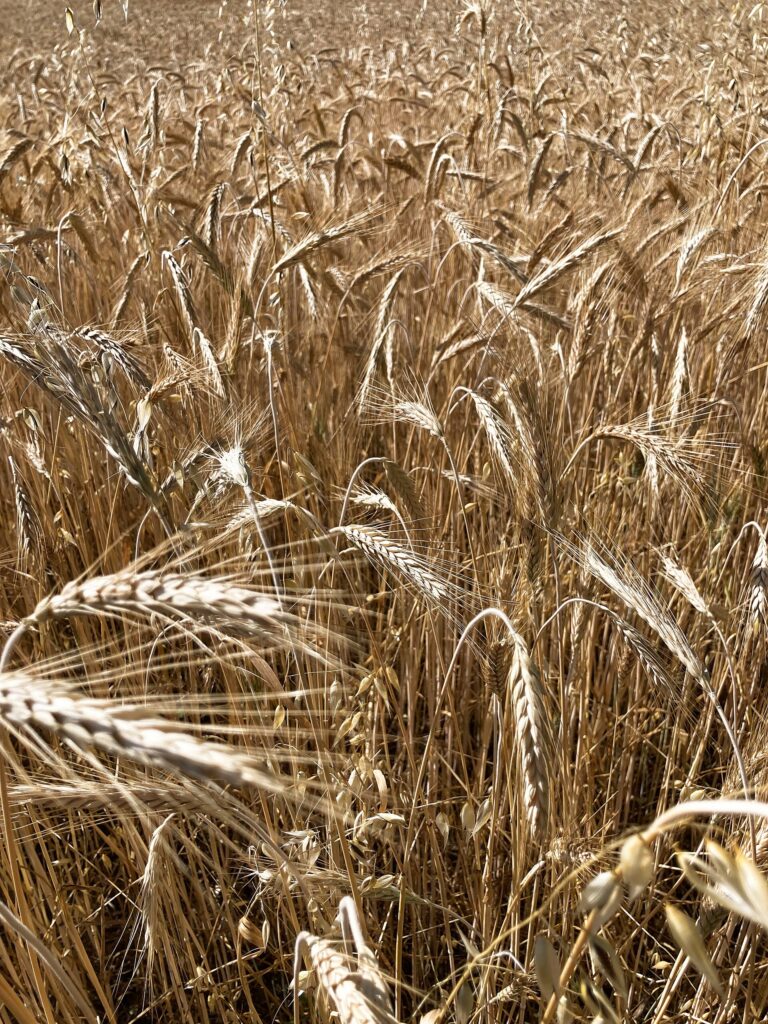
Ingredient or production reference: Wheat growing in a field, a whiskey raw material. This photograph illustrates the raw material or process, not a bottle of this specific style. Photo: Michele Castagnetti / Wikimedia Commons. CC BY-SA 4.0. Display resized; no other edits.

Keep exploring
- 27 CFR 5.143 — evidence reviewed 2026-09-18.