
Corn Whiskey
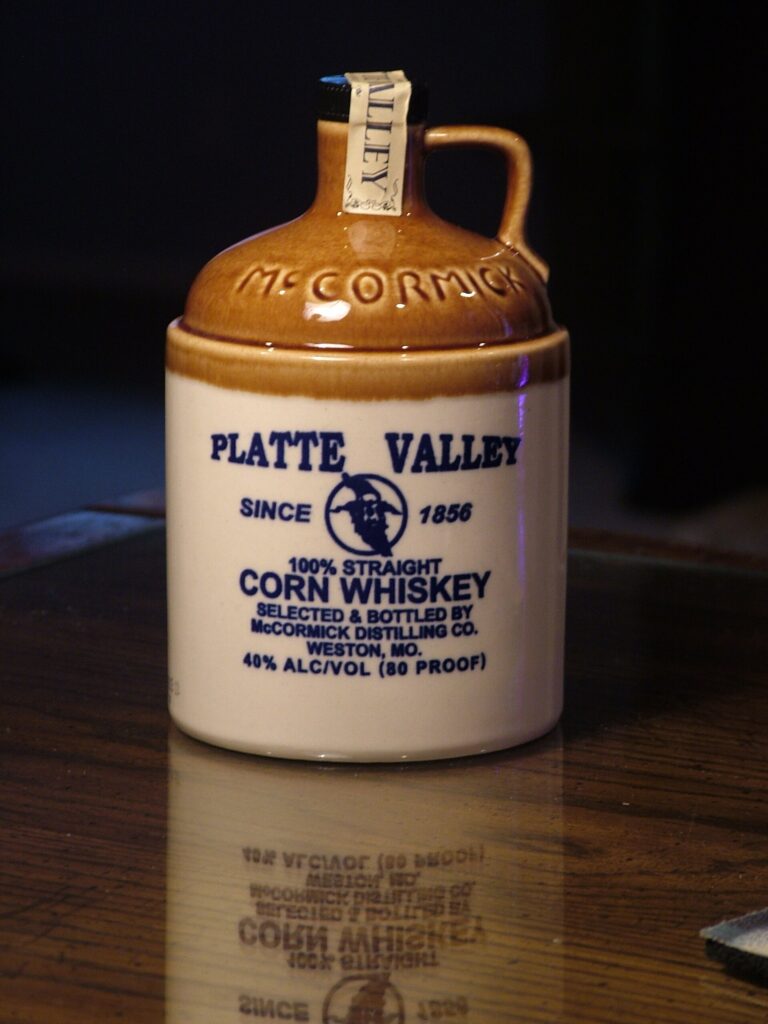
A corn-dominant whiskey that may be fresh and grain-forward or matured and rounded. Unaged examples can show cornmeal, fresh cereal, dough and fermentation fruit; matured versions add vanilla, light toast and spice. Neither colourlessness nor a rustic presentation is required for the entire category.
Color
Maturation
Alcohol
Sweetness
Balance
History
Corn whiskey belongs to the agricultural history of American grain distilling, in which converting crops into spirit created a more transportable commercial product. National Park Service historical interpretation places rural whiskey within that farm economy. The modern corn-whiskey category preserves a grain and production identity, while moonshine describes a different historical relationship with the law. Corn whiskey therefore should not automatically be described as illicit liquor or as unfinished bourbon. National Park Service: Thoughts on Whiskey.
Classic characteristics
Appearance
Colourless when unaged through gold or amber after wood exposure; do not judge all examples against one colour.
Aroma
Medium cereal and corn aromas, with fruit or dough; matured versions can add vanilla and gentle oak.
Flavor
Grain-led, sometimes buttery or nutty in impression; maturation broadens rather than erases the identity.
Sweetness
Usually dry with sweet-corn associations; sweetness of aroma is not a measurement of residual sugar.
Mouthfeel
Light to full, sometimes oily; alcohol integration matters in both fresh and matured versions.
Finish
Short to long, with cereal, corn, fruit or wood; clean persistence is preferable to raw solvent dominance.
Flavor Profile Deep Dive
Assess corn character with the declared unaged or permitted oak treatment; bourbon-style char is not the category target. Investigate persistent solvent-like pungency, unpleasant stale character or wood astringency that overwhelms the intended expression. A descriptor alone cannot prove a distillation-cut error, additive use or chemical safety.
Service notes
Compare an unaged corn whiskey with a matured example, noting how fruit and grain persist beneath wood. Do not describe all corn whiskey as unfinished bourbon. For restaurant training, discuss whether the bottle suits a fresh, citrus-led drink or a mature-whiskey preparation based on the actual taste. Use the label's legal name when explaining an apparently unusual colourless whiskey.
Style parameters
| Parameter | Boundary or expectation |
|---|---|
| Base material | At least 80% corn in the mash |
| Bottled strength | U.S. minimum 40% ABV; specific bottled-in-bond examples are stronger. |
| United States: bottled ABV | at least 40%; Whiskey identity; protected origin and named types have additional rules. |
| Color and clarity | Colourless when unaged through gold or amber after wood exposure; do not judge all examples against one colour. |
| Maturation | Optional for basic corn whiskey; used or uncharred new oak if stored, subject to the standard. |
| Additions | Straight status excludes colouring/flavouring; check the full identity for other formulations. |
Legal limits apply only to the named jurisdiction and identity. ADI entry conditions and typical sensory expectations are separate; a product example is not a universal range.
Cocktail connections
Browse published cocktails. Documented recipes, conditional style choices and development substitutions are labeled separately.
No established classic or recognized modern cocktail match was found for this specific style in the sources reviewed. This records a research gap, not proof that no cocktail exists. No neighboring style has been substituted to fill the space.
Style comparison
This category bridges legitimate unaged whiskey and mature American whiskey. “Moonshine” is a broader marketing and ADI grouping, not a substitute for the corn-whiskey definition. New charred oak is the central production contrast with bourbon, alongside the different minimum corn proportion. Age can develop complexity without the same initial wood intensity as a fresh charred barrel.
Ingredients
At least 80% corn in the mash
Production notes
U.S. corn whiskey requires at least 80% corn and distillation no higher than 80% ABV. It is the whiskey type exempt from mandatory oak storage. If stored in oak, the permitted regime is used or uncharred new oak, with entry no higher than 62.5% ABV. Straight corn whiskey requires maturation under its own rules. These distinctions are crucial: a high-corn mash does not automatically make an aged bourbon a corn whiskey.
Commercial examples
| Expression | Stated ABV | Source/market review | Eligibility note |
|---|---|---|---|
| Mellow Corn | 50.0% | U.S. producer page; checked 2026-09-18 | Straight corn whiskey, four years in used bourbon cooperage; 100 U.S. proof converted to 50% ABV. |
Retained example and source context. Mellow Corn illustrates matured corn whiskey; Heaven Hill's brand listing confirms its four-year, 100-proof bottled-in-bond presentation. ADI scope: S108; the U.S. whiskey standard.
Photo credit
McCormick Platte Valley corn whiskey. Photo: Ken444444 / Wikimedia Commons. CC BY-SA 3.0. Display resized; no other edits.

Keep exploring
- 27 CFR 5.143 — evidence reviewed 2026-09-18.