
Mezcal Ancestral
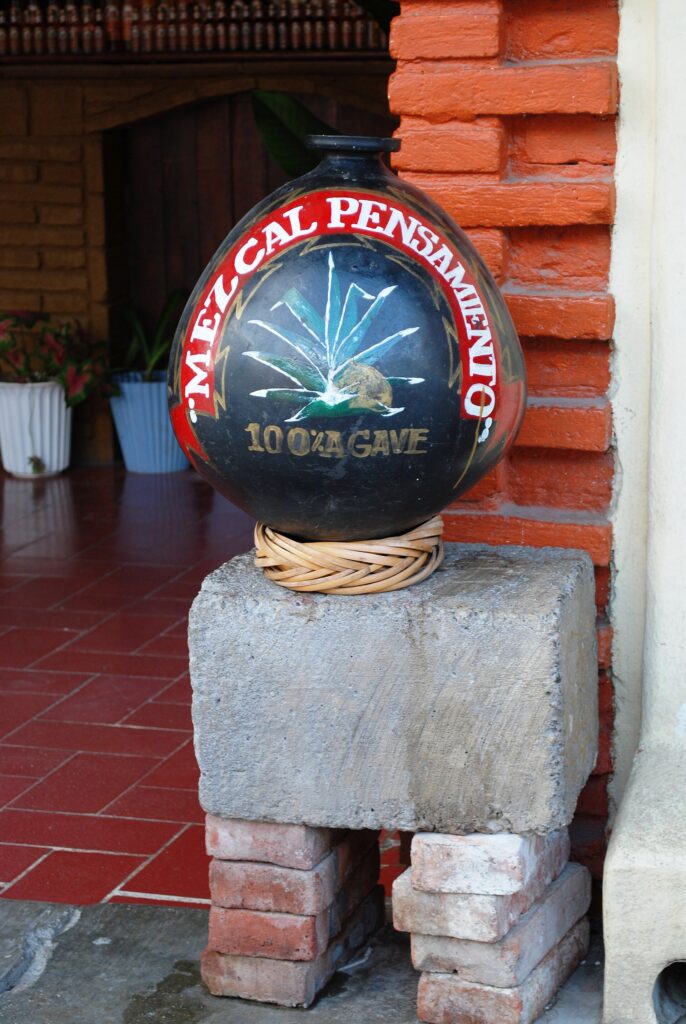
A mezcal production category that can offer vivid agave, fruit, earth and fermentation character. Some examples feel especially textured or layered, but the name should not be taught as a guaranteed level of smoke, rusticity or quality.
Color
Maturation
Alcohol
Sweetness
Balance
History
Mezcal Ancestral became an explicitly defined production category in NOM-070-SCFI-2016, published in 2017. The name recognizes specified production methods; it is not a calendar date for their invention. Its historical significance lies in modern regulation making room for particular inherited practices. “Ancestral” alone does not prove that distillation took place before European contact. Mexico: NOM-070-SCFI-2016, published 2017.
Classic characteristics
Appearance
Typically clear and colourless in joven examples; other classes differ.
Aroma
Often medium to pronounced; agave, earth, fruit, herbs and variable smoke.
Flavor
Potentially layered plant and fermentation character; clay distillation does not impose one flavor.
Sweetness
Usually dry in untreated examples; ripe-fruit aromas can seem sweet.
Mouthfeel
May be oily, rounded or firm; evaluate alcohol integration separately.
Finish
Medium to long in expressive examples, potentially developing through several notes.
Flavor Profile Deep Dive
Assess the certified ancestral expression without rewarding clay equipment or smoke intensity merely for being present. Investigate persistent unpleasant solvent-like, stale or sulfurous character in context. Do not diagnose a specific production error from one aroma; appropriate fermentation character and proof-related warmth are not automatic faults.
Service notes
Compare documented ancestral and artesanal expressions without asking tasters to rank the production categories. First describe aromatic intensity, texture and the nature of the finish; then examine which differences may reasonably relate to species, fermentation or distillation. Avoid assigning every contrast to the still material. For a guest, name the maker and agave where known and describe the particular bottle. Batch variation can be educational when presented as documented variation rather than romantic speculation.
Style parameters
| Parameter | Boundary or expectation |
|---|---|
| Base material | Agave-derived fermentable material; verify species and source |
| Bottled strength | Mexico 35–55% ABV; ordinary U.S. mezcal at least 40%; record actual strength for meaningful comparisons. |
| Mexico: bottled ABV | at least 35% and at most 55%; Mezcal; production class and maturation class are separate. |
| United States: bottled ABV | at least 40%; U.S. agave-spirit designation; stricter protected-origin requirements may apply. |
| Color and clarity | Typically clear and colourless in joven examples; other classes differ. |
| Maturation | Often joven; ancestral describes production, not age. |
| Additions | Identify any declared abocado con or destilado con presentation. |
Legal limits apply only to the named jurisdiction and identity. ADI entry conditions and typical sensory expectations are separate; a product example is not a universal range.
Cocktail connections
Browse published cocktails. Documented recipes, conditional style choices and development substitutions are labeled separately.
No established classic or recognized modern cocktail match was found for this specific style in the sources reviewed. This records a research gap, not proof that no cocktail exists. No neighboring style has been substituted to fill the space.
Style comparison
The essential distinction from artesanal is the permitted production toolkit, particularly clay-pot distillation. It is not a promise that an observer can identify clay by taste. A mezcal with intense smoke is not thereby ancestral, and a gently smoky example is not disqualified. Certification and production records establish the category.
Ingredients
Agave-derived fermentable material; verify species and source
Production notes
The ancestral category restricts cooking to pit ovens and distillation to direct-fired clay pots, with specified traditional milling methods. Fermentation and distillation may include agave fibre; its inclusion should not be assumed for every bottle. The shared mezcal table governs separate maturation and flavor classes. Species, maker and batch remain important identifiers within this category.
Commercial examples
No newly verified benchmark is designated in this revision. The original example discussion below remains a research lead, with its original qualifications.
Retained example and source context. Vago's range includes Tío Rey's Ensamble en Barro, illustrating clay-distilled blended-agave expression. Tío Rey production account. Legal category: NOM-070 reference.
Photo credit
Ingredient or production reference: Black clay mezcal storage vessel in Tlacolula, Oaxaca; a cultural reference, not a distillation still. This photograph illustrates the raw material or process, not a bottle of this specific style. Photo: AlejandroLinaresGarcia / Wikimedia Commons. CC BY-SA 4.0. Display resized; no other edits.

Keep exploring
- NOM-070-SCFI-2016 — evidence reviewed 2026-09-18.
- 27 CFR 5.148 — evidence reviewed 2026-09-17.