
Rượu Đế
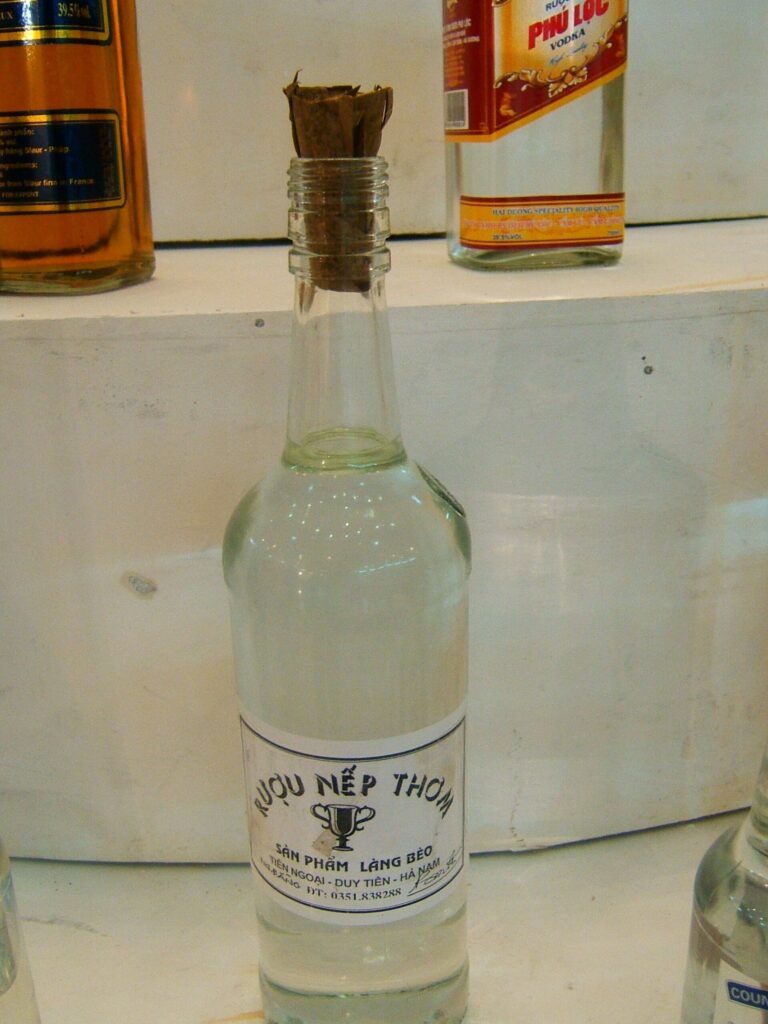
A Vietnamese rice-spirit tradition with potentially delicate grain, bread-like, fruity and fermentation-derived character. ADI uses this entry broadly for rice distillate. The sensory expectation should follow the specific producer and local tradition rather than a universal national recipe.
Color
Maturation
Alcohol
Sweetness
Balance
History
Rượu đế belongs to Vietnam’s rice-spirit traditions and their changing relationship with state authority. Historical research on colonial Vietnam documents the alcohol monopoly established after 1897 and the conflict between industrial supply and local production and consumption. That struggle is central to the drink’s modern history. The familiar explanation that the name arose from hiding liquor in grass is not treated here as a verified etymology. Gerard Sasges: alcohol, tradition and modernity in colonial Vietnam.
Classic characteristics
Appearance
Commonly clear and colourless for untreated rice spirit.
Aroma
Light to pronounced; fresh rice, bread, fruit or buttery associations depending on production.
Flavor
Grain and fermentation character; a restrained profile need not be completely neutral.
Sweetness
Often dry to sweet-seeming; rice aroma does not establish retained sugar.
Mouthfeel
Light through silky or oily, with strength-dependent warmth.
Finish
Variable; describe the persistence of rice and fermentation notes beyond the alcohol.
Flavor Profile Deep Dive
Evaluate the documented regional or diaspora rice-spirit expression; a northern Vietnamese comparison is not proof of southern identity. Investigate persistent unpleasant solvent-like, stale or sulfurous character in context. Do not diagnose a specific production error from one aroma; appropriate fermentation character and proof-related warmth are not automatic faults.
Service notes
Use an untreated, documented rice spirit for the first tasting. Ask staff to distinguish cereal aroma from sweetness and an oily texture from syrupiness. Then, if relevant, compare an infusion made from the same base. For a guest, identify the actual Vietnamese product and describe its flavour rather than promising that every rice spirit is neutral. State regional provenance accurately; do not relabel a northern producer's bottle as a southern tradition merely to simplify the menu.
Style parameters
| Parameter | Boundary or expectation |
|---|---|
| Base material | Fermented rice |
| Bottled strength | Product-specific; Sơn Tinh's cited example is 38%, not a category-wide limit. |
| Color and clarity | Commonly clear and colourless for untreated rice spirit. |
| Maturation | Resting may occur without wood colour; establish vessel and duration if claimed. |
| Additions | Separate the untreated distillate from fruit, herb or other infusions. |
Legal limits apply only to the named jurisdiction and identity. ADI entry conditions and typical sensory expectations are separate; a product example is not a universal range.
Cocktail connections
Browse published cocktails. Documented recipes, conditional style choices and development substitutions are labeled separately.
No established classic or recognized modern cocktail match was found for this specific style in the sources reviewed. This records a research gap, not proof that no cocktail exists. No neighboring style has been substituted to fill the space.
Style comparison
Rice as a starting material does not make the spirit sake, shochu or vodka. Fermented rice beverages and distilled rice spirits are also different products. This entry's broad ADI definition is useful for inventory coverage but insufficient to erase local names or production distinctions within Vietnam.
Ingredients
Fermented rice
Production notes
Rice is fermented and distilled, with starter culture, rice variety, equipment and resting affecting the result. Vietnamese rượu is a broad term; not every product bearing it is an untreated rice distillate. Fruit- or herb-infused products should be distinguished from the base spirit. The northern Sơn Tinh example below illustrates Vietnamese rice spirit, not proof of a specific southern Rượu Đế identity.
Commercial examples
| Expression | Stated ABV | Source/market review | Eligibility note |
|---|---|---|---|
| Đào Rượu Đế Viet Original | Not confirmed | California, United States; checked 2026-09-18 | Diaspora production comparison; not evidence of production in Vietnam. Exact SKU strength remains to be confirmed from its bottle or individual product sheet. |
Retained example and source context. Sơn Tinh Nếp Phú Lộc documents fragrant sticky rice, copper distillation, resting, grain/bread associations and a silky texture. ADI supplies the wider category boundary; a universal legal specification was not verified.
Photo credit
Phu Loc rượu đế. Photo: Viethavvh at vi.wikipedia / Wikimedia Commons. Public domain. Display resized; no other edits.
