
Commercial Examples
Cuauhtémoc Noche Buena, Chuckanut Vienna Lager, Devils Backbone Vienna Lager, Heavy Seas Cutlass Amber Lager, Schell's Firebrick

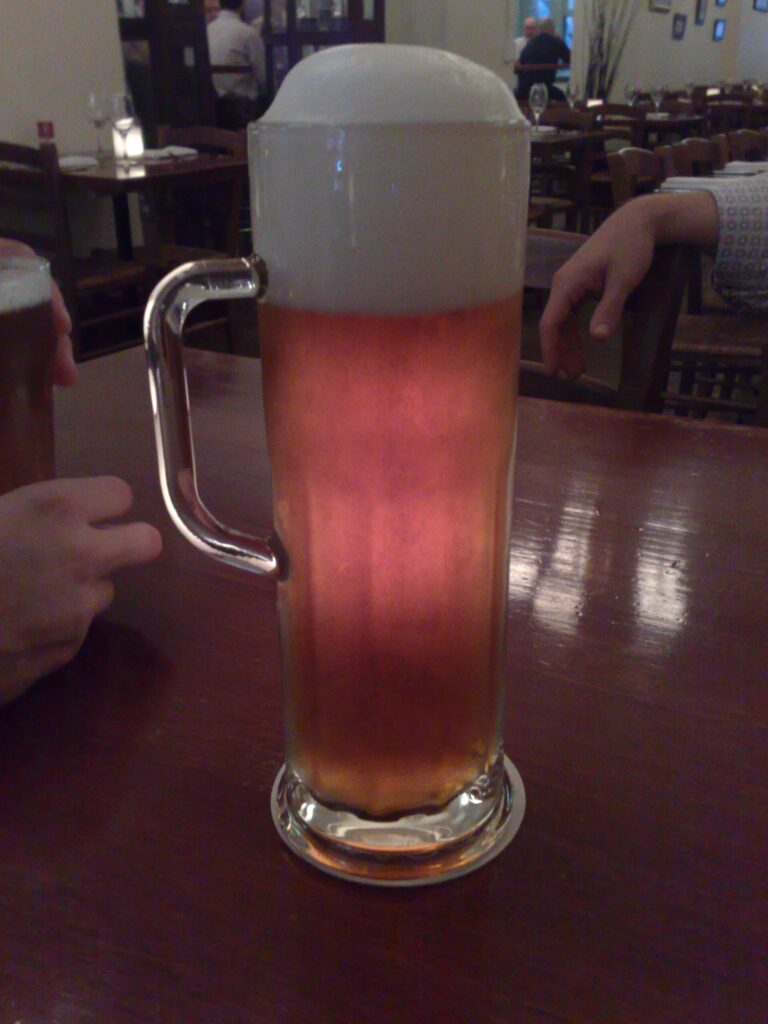
A moderate-strength amber lager with soft, smooth maltiness and moderate supporting bitterness. Finishes relatively dry with floral, peppery, noble hop character throughout. Vienna Lager represents a technological triumph that emerged from the industrial advancement of the 19th century.
Vienna Lager emerged from one of the most intense periods of technological spread and advancement in beer history. First brewed in 1841 by Anton Dreher at the Klein-Schwechat Brewery just outside Vienna, this amber-hued beer represented a remarkable shift from the braunbier typical of that time. Anton Dreher traveled to London with Gabriel Sedlmayr II and other German brewers in 1833 to learn what British brewers were doing. During that trip, they received saccharometers and learned new English malting techniques that produced paler, unsmoked malt more useful in the brewhouse. When they returned to their respective breweries with these new technologies, it changed the German brewing landscape forever. Sedlmayr implemented new systems of ice harvesting while Dreher, with new malting techniques, brewed the first batch of what would become Vienna Lager in 1841.
Vienna Lager originated in Austria, specifically Vienna, though it was influenced by technological innovations learned from British brewers and developed in dialogue with Bavarian brewing traditions.
Now nearly extinct in its area of origin, Vienna Lager continues in Mexico, where it was brought by Santiago Graf and other Austrian immigrant brewers in the late 1800s. The style has seen renewed interest in the craft beer movement as brewers seek to recreate authentic examples.
Light reddish amber to copper color. Bright clarity. Large, off-white, persistent head.
Moderately-intense malt aroma with toasty and malty-rich aromatics. Clean lager character. Floral, spicy hop aroma may be low to none. Significant caramel or roasted aroma is inappropriate.
Soft, elegant malt complexity in the forefront with firm hop bitterness providing balanced finish. Malt flavor tends toward rich, toasty character without significant caramel or roast. Fairly dry, crisp finish with both rich malt and hop bitterness present in aftertaste. Floral, spicy hop flavor may be low to none. Clean lager fermentation character.
Clean, toasty-rich malt character with moderate hop bitterness. Vienna malt provides distinctive bready and complex flavors. Hops provide subtle spice and floral notes without dominating.
Light caramel from specialty malts, subtle grainy notes, mineral character from water profile.
Dry, crisp finish with lingering toasty malt and hop bitterness. Clean and balanced without harsh edges.
Serve in a stein at 50°F. Vienna Lager works well year-round as a flavorful everyday lager.
Overall Impression: A moderate-strength amber lager with a soft, smooth maltiness and moderate bitterness, yet finishing relatively dry. The malt flavor is clean, bready-rich, and somewhat toasty, with an elegant impression derived from quality base malts and process, not specialty malts and adjuncts.
Aroma: Moderately-intense malt aroma, with toasty and malty-rich aromatics. Clean lager character. Floral, spicy hop aroma may be low to none. A significant caramel or roasted aroma is inappropriate.
Appearance: Light reddish amber to copper color. Bright clarity. Large, off-white, persistent head.
Flavor: Soft, elegant malt complexity is in the forefront, with a firm enough hop bitterness to provide a balanced finish. The malt flavor tends towards a rich, toasty character, without significant caramel or roast flavors. Fairly dry, crisp finish, with both rich malt and hop bitterness present in the aftertaste. Floral, spicy hop flavor may be low to none. Clean lager fermentation character.
Mouthfeel: Medium-light to medium body, with a gentle creaminess. Moderate carbonation. Smooth.
Comments: A standard-strength everyday beer, not a beer brewed for festivals. American versions can be a bit stronger, drier and more bitter, while modern European versions tend to be sweeter. Many Mexican amber and dark lagers used to be more authentic, but unfortunately are now more like sweet, adjunct-laden Amber/Dark International Lagers. Regrettably, many modern examples use adjuncts which lessen the rich malt complexity characteristic of the best examples of this style. This style is on the watch list to move to the Historical category in future guidelines; that would allow the classic style to be described while moving the sweeter modern versions to the International Amber or Dark Lager styles.
History: Developed by Anton Dreher in Vienna in 1841, became popular in the mid-late 1800s. Now nearly extinct in its area of origin, the style continues in Mexico where it was brought by Santiago Graf and other Austrian immigrant brewers in the late 1800s. Authentic examples are increasingly hard to find (except perhaps in the craft beer industry) as formerly good examples become sweeter and use more adjuncts.
Characteristic Ingredients: Vienna malt provides a lightly toasty and complex, Maillard-rich malt profile. As with Marzens, only the finest quality malt should be used, along with Continental hops (preferably Saazer types or Styrians). Can use some caramel malts and/or darker malts to add color and sweetness, but caramel malts shouldn't add significant aroma and flavor and dark malts shouldn't provide any roasted character.
Style Comparison: Lighter malt character, slightly less body, and slightly more bitter in the balance than a Marzen, yet with many of the same malt-derived flavors. The malt character is similar to a Marzen, but less intense and more balanced. Lower in alcohol than Marzen or Festbier. Less rich, less malty and less hop-centered compared to Czech Amber Lager.
Vital Statistics: OG: 1.048 – 1.055 IBUs: 18 – 30 FG: 1.010 – 1.014 SRM: 9 – 15 ABV: 4.7 – 5.5%
Commercial Examples: Cuauhtemoc Noche Buena, Chuckanut Vienna Lager, Devils Backbone Vienna Lager, Figueroa Mountain Danish-style Red Lager, Heavy Seas Cutlass Amber Lager, Schell's Firebrick
Vienna malt provides lightly toasty and complex, Maillard-rich malt profile. High-quality malt essential, along with Continental hops (preferably Saazer types or Styrians). Can use some caramel malts and/or darker malts to add color and sweetness, but caramel malts shouldn't add significant aroma and flavor.
Noble varieties providing gentle bittering and minimal aroma. European hop varieties typical.
Clean lager yeast fermented cool for smooth, refined character.
Moderate to slightly sulfate-forward water can accentuate hop character. Avoid chloride-heavy water that would emphasize sweet malt character.
Decoction mash schedule is traditional, helping with modification of Vienna malt and development of Maillard products for aroma and flavor.
Ferment cool (around 50-55°F) with proper attenuation. Extended lagering helps develop smooth character.
At the Pub: Smash Burger and Fries Takeout: Kabobs Swanky date night: Crab cakes (light on the spice)
Medium aged cheddar, Gruyere, semi-hard European cheeses
Smash burger and fries, kabobs, roasted meats, light preparations
Roasted vegetables, light salads, traditional European fare
Not typical with sweets; best as an everyday lager
White beat spirit Boldly spicy rye
New: Bruno Mars: Doo-Waps & Hooligans Old: Schubert, Piano Sonata No. 18 in B-flat Major
Cuauhtémoc Noche Buena, Chuckanut Vienna Lager, Devils Backbone Vienna Lager, Heavy Seas Cutlass Amber Lager, Schell's Firebrick