
Tennessee Whiskey
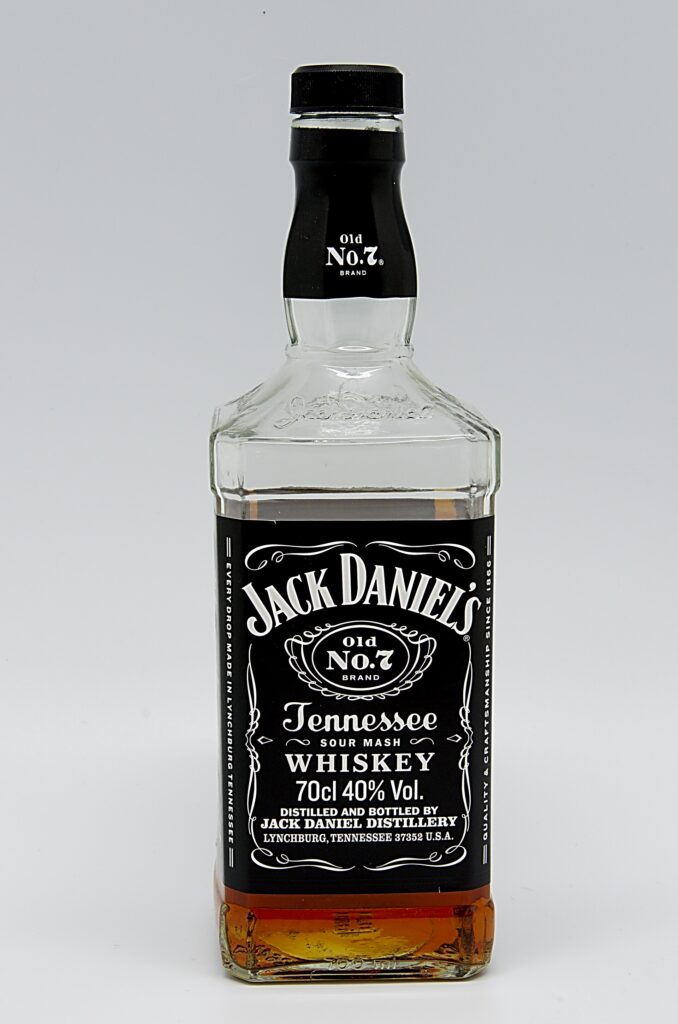
A Tennessee-made, corn-led whiskey shaped by new charred oak, frequently expressing vanilla, caramel-like aromas, fruit, toasted grain and spice. Familiar examples can be rounded and approachable, but stronger or older bottlings may be assertive. Charcoal mellowing is a production distinction, not a guarantee of one flavour or texture.
Color
Maturation
Alcohol
Sweetness
Balance
History
Tennessee whiskey’s history includes production knowledge transmitted across the boundaries of slavery and emancipation. Jack Daniel’s own historical account acknowledges Nathan “Nearest” Green’s role in teaching Jack Daniel and in the early distillery operation. Green’s contribution belongs in the account of the charcoal-mellowing tradition rather than being omitted in favor of a lone-founder story. This is a specific producer history within the wider Tennessee category. Jack Daniel’s: historian interview on Nathan Green and early distillery history.
Classic characteristics
Appearance
Gold through deep amber or copper, primarily reflecting active new charred oak.
Aroma
Medium to pronounced vanilla, grain, caramel-like aromas, fruit and oak spice.
Flavor
Corn and wood character with variable fruit, nuts, toast and spice; charcoal treatment need not taste smoky.
Sweetness
Generally dry with sweet-associated corn and oak impressions; charcoal does not establish sugar content.
Mouthfeel
Medium to full, rounded to firm; assess alcohol integration and tannin in the actual expression.
Finish
Medium to long, often showing oak, grain, spice and sustained warmth.
Flavor Profile Deep Dive
Assess corn and oak integration with documented mellowing; charcoal treatment cannot be authenticated by taste alone. Investigate persistent solvent-like pungency, unpleasant stale character or wood astringency that overwhelms the intended expression. A descriptor alone cannot prove a distillation-cut error, additive use or chemical safety.
Service notes
Explain the sequence of charcoal mellowing before maturation, while acknowledging the statutory exception. Compare with a bourbon of similar strength and maturity without claiming that every perceived difference proves the filtration effect. For consumers, describe the observed vanilla, fruit, oak and spice rather than promising that charcoal removes all harshness. Record the exact expression, since a brand's barrel-proof and standard bottlings can differ markedly.
Style parameters
| Parameter | Boundary or expectation |
|---|---|
| Base material | At least 51% corn in the mash under cited U.S. identity |
| Bottled strength | State minimum 40% ABV; higher-strength examples require deliberate dilution for comparison. |
| United States: bottled ABV | at least 40%; Whiskey identity; protected origin and named types have additional rules. |
| Tennessee: bottled ABV | at least 40%; Tennessee whiskey; charcoal-treatment statutory exception exists. |
| Color and clarity | Gold through deep amber or copper, primarily reflecting active new charred oak. |
| Maturation | New charred oak under Tennessee requirements; no universal age minimum stated for the basic designation. |
| Additions | Follow the whiskey's full federal and state identity; flavour extensions are separate products. |
Legal limits apply only to the named jurisdiction and identity. ADI entry conditions and typical sensory expectations are separate; a product example is not a universal range.
Cocktail connections
Style comparison
The production overlaps substantially with bourbon, while Tennessee adds origin and generally charcoal-treatment requirements. Charcoal filtration is not the same as peat smoking or adding maple flavour. A Tennessee-made rye is not automatically Tennessee whiskey under this corn-based state definition. Bottles carrying honey, cinnamon or other flavour names may also have a different legal classification from the producer's core whiskey.
Ingredients
At least 51% corn in the mash under cited U.S. identity
Production notes
Tennessee law requires manufacture in the state, a mash containing at least 51% corn, distillation no higher than 80% ABV, and new-charred-oak ageing in Tennessee, with entry no higher than 62.5% and bottling at least 40%. Maple-charcoal filtration before ageing is generally required, with a narrowly defined statutory exception. Therefore, neither “all Tennessee whiskey is filtered” nor “any whiskey made in Tennessee qualifies” is sufficiently accurate.
Commercial examples
No newly verified benchmark is designated in this revision. The original example discussion below remains a research lead, with its original qualifications.
Retained example and source context. Jack Daniel's producer overview documents sugar-maple-charcoal mellowing. Tennessee §57-2-106; Tennessee Attorney General's discussion. ADI scope: S128.
Photo credit
Jack Daniel’s Tennessee Whiskey. Photo: Clément Bucco-Lechat / Wikimedia Commons. CC BY-SA 3.0. Display resized; no other edits.

Keep exploring
- Tennessee Attorney General discussion of 57-2-106 — evidence reviewed 2026-09-17.
- 27 CFR 5.143 — evidence reviewed 2026-09-18.