
Commercial Examples
Belhaven Scottish Ale, Broughton Exciseman's Ale, Orkney Dark Island, Pelican MacPelican's Scottish Style Ale, Weasel Boy Plaid Ferret Scottish Ale

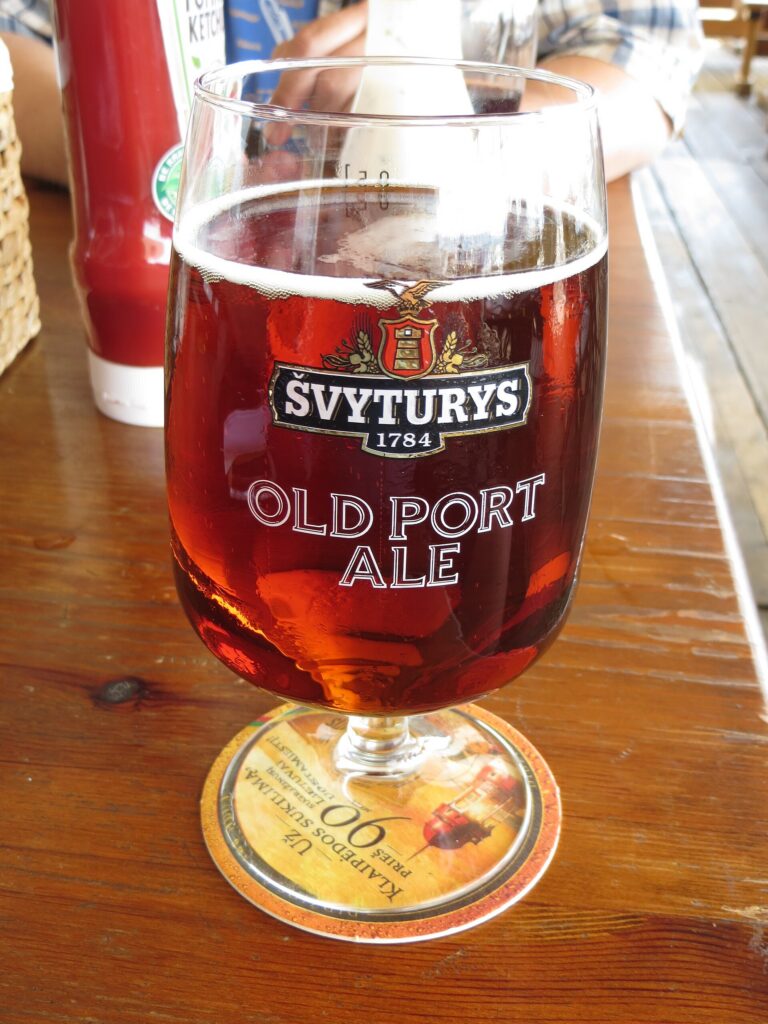
A malt-focused, generally caramelly beer with perhaps a few esters and occasionally a butterscotch aftertaste. Hops only to balance and support the malt. The malt character can range from dry and grainy to rich, toasty, and caramelly, but is never roasty and especially never has a peat smoke character.
Beer styles have a way of telling you a little bit about themselves. Belgian and French beer often carries a rustic, farmhouse character. German beer is clean, crisp, and drinkable by the liter. American beer has the common thread of just being more of whatever the base style was. Scottish beer is in many ways similar to English ales–though as we mentioned in our post on Scottish Light, the early beer influence went the opposite direction–but with less hop and yeast character. They are caramelly, biscuity, and sometimes butterscotch-like malt showcases, whereas their English counterparts have a firm bitterness and lots of ale yeast character.
Geography and agriculture play a big part in why these beers evolved this way. Since at least the Norman Conquest, brewing in Scotland and England has followed similar trajectories: ales brewed with malt and hops from the British islands and fermented with ale yeast. The predominance of estate brewing was common as well, meaning that before industrialization, and with it commercial refrigeration, climate would have played a much bigger role in finished beer.
A common axiom in the brewing industry is, "Brewers make wort, yeast make beer." It's true, to a certain extent, that brewers have only a small role to play in the grand scheme of things. It isn't us, after all, that actually create any of the alcohol or carbon dioxide that make beer amazing. We like to be in control of things, though, so we play with our yeast's health in a lot of ways to achieve what we want in a finished beer. One of the ways we do this is to change the temperature at which yeast do their thing. In general, cooler temperatures create beer with cleaner yeast profiles–less fruity esters and spicy phenolics–than warmer temperatures do. There are a ton of other factors impacting this–including how much yeast you add to the wort, whether it has the nutrients it needs, what yeast strain you're using, and what the moon phase is–but this general rule tells us something about why Scottish and English beer are different. When estate brewers would add yeast to their wort in the pre-industrial period, fermentation temperatures in Scotland would have been cooler than in its southern neighbor. What would have resulted, then, was a finished beer with less yeast character, which certainly influenced production after warming and cooling became more scientific. That cooler climate had another major impact on brewing. Because the hop growing season in Scotland was (and is, though unfortunately not for long) shorter than in its southern neighbors, brewing traditions in Scotland developed around recipes with far less hops than in England. As hops gradually replaced gruit–a spice mixture used to bitter beer–during the fifteenth and sixteenth centuries, Scottish brewers, recognizing the steep import prices, stuck to their recipes and kept hop usage low.
Though industrialization and globalized trade made hops cheaper and more readily available, Scottish beer, which was envied enough to incite violence at various points in history (more on that in an upcoming post on Heather Ale), remained true to its lineage. Their enduring popularity, especially those in the Export and Wee Heavy range, speak to just how wonderful these beers can be: malty, caramelly, and biscuity, they're a malt-lover's dream in a glass.
Copper to brown
Biscuity, caramelly, and with hints of butterscotch
Usually malty-sweet, but some versions have a dry graininess Always malty in the balance
Medium-light body, low to medium-low carbonation Creamy
Overall Impression: A malt-focused, generally caramelly beer with perhaps a few esters and occasionally a butterscotch aftertaste. Hops only to balance and support the malt. The malt character can range from dry and grainy to rich, toasty, and caramelly, but is never roasty and especially never has a peat smoke character.
Aroma: Low to medium maltiness, often with flavors of toasted breadcrumbs, lady fingers, and English biscuits. Low to medium caramel and low butterscotch is allowable. Light pome fruitiness in best examples. May have low traditional English hop aroma (earthy, floral, orange-citrus, spicy, etc.). Peat smoke is inappropriate.
Appearance: Pale copper to very dark brown. Clear. Low to moderate, creamy off-white.
Flavor: Entirely malt-focused, with flavors ranging from pale, bready malt with caramel overtones to rich-toasty malt with roasted accents (but never roasty) or a combination thereof. Fruity esters are not required but add depth yet are never high. Hop bitterness to balance the malt. No to low hop flavor is also allowed and should of traditional English character (earthy, floral, orange-citrus, spicy, etc.). Finish ranges from rich and malty to dry and grainy. A subtle butterscotch character is acceptable; however, burnt sugars are not. The malt-hop balance tilts toward malt. Peat smoke is inappropriate.
Mouthfeel: Medium-low to medium body. Low to moderate carbonation. Can be relatively rich and creamy to dry and grainy.
Comments: Malt-focused ales that gain the vast majority of their character from specialty malts, never the process. Burning malt or wort sugars via 'kettle caramelization' is not traditional nor is any blatantly 'butterscotch' character. Most frequently a draught product. Smoke character is inappropriate as any found traditionally would have come from the peat in the source water. Scottish ales with smoke character should be entered as a Classic Style Smoked Beer.
Characteristic Ingredients: Originally used Scottish pale malt, grits or flaked maize, and brewers caramel for color. Later adapted to use additional ingredients, such as amber and brown malts, crystal and wheat malts, and roasted grains or dark sugars for color but not for the 'roasty' flavor. Sugar adjuncts are traditional. Clean or slightly fruity yeast. Peatsmoked malt is inauthentic and inappropriate.
Style Comparison: Similar character to a Wee Heavy, but much smaller.
Vital Statistics: OG: 1.040 – 1.060 IBUs: 15 – 30 FG: 1.010 – 1.016 SRM: 13 – 22 ABV: 3.9 – 6.0%
Commercial Examples: Belhaven Scottish Ale, Broughton Exciseman's Ale, Orkney Dark Island, Pelican MacPelican's Scottish Style Ale, Weasel Boy Plaid Ferret Scottish Ale
Similar character to a Wee Heavy, but much smaller.
Two-row brewers malt Caramel malts Very light use of roasted barley English hops Neutral scottish ale yeast
A single infusion mash is traditional, and hopping is traditionally only one addition for bitterness early in the boil. Use caramel malts at up to 20% of the grain bill, but make most of them lighter caramel malts…120L can take this beer over quickly at to high a percentage. Keep the roasted barley to 2% or less…this is really just giving you color and a touch of dryness. Plan to mash in the middle to upper range for lower fermentable extract but not too light of a body (153-154). Fermented in the low to mid 60s with Scottish yeast for a clean neutral character.
At the Pub: Grilled Endive Salad Takeout: Sandwiches Barbecue night: Beer Can Chicken
Black Flannel Vermont Common
New: Mumford and Sons Old: Ticheli – Loch Lomond
Belhaven Scottish Ale, Broughton Exciseman's Ale, Orkney Dark Island, Pelican MacPelican's Scottish Style Ale, Weasel Boy Plaid Ferret Scottish Ale