
Pot-Column Blended Rum
A blend combining pot- and column-distilled rums into an integrated profile. It may balance fruit and fermentation weight with a lighter aromatic framework, although the actual result depends on the component spirits. Unaged, filtered and oak-matured expressions can all fit; no fixed midpoint between two stereotypes is required.
Color
Maturation
Alcohol
Sweetness
Balance
History
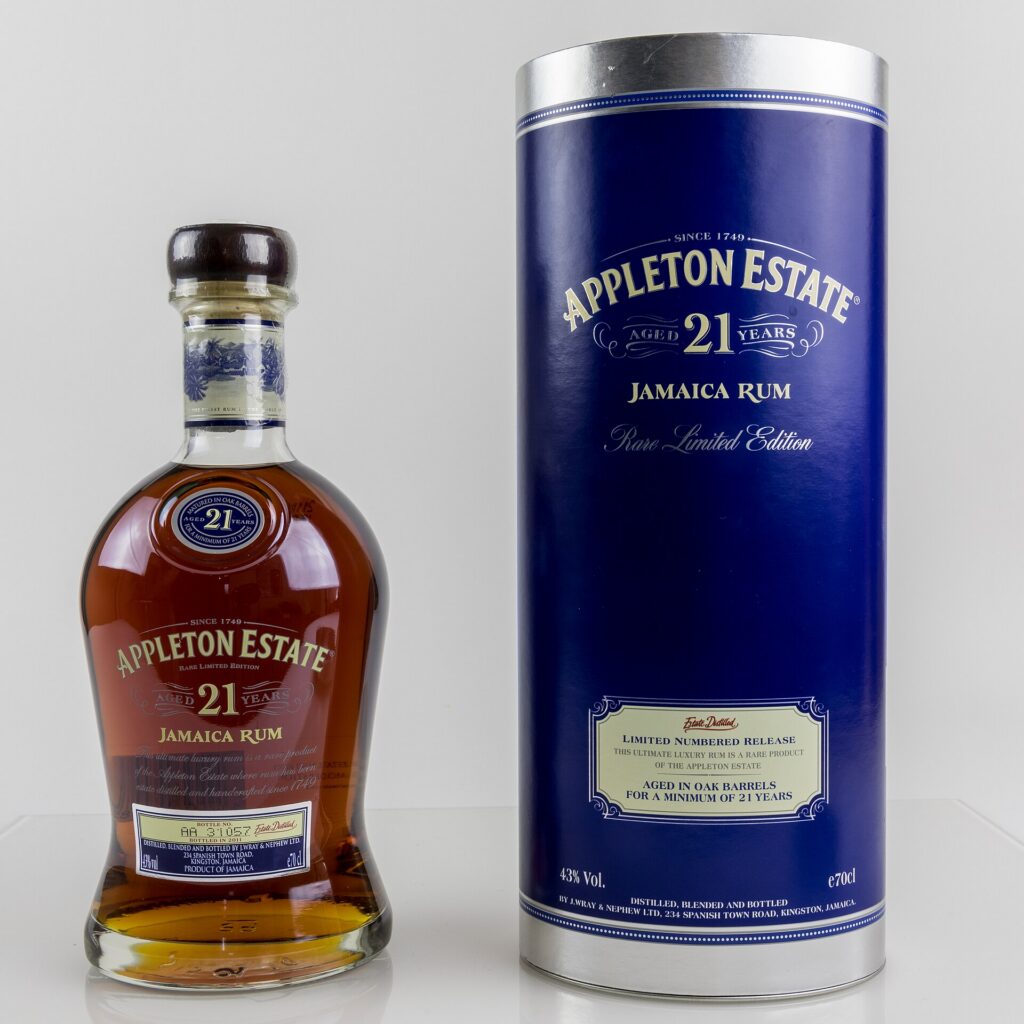
Pot-and-column blended rum developed through producers combining differently made distillates into a house style. Appleton Estate, which identifies a production record from 1749, illustrates the relationship between a long estate history and a modern blending method: its production account explicitly combines pot- and column-still components. The two facts should remain distinct. An early estate date documents rum production there, but does not prove that its present blend or equipment configuration existed in the eighteenth century. Appleton Estate: historical roots; Appleton Estate: pot-and-column production and blending.
Classic characteristics
Appearance
Colourless to deep amber; filtration, maturation and permitted colouring influence presentation independently of blending.
Aroma
Light to pronounced fruit, cane, molasses-associated and fermentation notes; oak can add vanilla and spice.
Flavor
Integrated component flavours; lighter and more intense elements should support a coherent house style.
Sweetness
Dry to sweet in impression; component selection and any sweetening must not be conflated.
Mouthfeel
Light to full; proportions and component character determine weight more than the word blended.
Finish
Short to long; assess continuity of fruit, spice and wood rather than a required intensity level.
Flavor Profile Deep Dive
Judge coherence of the pot/column blend; do not infer the component ratio from aroma or weight alone. Investigate persistent unpleasant solvent-like, stale or sulfurous character in context. Do not diagnose a specific production error from one aroma; appropriate fermentation character and proof-related warmth are not automatic faults.
Service notes
Use a producer-documented blend and, where available, examples of its component styles. Ask tasters to describe the finished balance without pretending they can calculate blend proportions from taste. For guests, explain whether the bottle is fruit-led, oak-led, light or full before discussing equipment. In cocktail training, compare its flavour contribution with a similar-strength single-production-type rum rather than assuming universal interchangeability.
Style parameters
| Parameter | Boundary or expectation |
|---|---|
| Base material | Sugarcane juice, syrup, molasses or other cane-derived material; identify product |
| Bottled strength | ADI minimum 40% ABV; stronger versions can also meet the overproof category. |
| United States: bottled ABV | at least 40%; Ordinary rum/cachaça identity; origin requirements remain applicable. |
| Color and clarity | Colourless to deep amber; filtration, maturation and permitted colouring influence presentation independently of blending. |
| Maturation | Optional; component ages and any finished-blend resting should be distinguished. |
| Additions | Product and jurisdiction govern permissions; blending does not itself mean added sugar, flavours or colour. |
Legal limits apply only to the named jurisdiction and identity. ADI entry conditions and typical sensory expectations are separate; a product example is not a universal range.
Cocktail connections
Browse published cocktails. Documented recipes, conditional style choices and development substitutions are labeled separately.
- Añejo Highball — qualified; base.
- Bacardi Cocktail — qualified; base.
- Bermuda Rum Swizzle — qualified; base.
- Between The Sheets — qualified; co-base.
- Cuba Libre — qualified; base.
- Daiquiri — qualified; base.
- Dark ’n Stormy — qualified; base.
- Don’s Special Daiquiri — qualified; co-base.
- Eggnog — qualified; base.
- El Presidente — qualified; base.
- Fog Cutter — qualified; co-base.
- Hemingway Special — qualified; base.
- Hot Buttered Rum — qualified; base.
- IBA Tiki — qualified; co-base.
- Jungle Bird — qualified; base.
- Long Island Iced Tea — qualified; co-base.
- Mai Tai — qualified; base.
- Mary Pickford — qualified; base.
- Missionary’s Downfall — qualified; base.
- Mojito — qualified; base.
- Old Cuban — qualified; base.
- Painkiller (Pusser’s reference) — qualified; base.
- Piña Colada — qualified; base.
- Planters Punch — qualified; base.
- Queen’s Park Swizzle — qualified; base.
- Three Dots And A Dash — qualified; co-base.
- Zombie — qualified; co-base.
Style comparison
This is an equipment-origin blend, not merely an age blend. The word blended should not imply dilution with neutral alcohol; ADI's definition specifies rum distillates. A well-made blend may be complex or intentionally straightforward. Neither component's presence guarantees a particular flavour if its proportion and character are unknown.
Ingredients
Sugarcane juice, syrup, molasses or other cane-derived material; identify product
Production notes
ADI specifies separately produced pot and column distillates from cane-derived materials, blended and bottled at least at 40% ABV. The component proportions need not be equal. Blending may occur within one distillery or across sources, subject to applicable origin and label rules. A blend of several pot rums alone does not qualify, nor does a blend of only column rums. See the U.S. rum rule for the U.S. distillation boundary.
Commercial examples
No newly verified benchmark is designated in this revision. The original example discussion below remains a research lead, with its original qualifications.
Retained example and source context. Mount Gay Eclipse documents pot and column distillation followed by maturation in former American whiskey casks. ADI scope: S095; the U.S. rum rule.
Photo credit
Appleton Estate 21 Year Old rum. Photo: Raimond Spekking / Wikimedia Commons. CC BY-SA 4.0. Display resized; no other edits.
-92329.jpg)
Keep exploring
- 27 CFR 5.147 — evidence reviewed 2026-09-17.