
Commercial Examples
Liefmans Goudenband, Liefmans Cuvée Brut, Ichtegem's Oud Bruin, Petrus Aged Pale (barrel-aged variant)

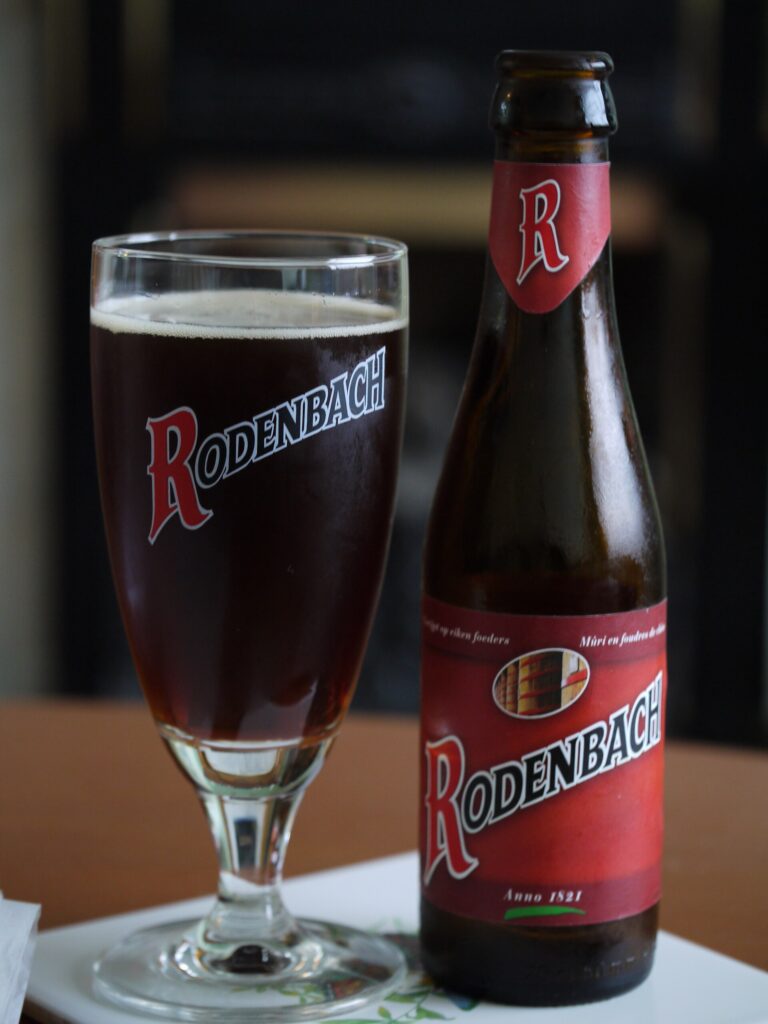
The Oud Bruin represents a distinctly Belgian approach to mixed-fermentation brewing, with origins tracing back to the Liefmans brewery in Dendermonde, Belgium. This style developed as brewers sought to create complex, age-worthy brown ales through deliberate blending of younger and older batches.
Belgium, particularly the Flanders region, is home to this style. The Oud Bruin tradition is less widespread than Flanders Red Ale but represents an important part of Belgian brewing heritage.
Contemporary Oud Bruin producers maintain the traditional blending approach, using warm aging in stainless steel or wooden vessels. The style has evolved with modern sanitation practices while maintaining its complex character through extended aging and careful microbial management.
Brown to dark brown color, ranging from deep ruby to opaque depending on age and blend composition. Clear when young, becoming increasingly hazy with age. White to tan head with good retention.
Complex bouquet featuring caramel sweetness, wine-like fruitiness (plum, raisin, cherry notes), subtle oak character, and gentle vinous complexity. Some leather or tobacco notes may emerge with age.
Rich malt sweetness with moderate acidity—less sharp than Flanders Red. Notes of dark fruit, caramel, toffee, and subtle oakiness. The balance shifts with age from sweet to increasingly dry. Some versions show chocolate, licorice, or anise character.
Rich caramel sweetness with developing vinous character. The interplay between young and old beer creates complexity that evolves in the glass.
Dark fruit esters (plum, raisin, cherry), subtle oak aging notes, gentle lactic acid acidity, hints of leather or tobacco in aged examples.
Warming, slightly tart finish with lingering sweetness. Some versions finish dry; others retain gentle sweetness depending on blend ratios.
Overall Impression: A malty, fruity, aged, somewhat sour Belgian-style brown ale.
Aroma: Complex combination of fruity esters and rich malt character. Medium to medium-high esters commonly reminiscent of raisins, plums, figs, dates, black cherries or prunes. Medium low to medium high malt character of caramel, toffee, orange, treacle or chocolate. Spicy phenols can be present in low amounts for complexity. A sherry-like character may be present and generally denotes an aged example. A low sour aroma may be present, and can modestly increase with age but should not grow to a noticeable acetic/vinegary character. Hop aroma absent. Diacetyl is perceived only in very minor quantities, if at all, as a complementary aroma.
Appearance: Dark reddish-brown to brown in color. Good clarity. Average to good head retention. Ivory to light tan head color.
Flavor: Malty with fruity complexity and typically some caramel character. Medium to medium-high fruitiness commonly includes dark or dried fruit such as raisins, plums, figs, dates, black cherries or prunes. Medium low to medium high malt character of caramel, toffee, orange, treacle or chocolate. Spicy phenols can be present in low amounts for complexity. A slight sourness often becomes more pronounced in well-aged examples, along with some sherry-like character, producing a "sweet-and-sour" profile. The sourness should not grow to a notable acetic/vinegary character. Hop flavor absent. Restrained hop bitterness. Low oxidation is appropriate as a point of complexity. Diacetyl is perceived only in very minor quantities, if at all, as a complementary flavor. Balance is malty, but with fruitiness and sourness present. Sweet and tart finish.
Mouthfeel: Medium to medium-full body. Low to moderate carbonation. No astringency.
Comments: Long aging and blending of young and aged beer may occur, adding smoothness and complexity and balancing any harsh, sour character. This style was designed to lay down so examples with a moderate aged character are considered superior to younger examples. As in fruit lambics, Oud Bruin can be used as a base for fruit-flavored beers such as kriek (cherries) or frambozen (raspberries), though these should be entered in the Classic-Style Fruit Beer category.
History: An "old ale" tradition, indigenous to East Flanders, typified by the products of the Liefman brewery (now owned by Riva), which has roots back to the 1600s. Historically brewed as a "provision beer" that would develop some sourness as it aged. These beers were typically more sour than current commercial examples. While Flanders red beers are aged in oak, the brown beers are warm aged in stainless steel.
Characteristic Ingredients: A base of Pils malt with judicious amounts of dark cara malts and a tiny bit of black or roast malt. Often includes maize. Low alpha acid continental hops are typical (avoid high alpha or distinctive American hops). Saccharomyces and Lactobacillus (and acetobacter) contribute to the fermentation and eventual flavor. Lactobacillus reacts poorly to elevated levels of alcohol. Water high in carbonates is typical of its home region and will buffer the acidity of darker malts and the lactic sourness. Magnesium in the water accentuates the sourness.
Style Comparison: A deeper malt character distinguishes these beers from Flanders red ales. The Oud Bruin is less acetic and maltier than a Flanders Red, and the fruity flavors are more malt-oriented.
Vital Statistics: OG: 1.040 – 1.074 IBUs: 20 – 25 FG: 1.008 – 1.012 SRM: 15 – 22 ABV: 4.0 – 8.0%
Commercial Examples: Ichtegem Oud Bruin, Liefmans Goudenband, Liefmans Oud Bruin, Petrus Oud Bruin, Riva Vondel, Vanderghinste Bellegems Bruin
Belgian malts forming the base, typically featuring pale ale malts, some crystal/caramel malts for color and body, and occasionally darker malts for depth. Adjuncts like candi syrup may appear in some interpretations.
Restrained hopping (20-25 IBU) using noble or old-world hop varieties. Hops provide balance without dominance.
Mixed fermentation cultures combining brewers' yeast with Lactobacillus and wild yeast strains. Temperature control during aging is critical.
Soft to moderately hard water suits this style, with balanced mineral content.
Single infusion mash in the mid-temperature range, designed for good fermentability and malt extraction.
Initial fermentation at ale temperatures followed by warm aging in stainless steel or oak. Extended conditioning (months to years) develops complexity and acidity.
At the Pub: Creamie of the day Brunch: Belgian Waffles, fresh berries, vanilla whipped cream Cheese pairing: Cave aged cheddar
Aged hard cheeses, smoked gouda, cave-aged varieties
Roasted duck, venison, beef stews, richer fish preparations
Caramel-based desserts, chocolate tarts, aged fruit preparations
Agave Dream
New: Joy Williams Old: Sweelinck, Fantasia Chromatica
Liefmans Goudenband, Liefmans Cuvée Brut, Ichtegem's Oud Bruin, Petrus Aged Pale (barrel-aged variant)