
Commercial Examples
Rodenbach Classic, Rodenbach Grand Cru, Duchess, Petrus, Consecrator, Czar

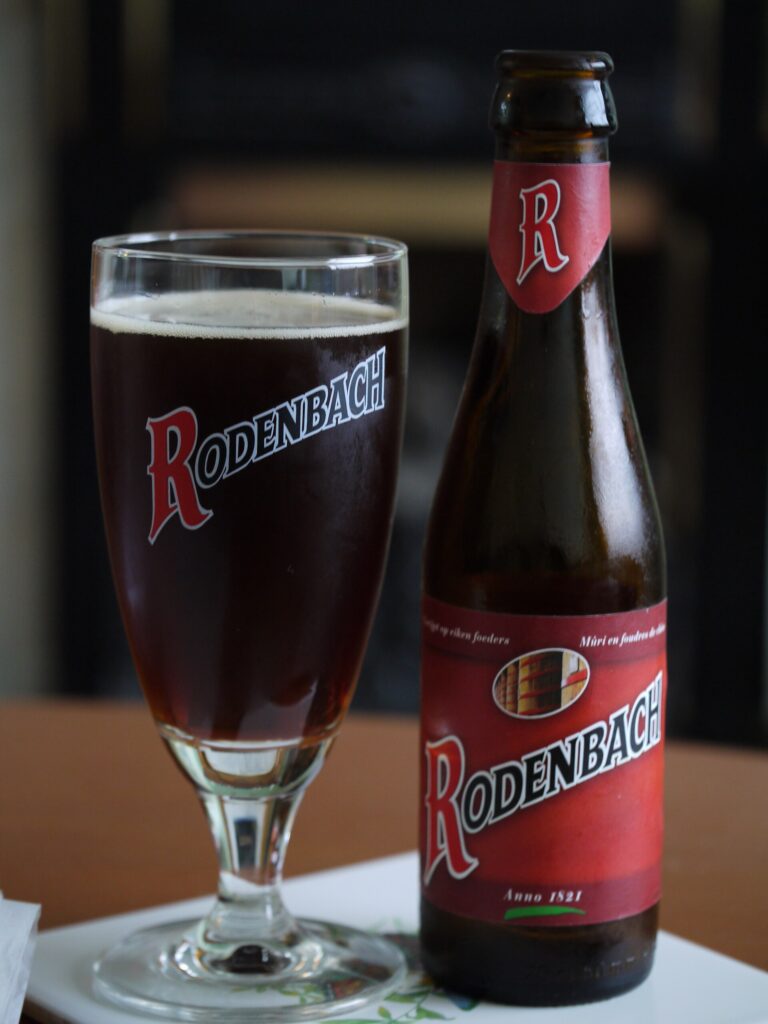
The Flanders Red Ale is often called the "Burgundy of Belgium"—a wine-like mixed-fermentation ale with tart acidity, complex fruit character, and elegant oak aging. This iconic Belgian style represents centuries of brewing tradition and microbial partnership.
The Flanders Red Ale traces its roots to the Rodenbach brewery, founded in 1821. The brewery's legendary approach to blending young and old beers became the template for this style. Historically, these beers were aged in massive wooden foeders (vessels holding 500+ barrels), where spontaneous fermentation and bacterial action created the characteristic complexity.
The West Flanders region of Belgium, particularly around Ronse and Rodenbach's homeland, is the historical home of this style. The tradition extends across Flanders but reaches its apotheosis at specific breweries maintaining centuries-old techniques.
Contemporary Flanders Red producers maintain foeders and traditional blending, though some have adopted stainless steel aging. The style remains relatively rare, with production concentrated in a handful of Belgian breweries committed to the labor-intensive process.
Deep red to burgundy color, typically ruby through brick-red, ranging from clear to slightly hazy. Low to moderate tan head with fair retention.
Complex and wine-like with pronounced acidity. Notes of dark cherry, plum, raisin, and vinous character dominate. Some oak aging character and subtle funk may be present. Very little hop aroma.
Tart and fruity with wine-like character. Dark cherry and plum notes, moderate acidity (from acetic acid and lactic acid), subtle oak, and a vinous quality. The balance between sweetness and acidity varies with blend composition. Very dry finish despite initial fruity impression.
Pronounced acidity balanced against dark cherry and plum fruit. The wine-like character comes from both the fruit character and the acid profile (acetic acid in particular).
Vinous complexity, subtle oak from barrel aging, hints of leather or tobacco, funky Bretanomyces character in some examples.
Clean, dry, slightly warming with lingering acidity. The tart finish invites another sip.
Overall Impression: A sour, fruity, red wine-like Belgian-style ale with interesting supportive malt flavors and fruit complexity. The dry finish and tannin completes the mental image of a fine red wine.
Aroma: Complex fruity-sour profile with supporting malt that often gives a wine-like impression. Fruitiness is high, and reminiscent of black cherries, oranges, plums or red currants. There are often low to medium-low vanilla and/or chocolate notes. Spicy phenols can be present in low amounts for complexity. The sour aroma ranges from balanced to intense. Prominent vinegary acetic character is inappropriate. No hop aroma. Diacetyl is perceived only in very minor quantities, if at all, as a complementary aroma.
Appearance: Deep red, burgundy to reddish-brown in color. Good clarity. White to very pale tan head. Average to good head retention.
Flavor: Intense fruitiness commonly includes plum, orange, black cherry or red currant flavors. A mild vanilla and/or chocolate character is often present. Spicy phenols can be present in low amounts for complexity. Sour flavor ranges from complementary to intense, and can have an acidic bite. Malty flavors range from complementary to prominent, and often have a soft toasty-rich quality. Generally as the sour character increases, the malt character blends to more of a background flavor (and vice versa). No hop flavor. Restrained hop bitterness. An acidic, tannic bitterness is often present in low to moderate amounts, and adds an aged red wine-like character and finish. Prominent vinegary acetic character is inappropriate. Diacetyl is perceived only in very minor quantities, if at all, as a complementary flavor. Balanced to the malt side, but dominated by the fruity, sour, wine-like impression.
Mouthfeel: Medium bodied. Low to medium carbonation. Low to medium astringency, like a well-aged red wine, often with a prickly acidity. Deceivingly light and crisp on the palate although a somewhat sweet finish is not uncommon.
Comments: Long aging and blending of young and well-aged beer often occurs, adding to the smoothness and complexity, though the aged product is sometimes released as a connoisseur's beer. Known as the Burgundy of Belgium, it is more wine-like than any other beer style. The reddish color is a product of the malt although an extended, less-than-rolling portion of the boil may help add an attractive Burgundy hue. Aging will also darken the beer. The Flanders red is more acetic (but never vinegar-like) and the fruity flavors more reminiscent of a red wine than an Oud Bruin. Can have an apparent attenuation of up to 98%.
History: An indigenous beer of West Flanders, typified by the products of the Rodenbach brewery, established in 1820 in West Flanders but reflective of earlier brewing traditions. The beer is aged for up to two years, often in huge oaken barrels which contain the resident bacteria necessary to sour the beer. It was once common in Belgium and England to blend old beer with young to balance the sourness and acidity found in aged beer. While blending of batches for consistency is now common among larger breweries, this type of blending is a fading art.
Characteristic Ingredients: A base of Vienna and/or Munich malts, light to medium cara-malts, and a small amount of Special B are used with up to 20% maize. Low alpha acid continental hops are commonly used (avoid high alpha or distinctive American hops). Saccharomyces, Lactobacillus and Brettanomyces (and acetobacter) contribute to the fermentation and eventual flavor.
Style Comparison: Less malty-rich than an Oud Bruin, often with more of a fruity-tart profile.
Vital Statistics: OG: 1.048 – 1.057 IBUs: 10 – 25 FG: 1.002 – 1.012 SRM: 10 – 16 ABV: 4.6 – 6.5%
Commercial Examples: Cuvee des Jacobins Rouge, Duchesse de Bourgogne, Rodenbach Grand Cru, Rodenbach Klassiek, Vichtenaar Flemish Ale
Belgian pale ale malts form the base, with some use of darker malts for color and complexity. The goal is fermentability combined with enough character to support extended aging and microbial action.
Light hopping (10-25 IBU) using noble varieties. Hops provide balance without character dominance; they fade significantly during aging.
Mixed fermentation using brewers' yeast combined with Lactobacillus, Pediococcus, and wild Brettanomyces strains. The interplay of these microbes creates the characteristic acidity and complexity.
Soft to moderately hard water, often with moderate sulfate content to complement the acidity.
Single infusion mash designed for good fermentability and malt extraction.
Initial primary fermentation at ale temperatures, followed by extended aging in large wooden foeders or other vessels (18+ months minimum). Young and old beers are blended in ratios (traditionally 3:1 young to old) to create the finished product.
At the Pub: Creamie of the day Brunch: Belgian Waffles, fresh berries, vanilla whipped cream Cheese pairing: Funky Camembert or Blue Brie
Aged gouda, sharp cheddar, blue cheese varieties
Grilled meats with acid-cut sauces, venison, pork chops, rich fish preparations
Fruit tarts, cherry-based desserts, aged fruit preparations
Agave Dream
New: Vulfpeck Old: Johann Strauss, Zeitgeister
Rodenbach Classic, Rodenbach Grand Cru, Duchess, Petrus, Consecrator, Czar