
Neutral Brandy
A highly rectified fruit-derived spirit with a generally restrained aroma and flavour. Its identity is technical rather than a promise of the rich fruit-and-oak character often associated with the everyday word brandy. The absence of pronounced fruit can be consistent with the intended production approach.
Color
Maturation
Alcohol
Sweetness
Balance
History
Neutral Brandy has a clearer documentary history as a technical and regulatory designation than as a regional drinking tradition. A U.S. proposed-rule notice in December 1954 explicitly used names including neutral brandy and neutral fruit brandies when discussing higher-proof distillates. That contemporary document establishes that the terminology was already in regulatory use; it should not be misrepresented as either the final adoption date of a standard or the invention of the product. U.S. Federal Register: proposed distillery rules, December 11, 1954.
Classic characteristics
Appearance
Typically colourless without subsequent treatment; verify the actual product.
Aroma
Usually light and restrained; faint fruit or fermentation character may remain.
Flavor
Relatively neutral, with limited identifiable raw-material detail expected.
Sweetness
Usually dry unless subsequently treated; assess rather than infer.
Mouthfeel
Generally light, with warmth driven substantially by finished strength.
Finish
Often short and simple; evaluate cleanliness and balance within the intended style.
Flavor Profile Deep Dive
Judge a relatively restrained fruit distillate on condition and integration; do not require a richly aromatic eau-de-vie profile. Investigate persistent unpleasant solvent-like, stale or sulfurous character in context. Do not diagnose a specific production error from one aroma; appropriate fermentation character and proof-related warmth are not automatic faults.
Service notes
This entry is most useful in distillery education and label interpretation. If a documented sample is available, compare it with a characterful distillate of the same fruit. Focus on what rectification has changed in aroma and texture. Do not present an unidentified neutral-tasting bottle as a confirmed example. For consumers, explain its role and actual formulation rather than implying that it must resemble a mature sipping brandy. A short finish may fit its intended purpose, while off-aromas or poorly integrated alcohol still require evaluation.
Style parameters
| Parameter | Boundary or expectation |
|---|---|
| Base material | Fermented fruit distilled in the neutral-brandy band |
| Bottled strength | Distillation above 85% and below 95% ABV; ordinary bottled brandy follows the U.S. brandy strength requirements. |
| United States: bottled ABV | at least 40%; Ordinary brandy identity; protected-origin specifications also apply. |
| Color and clarity | Typically colourless without subsequent treatment; verify the actual product. |
| Maturation | Do not infer oak aging from the word brandy; confirm the product's treatment. |
| Additions | Verify subsequent blending, flavoring or sweetening and resulting designation. |
Legal limits apply only to the named jurisdiction and identity. ADI entry conditions and typical sensory expectations are separate; a product example is not a universal range.
Cocktail connections
Browse published cocktails. Documented recipes, conditional style choices and development substitutions are labeled separately.
No established classic or recognized modern cocktail match was found for this specific style in the sources reviewed. This records a research gap, not proof that no cocktail exists. No neighboring style has been substituted to fill the space.
Style comparison
Ordinary fruit brandy aims to retain more characteristic fruit expression under ADI's lower distillation ceiling. Neutral brandy is separated by a documented production threshold, not by a taster deciding that a spirit seems bland. Conversely, a restrained ordinary brandy is not automatically neutral brandy. Classification requires production evidence.
Related styles: Unaged Grape Brandy · Vodka — Neutral Character.
Ingredients
Fermented fruit distilled in the neutral-brandy band
Production notes
U.S. neutral brandy occupies the distillation-strength band described in the neutral-brandy distillation band. It remains below the threshold for neutral spirits, so “neutral brandy” and fruit-derived neutral alcohol are not interchangeable technical terms. The source fruit and any residue designation still matter. A commercial formulation may use this material differently from a standalone sipping brandy.
Commercial examples
No newly verified benchmark is designated in this revision. Select a documented qualifying expression before running a benchmark tasting.
Retained example and source context. the neutral-brandy distillation band and the current U.S. brandy standard establish the category. No independently verified standalone commercial benchmark is assigned in the available sources; the sensory matrix is a process-based expectation, not a report of a specific tasting or an invented market-average profile.
Photo credit
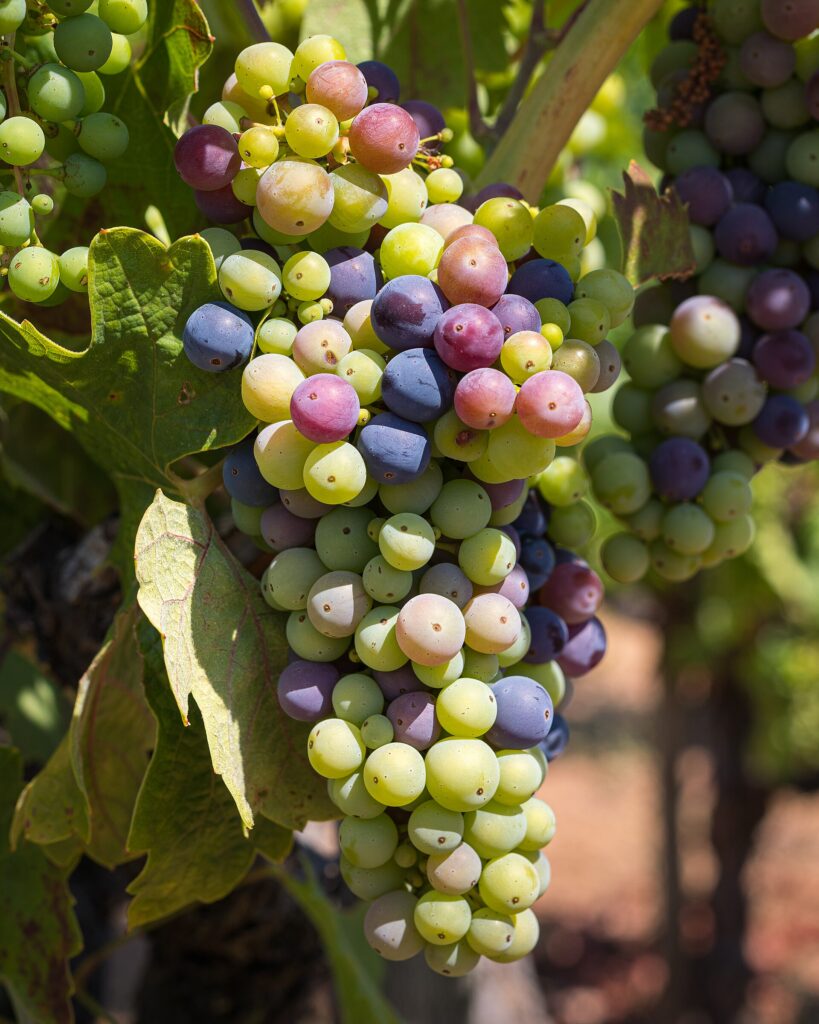
Ingredient or production reference: Grapes ripening in a vineyard. This photograph illustrates the raw material or process, not a bottle of this specific style. Photo: Frank Schulenburg / Wikimedia Commons. CC BY-SA 4.0. Display resized; no other edits.

Keep exploring
- 27 CFR 5.145 — evidence reviewed 2026-09-17.